
Off-grid solar in Africa gets $224 million World Bank lift
The funds will be used for electrification projects in West Africa and the Sahel to bring electricity to 1.7 million people.
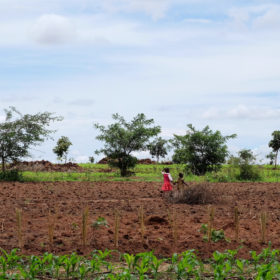
JCM kicks off EPC tender for 20 MW solar project in Malawi
Malawian independent power producer Golomoti JCM Solar Corporation Limited is planning a PV plant in Golomoti, 100km south east of Lilongwe. The project will sell power to utility ESCOM under a long-term PPA.
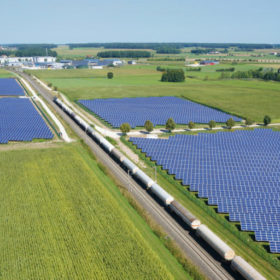
Solar, wind covered most of Germany’s power demand on Easter Monday
Renewable energy delivered 56 GW of capacity at noon on Easter Monday, with consumption coming in around 61 GW. The price on the power exchange fell to minus €83.01/MWh during peak hours.
Consolidation of Taiwanese PV industry continues with another shutdown
Taiwanese manufacturer E-Ton Solar said it will halt solar cell production due to strong price pressure. It is now seeking to sell two of its three manufacturing facilities in southern Taiwan, while its shares have been suspended from trading on Taiwan’s stock exchange.
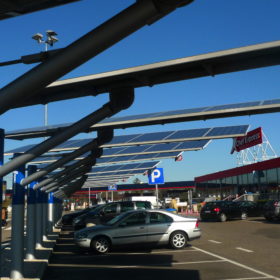
France suspends tenders for self-consumption solar projects
The suspension of tenders for projects ranging in size from 100 kW to 1 MW under net metering was due to an unexpectedly low number of applications and disproportionately high final tariffs for surplus power.

South Korea to raise renewables target to 129 GW by 2040
Under the South Korean government’s new strategy, renewables would cover up to 35% of total power demand by 2040. The government sees the potential to deploy up to 235 GW of solar and wind, but cites a lack of land and relatively low solar radiation as factors that could hinder growth.
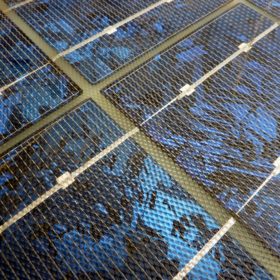
Taiwan’s PVEVL expands performance tests to perovskite, quantum dot and organic solar cells
Despite the difficulties its solar manufacturing industry faces, the Taiwanese government is ramping up its R&D efforts to measure the efficiency of what it calls “new-generation light-driven photovoltaics”.

Solar ready to take more risks in Brazil’s upcoming auction
According to Brazilian solar energy association ABSOLAR, PV project developers will be awarded “quantity contracts” in the auction to be held on June 27. The association, however, warns that changes in contract structures require adequate adaptation and correct implementation to achieve success.
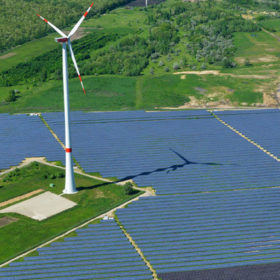
Solar once again the only winner in German renewables auctions
In the first round of this year’s mixed wind and solar tender there were only bids for PV projects. Some 18 projects with a combined capacity of 210 MW were selected and the final feed-in premium tariffs were almost the same as those seen in the previous round, with the average price slightly higher.

Global renewables R&D will further drive down energy transition cost
The Netherlands’ Organisation for Applied Scientific Research says renewables would not only contribute to a cheaper energy system but would also create more opportunities for new business, exports and jobs – as well as a cleaner environment.
