Mixed reactions to 18-month extension of antidumping and anti-subsidy duties on Chinese manufacturers
The 18-month extension to antidumping (AD) and anti-subsidy duties applied to Chinese solar exports has caused mixed reactions within the industry. The measure should be published on the EU Official Journal by the end of this week.
World Bank approves $480 million guarantee to promote solar and renewables in Argentina
The World Bank will promote the development of large-scale renewable energy and solar projects across Argentina with a $ 480 million guarantee. The funds will be used to support projects being implemented under the country’s RenovAr program for renewable energies.

Meyer Burger to shut-down U.S. diamond wire production
The Swiss equipment provider has announced a plan to close production for its diamond wire platform in Colorado. The company blames global pressure on prices and margins. Meanwhile, its preliminary financial results for 2016 show a 40% increase in sales.
Italy installed 369 MW of new PV systems in 2016
The Italian solar market grew by 22% in 2016. The country added 369 MW of new PV systems last year. This growth was mainly driven by tax breaks for the residential sector and the regulation for self-consumption. Most of these systems have a power of up to 100 kW.
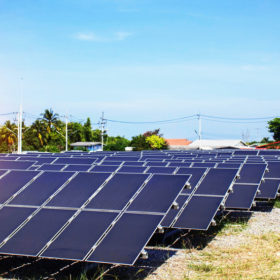
Spain installed PV systems totaling 55 MW in 2016
In 2016, Spain’s solar development was driven by grid-connected PV systems for self-consumption and stand-alone systems for agricultural use.
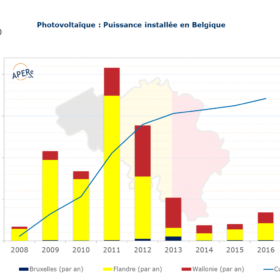
Belgium’s PV power surpasses 3.42 GW
Belgium has now over 3.4 GW of installed PV power. Most of this capacity, 2.45 GW, is located in the Flemish-speaking region of Flanders. The French-speaking region of Wallonia and the Brussels Metropolitan Region have reached 931 MW and 56 MW, respectively. In 2016, the country registered a 77% increase in new installations.
European Commission confirms 18-month extension of antidumping and anti-subsidy tariffs, with a staged phase-out
The European Union will see an extension to hotly contested duties on Chinese PV exporters by 18 months. A spokesperson for the European Commission confirmed the move with pv magazine today, adding that the duties will be phased out, in line with industry cost reductions.
Germany registers 117 MW of new PV installations in January
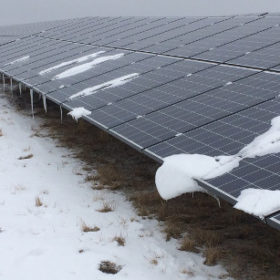
Germany has registered 117 MW of new PV installations in January. The country’s cumulative PV capacity has reached approximately 41.34 GW.
PV hybrid system to save 22% on electricity costs for Kenyan salt producer
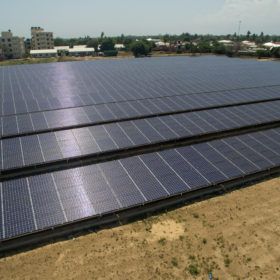
A 991 kW PV array will supply Kenya’s largest salt producer with 22% of its electricity, in a diesel-hybrid system delivered by SolarAfrica. The system was supported by a grant from the Japanese government’s Joint Crediting Mechanism (JCM).
REC Solar module shipments for 2016 exceed 1.2 GW
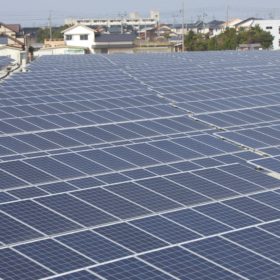
The Norwegian solar manufacturer saw its module shipments increase 9% year-on-year to 1,266 GW in 2016. A strong fourth quarter was the main driver for this performance. Americas accounted for about 53% of the company’s shipments last year, while in the EMEA and APAC markets REC Solar sold 32% and 15% of its products, respectively.
