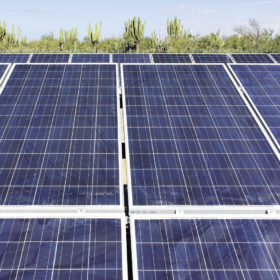
Repowering solar plants for need – or bigger returns
Alencon’s silicon carbide-based String Power Optimizers and Transmitters enable the repowering of solar plants which need to replace 600 V inverters with newer 1,000 V or 1,500 V gear, or for project owners who wish to maximize electricity generation at aging and imperfect facilities with creative engineering techniques.
US scientists claim clear-sky irradiance model provides better results for module testing
Researchers at the American Institute of Physics have used the clear-sky irradiance model developed by the National Renewable Energy Laboratory to measure the degradation rates of solar panels at a testing field in Germany over five years. The scientists say the model, when combined with real-world data, offers an efficient tool to evaluate the aging of PV technology.

Bolsonaro scraps solar tax planned by Brazilian regulator
The Brazilian president said the potential introduction of a grid fee for net metered solar systems will be eliminated thanks to an urgent ad-hoc decree expected to be approved soon by parliament. The proposed ‘solar tax’ would have affected all new PV installations with a generation capacity of no larger than 5 MW under Brazil’s net metering regime.
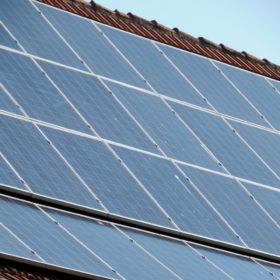
Net-metered rooftop PV on the rise in Malaysia
Sustainable Energy Development Authority figures show the country saw around 94 MW of new rooftop generation capacity added in the first 11 months of last year. That compares to less than 14 MW in the previous three years.
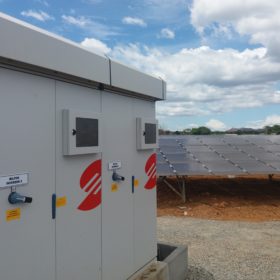
Enertronica Santerno unveils high-altitude central inverter
The Italian manufacturer said the product is based on a technical solution previously used for power downgrading. The device is said to be ideal for projects at altitudes greater than 1,000m.
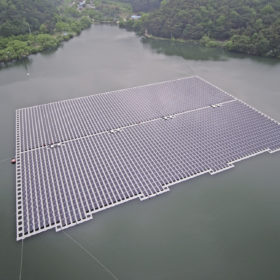
Vietnam to hold auctions for 400 MW of floating solar
Following its decision to switch from fixed feed-in tariffs to reverse auction bidding for the setting of solar incentives, the Vietnamese government has decided to devote the first two pilot auctions to floating PV. A first procurement exercise, for a project which could reach 100 MW of generation capacity, will be held this year.

PV against brain and heart diseases
Researchers in Denmark have developed water-based nanofibers coated with a biological PV substance which can be easily injected into the body. The developers say excitable cells in the heart and brain could be regenerated by being electrically stimulated with the solution.
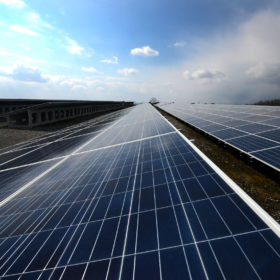
Winners and prices of Tunisia’s 500 MW PV tender
The Tunisian Ministry of Mines and Energy has confirmed that Norway’s Scatec Solar has secured 300 MW at three sites. It also revealed that France’s Engie and China’s TBEA each picked up 100 MW projects. The lowest bid came in at $0.025/kWh, while $0.034/kWh was the highest offer.
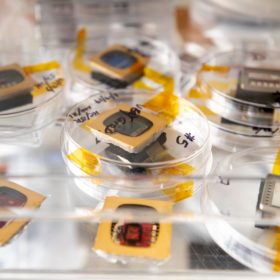
Gauging non-fullerene acceptors for organic PV
U.S. scientists are trying to understand how non-fullerene small-molecule acceptors (NAFs) increase the efficiency of organic PV devices. They claim that methoxy groups embedded in the acceptors could facilitate an efficiency increase of approximately 6%.
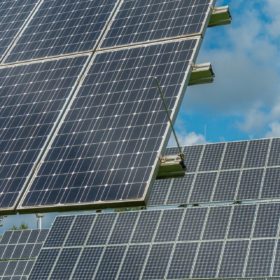
‘You can’t go wrong with solar’
2.5 MW of solar is being deployed at three project sites in Papua New Guinea, with commercial operations likely to begin within nine months. The installations will provide power in the island province of New Ireland at lower prices, while also improving access to electricity.
