
Dutch utility Liander expects 6 GW of solar on its turf by 2023
The Netherlands’ largest power provider said that capacity would be six times more than is currently connected to its grid. To accommodate such vertiginous growth, the company is planning to increase redundancy in critical areas with high levels of solar deployment. Parent company Alliander has announced an €844 million plan to improve the power network.
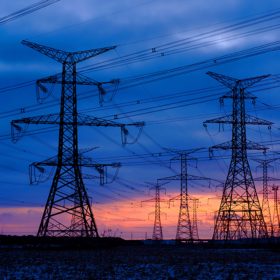
Wallonia’s controversial residential PV fee may only apply to new systems
The energy regulator of Belgium’s French-speaking region has announced the fee for residential PV will come into force next year and may apply only to installations grid-connected after July 1 this year, as proposed by the regional government.

Western Canada’s first solar park secures financing – and will incorporate bifacial panels
The 23 MW Suffield Solar Project is under development by Chinese-Canadian company Canadian Solar in Alberta. The project received CA$15.3 million in funds from the federal government under the Emerging Renewable Power Program.
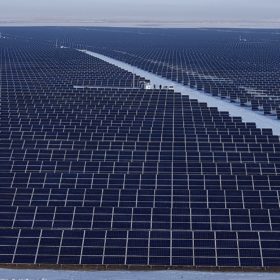
100 MW Saran solar park commissioned in Kazakhstan
The SES Saran solar project is in the Karaganda region. The project was financed by the European Bank for Reconstruction and Development and built by German developer Goldbeck.
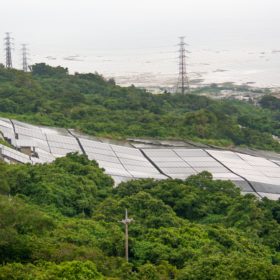
Another disappointing solar auction for Japan as prices stay high
In last month’s exercise, final prices were slightly lower than those seen in previous procurements and the total allocated capacity was 196.6 MW. Through the three tenders held by the Japanese government, around 500 MW of solar was assigned, against a target of 1-1.5 GW. Land availability, grid constraints and high labor costs make projects expensive and force developers to use mountainous regions.

Chile tender to assign up to 9,000 hectares of public land for renewables
Some 8,891 hectares could be allocated through the tender, in the form of 179 plots of land in the northern and southernmost regions of the country.
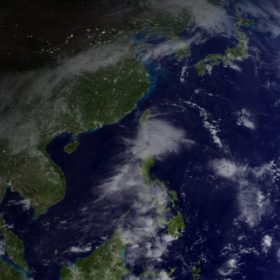
PV Market Alliance expects 120 GW of new solar capacity in 2019
The global market stagnated last year, with around 98 GW deployed. For 2019, the experts expect stronger solar growth, provided there are no setbacks in China.
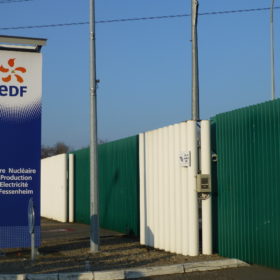
Solar tender for French nuclear site is published
Only four days after receiving approval from the European Commission, the French government has issued the tender for 200 MW of ground-mounted solar and a further 100 MW of rooftops at Fessenheim. The government is considering raising a 30 MW size limit for PV projects on degraded land.

PV Info Link: Jinko the largest module maker of 2018
According to the Taiwanese analysts, JA Solar was number two, followed by Hanwha Q-Cells and Trina Solar in joint third. The ten largest module makers met around 70% of demand, with 66 GW of shipments.

Smart-grid based hybrid wind-solar project goes online in Dubai
The Smart Grid Station wind-PV facility also incorporates a 500 kWh lithium-ion battery storage system, around 2,000 internet of things-derived sensors and smart meters. The plant was installed by the Dubai Electricity and Water Authority and Korean utility KEPCO.
