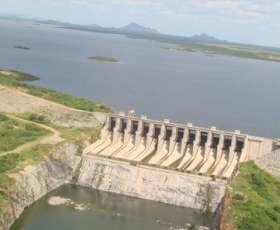
Brazilian state of Ceará begins tender for up to 45 MW of solar
The state’s Secretary of Resources intends now to conduct feasibility studies for a series of projects of up to 5 MW, which will provide local state-owned utilities Water Resources Management Company and the Water and Sewage Company with electricity.
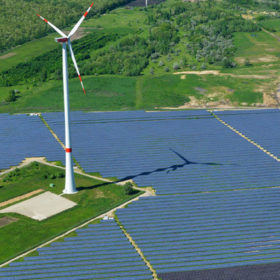
Deloitte sees renewable energy in the fast lane
Solar PV and wind energy are now evolving from established to the preferred energy sources, according to a recent Deloitte study analyzing the global renewable energy market.
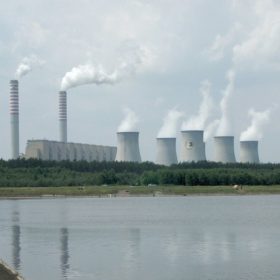
Solar, not coal, can stop hike in electricity prices in Poland
Polish research institute IEO released a new analysis showing increasing power prices in the Eastern European country, due to the current energy policy, which still strongly relies on coal power. Replacing coal with solar power, it argues, would likely result in decreasing power prices.
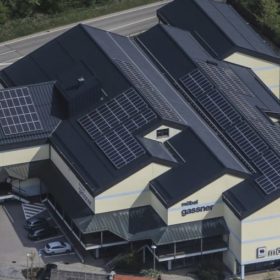
WWF says 2% of Germany’s surface is enough for 100% renewables
An analysis of the World Wildlife Fund (WWF) assumes that a maximum of 2.5% of Germany’s land is needed for the energy transition. With a higher share of solar in the electricity mix, however, this percentage would be lowered to 2%. The study also says that the expansion of renewables will not endanger nature protection.
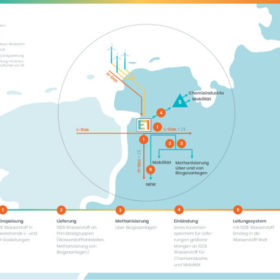
100 MW power-to-gas project planned in Germany
The project, under development by Gasunie, Tennet and Thyssengas, will convert wind power into green hydrogen. The plant commissioning should take place gradually starting from 2022.
‘There is no alternative to a world of 100% renewables’
Electrifying the global energy system with clean energy is the only way to reach the targets set by the Paris agreement on climate change and avoid the catastrophic scenarios outlined by the recent IPCC report. In an interview with pv magazine, Christian Breyer – Professor of Solar Economy at Finland’s Lappeenranta University of Technology – explains a 100% renewables model is not only technically feasible, but also the cheapest and safest option. With solar and storage at its core, the future energy system envisaged by Breyer and his team will not only stop coal, but also nuclear and fossil gas, while seeing solar reach a share of around 70% of power consumption by 2050. By that time, PV technology could cost a third of its current price.
Ukraine’s Naftogaz begins investing in solar power
The nation’s oil and gas provider is building its first small-sized PV projects at facilities operated by Ukrtransgaz, the Ukrainian gas transport system.

Tunisia postpones deadline for 70 MW solar tender, again
The country’s second 70 MW procurement – for solar projects up to 10 MW in size – was launched in May. The Tunisian government had already extended the deadline for the tender in August.

Decentralized solar-plus-storage would fire sub-Saharan Africa
According to a UC Berkeley study, the falling costs of storage technologies will make it possible for Sub-Saharan countries to rely on decentralized systems based mainly on solar-plus-storage, bringing access to electricity to more than 600 million people.
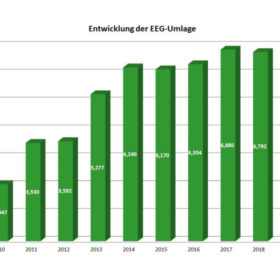
Germany’s EEG levy falls to €0.06405 in 2019
It is the second decline in a row. Germany’s TSOs base their calculations on the 6 GW expansion for solar and wind expected for the coming year. The surplus on the EEG account, which was included in the calculations, was €3.65 billion.
