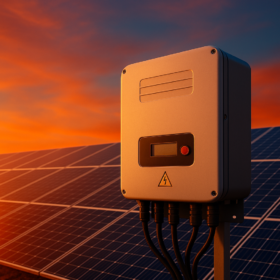
Cooling PV inverters with skived fin heat sink
Researchers in Turkey tested a novel heat sink design to cool insulated gate bipolar transistor (IGBT) arrays in solar inverters. They found that it reduced module temperatures by more than 6 C in lab experiments.
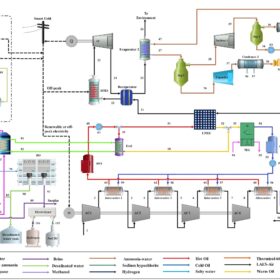
PV-powered liquid air system yields hydrogen, heating, fresh water
A global scientific team has designed a novel multigeneration system based on renewable energy and liquid air energy storage, then used soft computing techniques to optimize its operation. The optimized levelized costs of hydrogen (LCoH) were $1.52/kg and $5.22/m³.
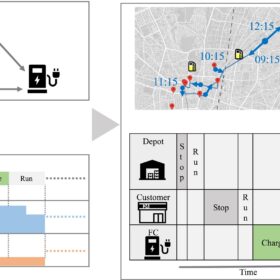
Surplus PV for electric delivery vehicles
Scientists in Japan have developed a model that predicts surplus PV generation and creates a route for optimized charging of electric delivery vehicles. They defined their work as a “practical blueprint for logistics operators.”
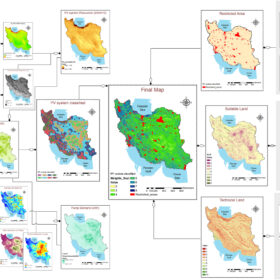
Map shows 43% of Iran’s land unsuitable for PV-powered water pumps
Scientists used geographic information systems and analytical hierarchy process methods to identify Iran’s most suitable areas for PV water pumping systems. They found 43.2% of land unsuitable, with Ardabil province the most favorable.
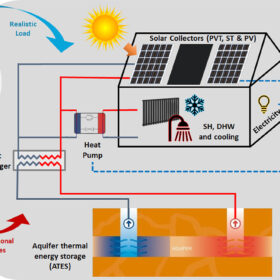
PV-thermal energy with heat pumps, aquifer thermal storage in buildings
Researchers in the Netherlands have simulated a residential energy system combining PV, solar thermal, and PV-thermal panels with aquifer thermal energy storage and a heat pump, achieving a seasonal coefficient of performance of seven across five buildings.
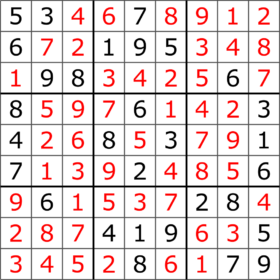
Using Sudoku to improve power yield in PV systems under partial shading
Indian researchers have developed a Sudoku-based technique to reduce power losses in PV systems operating under partial shading. They claim the method increases energy efficiency and revenue generation more than conventional reconfiguration techniques.
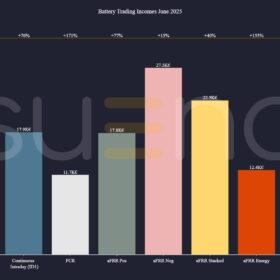
Why strategy is key: Lessons from real-world benchmarks
Maximizing value from battery energy storage systems (BESS) isn’t just about having the right hardware – it’s about executing the right strategy. Lennard Wilkening, CEO and co-founder of Germany’s suena energy, explores what makes standalone BESS profitable in increasingly competitive and volatile market, and what real-world benchmarks, such as suena energy’s monthly revenue update, reveal about the role of dynamic multi-market optimization.
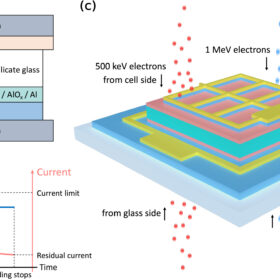
Gallium arsenide solar cells radiation-resilient for space applications
A group led by Cambridge University has developed an adhesive-free method of bonding ultra-thin gallium arsenide solar cells to borosilicate glass. The proposed technique is reportedly compatible with standard planar device processing.
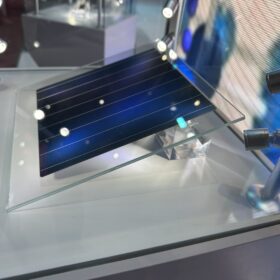
High-temperature co-annealing step could cut TOPCon cell costs
Researchers at the Ecole Polytechnique Fédérale de Lausanne (EPFL) have proposed combining the two high-temperature steps used in producing tunnel oxide passivated contact (TOPCon) solar cells into a single co-annealing process. Initial results show promising outcomes in boron concentration, passivation quality, and contact resistivity.

Novel switched capacitor boosting inverter for PV usage
Researchers have designed a new switched-capacitor-based multilevel inverter topology with nine switches. They have tested it in simulations and in hardware-in-the-loop tests. Efficiency reached up to 96.5%.
