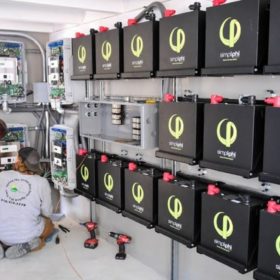
Simpliphi predicts cobalt-free battery takeover sooner than expected
pv magazine spoke with Catherine Von Burg, CEO of the Californian battery company, to discuss why she believes lithium-iron-phosphate is the chemistry of the near future.
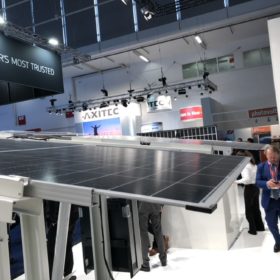
Manufacturing process for mono cast solar cell exceeding 23% efficiency
Trina Solar has made a PV cell by directly applying the unmodified i-TOPCon process, originally developed for Cz mono wafers, to cast n-type quasi-mono silicon wafers. It claims the average efficiency, tested in-house with a calibrated reference cell, is 22.98%.

Solar-powered hydrogen under $2/kg by 2030
Researchers from the Massachusetts Institute of Technology have identified sites where hydrogen could be produced via PV electrolysis at prices ranging from $1.90/kg to $4.20/kg in the United States by the end of the decade.
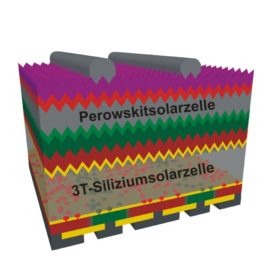
German-led consortium aims for 33% efficient perovskite-silicon solar cell
The Institute for Solar Energy Research Hamelin (ISFH), the Karlsruhe Institute of Technology (KIT) and the Institute for Materials and Components in Electronics at the University of Hannover, as well as Centrotherm, Singulus, Meyer Burger and Von Ardenne are involved in a research project aimed at achieving a 27% conversion efficiency for silicon solar cells based on perovskite.

Screen-printed heterojunction solar cell with 20.48% efficiency
Researchers from the United States have used new passivated contact architectures to demonstrate a screen-printed silicon heterojunction solar cell on 40 micron thick standalone wafers.

The steeplechase of transparent PV
A South Korean research team has claimed that transparent PV technologies need to improve in terms of efficiency, stability and aesthetics before they can reach commercial maturity.
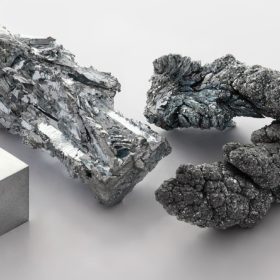
Strategies to improve rechargeable zinc metal batteries
A lack of standardized protocols is preventing rechargeable zinc metal batteries from complementing lithium-ion storage tech. A U.S. research team is now calling for standardized protocols for columbic efficiencies and greater zinc/electrolyte stability to make the technology viable.

Photovoltaic blinds to improve greenhouse energy performance
A Swedish-Iranian research team modeled 14 photovoltaic blind configurations in checkerboard arrays 1m above a greenhouse roof emulated with EnergyPlus building energy simulation software. The group found a PV installation would reduce natural gas consumption, electricity demand and carbon emissions.
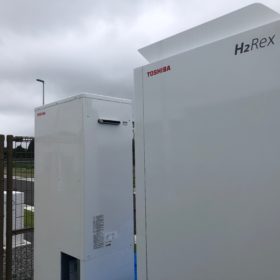
Toshiba’s power and heating hydrogen solution
The Japanese electronics giant has deployed a 3.5 kW hydrogen fuel cell system for at its Michinoeki-Namie site in the Fukushima prefecture. The fuel will be provided by the company’s 10 MW Fukushima Hydrogen Energy Research Field nearby.

Testing CPM-based passive cooling for CPV systems
An international research team has tested change material heat sinks for heat management on a concentrator photovoltaic system. It found that increasing over height ratios lowers the formation of stratified liquid layers, which in turn reduces the potential hot spots in the upper part of the solar cell.
