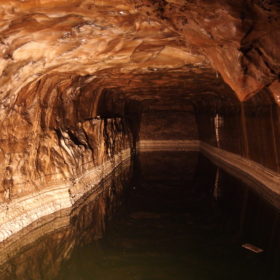
Hydrogen storage in salt caverns
Researchers in Germany have identified salt caverns as a feasible and flexible solution for hydrogen storage. They also revealed that Europe has the potential to inject hydrogen in bedded salt deposits and salt domes, with a total storage capacity of 84.8 PWh.
CIGS solar cell with IBC structure and up to 19.7% efficiency
Scientists in the Netherlands have demonstrated an interdigitated back contact copper-indium-gallium-selenide solar cell with a sub-micron thickness of 673nm. The device has an aluminum oxide and magnesium fluoride-based anti-reflective coating.
New approach to energy management in microgrids
Researchers from Australia’s Monash University have developed an energy exchange framework to manage distributed energy resources and help consumers lower their power costs.
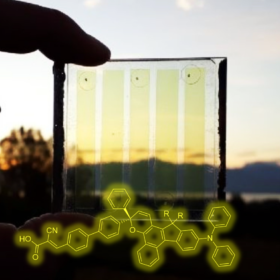
Semi-transparent mini BIPV panels for solar windows
European scientists have developed mini modules with an active area of 14 cm² and a 3.68% efficiency rating. The panels also have a self-adjusting feature that can help to mitigate the amount of light when they are exposed to full sunlight, or to the temperatures of buildings with large windows and/or glass facades.
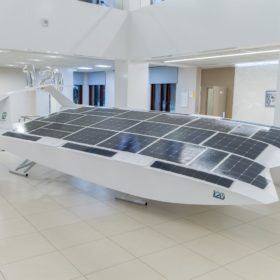
World’s first self-drifting solar boat
The pilotless, high-speed solar boat, now under development by Russian scientists, purportedly has unlimited power reserves. It could be used for marine patrols, search and rescue operations, and cargo delivery, they said.
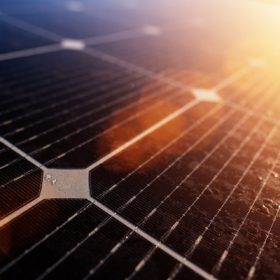
Lowering costs for PV cooling assessments
Researchers in Malaysia have developed a new, cheaper method to assess PV cooling techniques. Designers and manufacturers of PV cooling systems could follow the parameters of the new approach to evaluate the performance and bankability of their own devices, the scientists claimed.
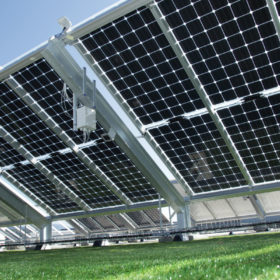
French bifacial standards measure up
A global assessment of bifacial testing methods conducted in Singapore has endorsed the approach taken by France’s Institut National de l’Énergie Solaire.
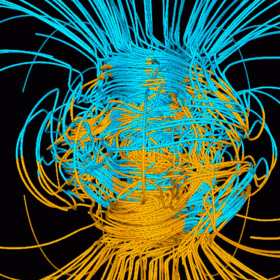
Earth’s magnetic field affecting PV panel performance
Researchers in Kenya say the geomagnetic field could reduce solar panel conversion efficiency 0.21% between the equator and a 50-degree latitude. Their analysis showed the complex magnetic field can determine increases in module fill factor and falls in maximum power.
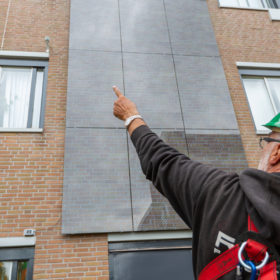
Facade solar panels with ‘mimic design’
Dutch startup Solar Visuals and the Netherlands Organisation for Applied Scientific Research (TNO) have developed new “mimic design” facade modules that reproduce the features of building surfaces. Lenneke Slooff-Hoek, a senior scientist for TNO, told pv magazine that the panels can be made in any size or color at 13% efficiency, adding that they have a partly transparent colored layer made of small dots.
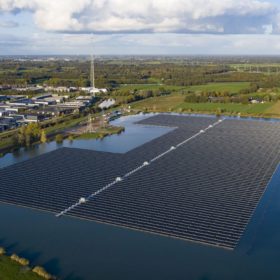
Implementing standards in floating PV
Norwegian consultancy DNV GL has gathered together big energy players, floating PV specialists and project developers into a consortium that will aim to define recommended practices for the floating solar business. Among the 14 participants are some big players in the field including EDP, EDF and Equinor, as well as French floating technology provider Ciel & Terre.
