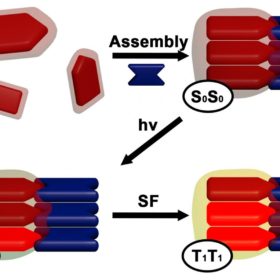
Singlet fission may raise theoretical efficiency of solar cells to 44%
According to a U.S. research team, new nanomaterials relying on dyes based on diketopyrrolopyrrole and rylene can generate a singlet fission reaction that extends the life of harvestable electronic charges.
Clustering-based computation used to measure PV module degradation
The method could be an effective tool to measure the performance of solar modules, according to research, due to its ability to speed up the inspection process, preventing further damage and hastening repairs.
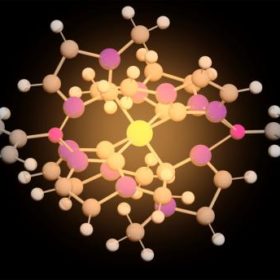
Iron therapy for solar cells
A research team from Sweden has developed a new iron-based molecule, which it says has the potential for further cost reductions in solar cells, and can also function as a photocatalyst to produce fuel.
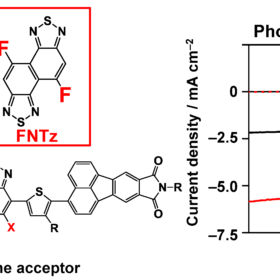
Fluorinated electron-acceptor improves yield of organic thin film solar cells
A Japanese research team claims to have tailored an electron-accepting unit, which has been successfully used in an organic semiconductor applied in a solar cell device that showed high PV performance.
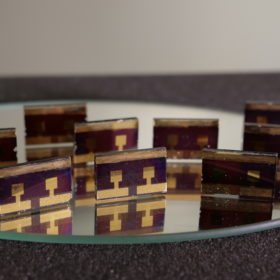
Swiss research group develops methylammonium-free perovskite cells
The organic methylammonium (MA) molecules in the cell were replaced with inorganic elements such as rubidium and cesium. The planar perovskite cells resulting from the research have an efficiency of more than 20%.
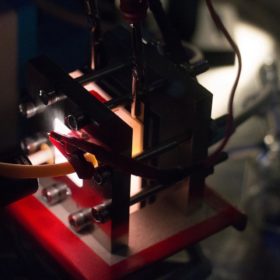
International research group develops solar cell with storage properties
Although the “solar flow battery” is currently considered too expensive by its own creators, a further improvement of its design and the use of emerging solar materials and new electrochemistry may open new opportunities for this kind of technology.
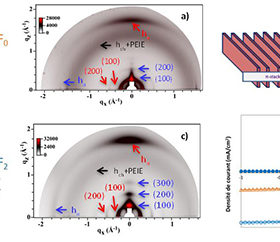
French research group changes polymer molecular structure to improve PV properties
The scientists have shown how the control of the molecular structure of a semiconductor polymer makes it possible to obtain a PV conversion efficiency of more than 10% for an organic solar cell.

Researchers propose doubling today’s solar panel efficiency using two weird tricks
By double stacking a perovskite-silicon solar cell and using the cell in a glass-on-glass bifacial solar module, scientists model that a 30-36% efficient solar module can be attained.

Study: 32% tandem cell solar still competitive at triple the price
Arizona State University researchers have determined that a 32% efficient perovskite-silicon tandem cell could produce electricity at the same price as cutting-edge 22% efficient panels in the most cost-competitive of situations

Egyptian Pyramids may help solar research
A group of Russian researchers has found out that under resonance conditions, the Pyramid of Giza can concentrate electromagnetic energy in its internal chambers. This discovery, the scientists claim, may also be used to develop high efficient solar cells.
