
General Electric works on grid-forming inverter controls
The U.S. conglomerate plans to deploy and test new controls with its commercial PV LV5 inverter platform. It aims to develop “grid-forming” controls to allow wind and solar inverters to form voltage and frequency levels like traditional generators. The company wants to improve coordination and synchronization among multiple grid-forming resources, and is working on smart PV reserve controls to improve the transient stability of systems with high renewables penetration.

Golden PV panels for balcony solar systems
German manufacturer a2-solar has supplied 240 solar panels for the renovation of an old building in Bern, Switzerland. The modules, which are being integrated into 96 balconies, feature different transparency options and color variations.
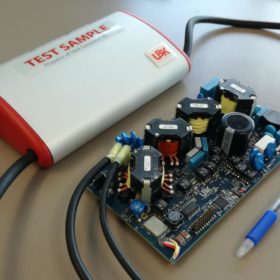
All-in-one device integrating a microinverter and optimizer
The so-called Optiverter is an all-in-one residential solution developed by startup Ubik Solutions and researchers from Estonia’s TalTech Power Electronics Research Group. The developers claim that the new solution can provide 30% more power than traditional microinverters under partially shaded conditions.
No such thing as ‘next-generation’ modules
According to one Dutch scientist, the development of PV technology in recent decades should be seen as an evolutionary process, rather than the constant emergence of new generations of equipment.

Solar pump moved by fuzzy logic
Researchers in the United Arab Emirates have proposed a PV-powered irrigation system that runs on a fuzzy logic-based algorithm, with a remote-control wireless monitoring system interface.
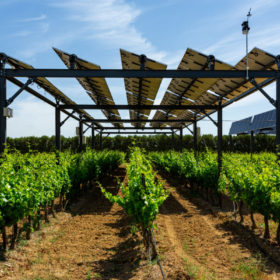
A good year for solar: Agrivoltaics in vineyards
French agricultural PV specialist Sun’Agri has revealed the results of tests run on a solar plant integrated with viticulture. During heat waves, the company said, vines shaded by solar panels continued to grow and needed less water.
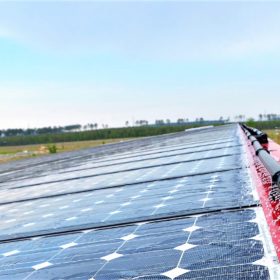
Cooling down PV panels with water
France’s Sunbooster has developed a technology to cool down solar modules when their ambient temperature exceeds 25 C. The solution features a set of pipes that spread a thin film of water onto the glass surface of the panels in rooftop PV systems and ground-mounted plants. The cooling systems collect the water from rainwater tanks and then recycle, filter and store it again. The company claims the technology can facilitate an annual increase in power generation of between 8% and 12%.

Adding solar at airports
An Indo-Malay research group has sought to define the best conditions for developing large scale solar projects at airports. The researchers provided insight on glare analysis as well as design and performance.
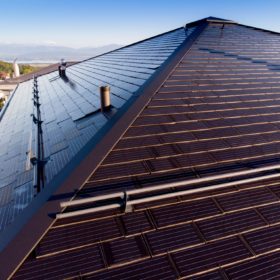
Solar tiles for new and historic buildings
Available in three versions, the product costs around $307-324 per square meter although prices will vary depending on project complexity. Swiss manufacturer Freesuns says its tiles can be used on historic buildings and can cover 100% of rooftops.
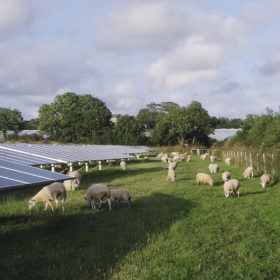
Sheep in search of a solar plant
A large sheep farming company in Germany is seeking PV asset owners who will let its animals graze sustainably at solar project sites, in a move that could be a win-win situation for everyone.
