
Organic solar cell with new film morphology and 16.88% efficiency
Chinese scientists have developed a single-layered organic solar cell based on non-fullerene acceptors with improved fill factor and short-circuit current density. They achieved their results with a new morphology that could be more suitable for vertical charge transport.

A power-to-gas system integrating co-electrolysis and methanation
Researchers in Italy extensively analyzed four different configurations of their proposed system to assess its potential, including under non-optimal, ‘off-design’ conditions and concluded that, for now, subsidies would still be required for the commercial production of synthetic natural gas.

Designing super-strong solar modules for the tropics
An international research team has defined the operational parameters needed to design and manufacture crystalline silicon PV modules for tropical climates. The group proposed a back-junction, back-contact cell tech with a selective laser soldering technique it claims offers the best potential to yield such robust panels.
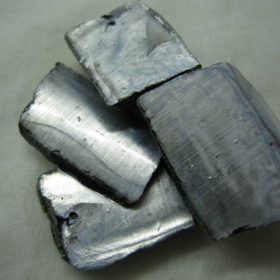
A stable potassium-ion storage with new cathode material
Scientists in China claim to have identified a special cathode material that could be utilized in more stable potassium-ion storage systems. According to the group, this new material could enable the development of storage systems able to retain 94% of their capacity after 2000 cycles, with 0.003% capacity fade per cycle.
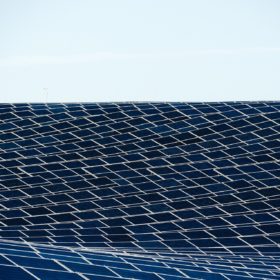
A dual-angle approach to building solar plants at higher latitudes
A research team in the US has proposed a ‘dual-angle solar harvesting’ method it is claimed could help PV developers optimize energy yield and land use. It is claimed the method would be particularly suitable for projects in cloudier climates and at higher latitudes.
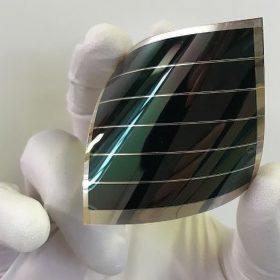
An organic solar cell with 25% efficiency
The ‘best conversion performance in the world in a dark room’ is how the developers of a new organic PV device have described it. Such cells could be used as a wireless source of energy for internet of things applications or in gadgets such as temperature-humidity and motion sensors.

Can a transparent solar window harvest enough power to be economical?
Can an organic solar cell material finally be commercialized? Last year, Ubiquitous Energy claimed a world record for efficiency of a “transparent solar cell” with a “certified” 9.8% efficiency.
Predicting the I-V characteristics of PV systems under partial shading
Researchers in Tunisia have proposed a method of determining the characteristic I-V profile of a partially shaded PV module, and to extrapolate it into a string profile.
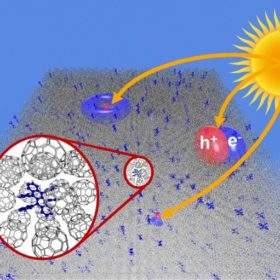
Bad vibes for organic solar cells
Researchers in Germany and Belgium have discovered ‘zero point vibrations’ are responsible for performance limitations in organic solar cells. New strategies to minimize such vibration-induced voltage losses in organic PV should be investigated, say the scientists.

More efficient underwater PV cells with wide-band gap semiconductors
U.S. researchers have conducted detailed balance calculations to show the ultimate potential of underwater solar cells. According to their findings, the devices could theoretically produce useful power at up to 65% efficiency in clear waters. However, this would only be possible by using wide-band-gap semiconductors, which have not been considered for solar cells used for land-based applications because their band gaps are too large.
