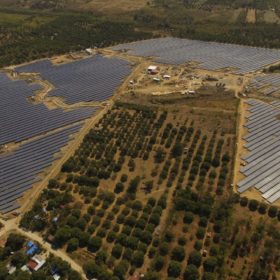
Philippines lowers FIT levy
The country’s energy regulator has decided to reduce the levy that finances the FIT program for renewable energy from P 0.2563/kWh to P 0.2226 ($0.004)/kWh. The lower levy is expected to go into effect next month.
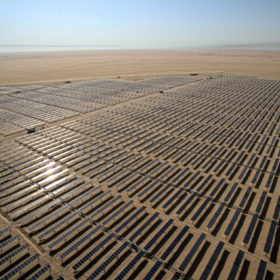
Iberdrola abandons race to acquire X-Elio
With the Spanish utility out of the game, there are now only three bidders still struggling to take over the PV project developer.
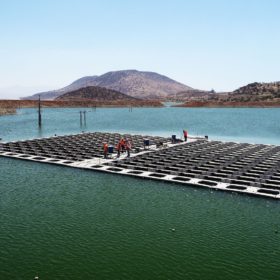
Chile’s first floating PV project reaches completion
Mining giant Anglo American has installed an 84 kW floating array at a copper mine in Chile’s Valparaiso Region. The project was developed by Lenergie with the floating technology of Ciel&Terre.
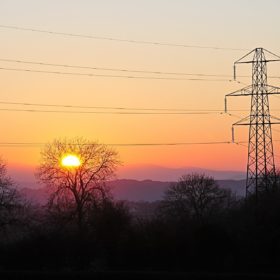
A roadmap for cross-border solar in the EU
Researchers at the EU Joint Research Centre have suggested a series of actions that could be implemented to turn solar power exports between European countries into a real plan.
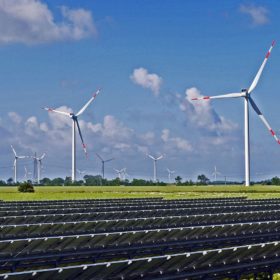
EnBW set to acquire French wind and solar developer Valeco
The financial terms of the plan were not revealed. Valeco currently owns and operates 332 MW of renewable energy assets in France.
SMA posts €175 million loss for 2018
The German inverter producer’s sales also fell significantly in the past financial year. With its cost reduction program, SMA is now eager to orchestrate a turnaround, but its first-quarter guidance still shows a sustained downward trend.

Brazil’s PV capacity exceeds 2.5 GW
With around 2,056 MW of operational installed capacity from large-scale PV and more than 500 MW of installed distributed-generation capacity, Brazil has now surpassed Chile to become Latin America’s second-largest solar market after Mexico. According to new statistics released by Brazilian industry association ABSOLAR, utility-scale solar currently accounts for around 1.2% of the country’s total generating capacity.

Guinea-Bissau launches 22 MW PV tender
The tendered project is expected to provide 500,000 people with access to energy, while more than doubling the country’s total installed power generation capacity. It includes a grid-connected 20 MW solar plant in Gardete and two 1 MW hybrid solar-diesel plants in Gabu and Canchungo that will also rely on some storage capacity.
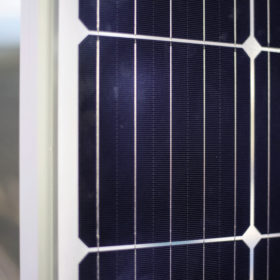
European researchers seek standard to assess short-circuit current temperature of PV devices
A European research team working on the EU-funded EURAMET ENG55 “PhotoClass” project has taken a step toward standardizing the measurement of the relative temperature dependence of the short-circuit current in different PV devices, although it applied completely different approaches.

Renewables & geopolitics: Saudi Arabia
In the third in a series of interviews on renewable energy and geopolitics, Indra Overland — head of the Center for Energy Research (NUPI) and a research panel member for the Global Commission on the Geopolitics of the Energy Transition at IRENA — discusses how Saudi Arabia is dealing with the energy transition. He also outlines the challenges the Middle Eastern country will face in the coming decades, as it shifts to a less oil-dependent economy. Although the country recently set new solar and renewable energy targets, Overland believes that the geopolitical balance in the Middle East could shift to countries such as Iran in the coming decades, even if the Saudi commitment to renewable energy proves genuine.
