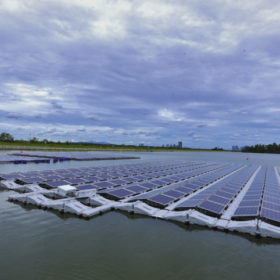
New Zealand’s largest solar farm to be built on water
Auckland’s electricity and water utilities will build New Zealand’s largest solar array on a wastewater treatment pond.
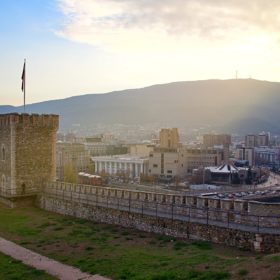
North Macedonia’s 35 MW solar tender attracts 82 bids
The government intends to build a 25 MW solar park in Sveti Nikole and a 10 MW facility in Makedonski Brod. The feed-in premium granted to the winning bids has been capped at €15/MWh.
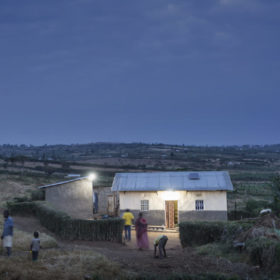
Engie expands presence in Africa with acquisition of Mobisol
Already active through subsidiary Fenix International and start-up Engie PowerCorner, the French energy giant is expanding further by acquiring Mobisol, an off-grid systems specialist with operations in Kenya, Tanzania and Rwanda.

Japan’s fourth solar auction concludes with lowest bid of $0.098/kWh
The tender produced lower bids than previous rounds but again allocated less generation capacity than planned. The Japanese government initially accepted bids for a combined 589.9 MW but ended up assigning only 195.8 MW of capacity. The final average price for procured solar power was $0.1222/kWh.
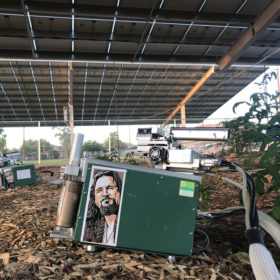
Food crops do better in the shade of solar panels
Another study has highlighted the advantages of combining solar with agriculture. According to the paper, growing chiltepin pepper, jalapeno and cherry tomato in dryland areas of the U.S. under the shade of PV modules is not only possible, but can lead to a better harvest.

Building a successful renewables auction in Colombia
pv magazine publisher Eckhart Gouras spoke to Carolina Obando, regulatory coordinator at renewable energy association SER Colombia, to discuss the country’s first renewable energy auction. The delayed tender promises to boost a solar industry with a 4.3 GW pipeline.

Germany added 292 MW of solar in July
Demand for systems with a generation capacity of up to 750 kW is driving the market. The 52 GW capacity cap for solar under the national FIT scheme is approaching. In September, feed-in tariffs and market premiums will fall a further 1.4%.
PV cheaper than spot market electricity across Europe
The levelized cost of energy produced by large scale PV projects ranges from €24/MWh in southern Spain to €42/MWh in Finland. New research states that is already cheaper than the average spot market electricity price and that the figure for big facilities in southern Spain may fall to €14 in 2030 and €9 in 2050.

France launches three solar tenders for 2 GW of capacity
Two procurement exercises will be for ground-mounted PV and will be launched in January and June. A third tender, scheduled for February, will concern rooftop PV.

Uzbekistan launches rebate program for rooftop PV
The Uzbek government last week opened a rooftop solar program which provides 30% of the initial costs for buying and installing a PV system, up to around $320 per project. Tax incentives are also available.
