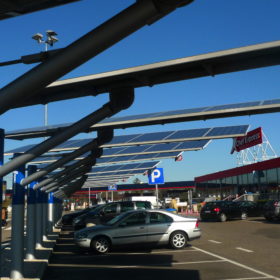
France suspends tenders for self-consumption solar projects
The suspension of tenders for projects ranging in size from 100 kW to 1 MW under net metering was due to an unexpectedly low number of applications and disproportionately high final tariffs for surplus power.
South Korea to raise renewables target to 129 GW by 2040
Under the South Korean government’s new strategy, renewables would cover up to 35% of total power demand by 2040. The government sees the potential to deploy up to 235 GW of solar and wind, but cites a lack of land and relatively low solar radiation as factors that could hinder growth.
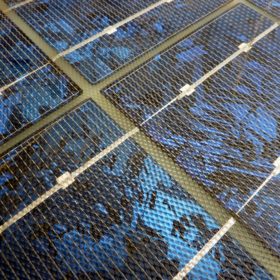
Taiwan’s PVEVL expands performance tests to perovskite, quantum dot and organic solar cells
Despite the difficulties its solar manufacturing industry faces, the Taiwanese government is ramping up its R&D efforts to measure the efficiency of what it calls “new-generation light-driven photovoltaics”.

Solar ready to take more risks in Brazil’s upcoming auction
According to Brazilian solar energy association ABSOLAR, PV project developers will be awarded “quantity contracts” in the auction to be held on June 27. The association, however, warns that changes in contract structures require adequate adaptation and correct implementation to achieve success.
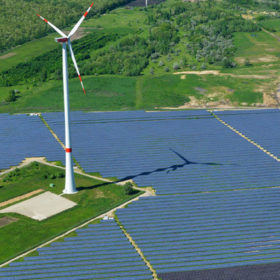
Solar once again the only winner in German renewables auctions
In the first round of this year’s mixed wind and solar tender there were only bids for PV projects. Some 18 projects with a combined capacity of 210 MW were selected and the final feed-in premium tariffs were almost the same as those seen in the previous round, with the average price slightly higher.

Global renewables R&D will further drive down energy transition cost
The Netherlands’ Organisation for Applied Scientific Research says renewables would not only contribute to a cheaper energy system but would also create more opportunities for new business, exports and jobs – as well as a cleaner environment.
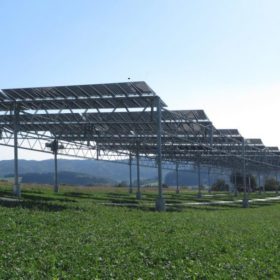
Agro PV raised efficiency of land by shielding crops from harsh sunlight
Germany’s Fraunhofer Institute for Solar Energy Systems has demonstrated combining solar generation with agricultural activity is now not only viable at lower costs, but may be particularly suitable for arid regions.
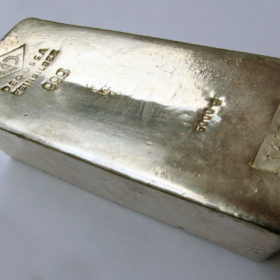
UK researchers warn of potentially rising silver costs
A study has highlighted that the two growth phases of solar panel manufacturing – after the 2008 global downturn and again after 2011 – coincided with higher prices for the precious metal.
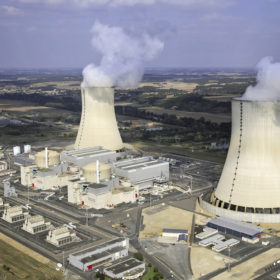
“There is no such thing as a zero or near-zero-emission nuclear power plant”
Stanford professor Mark Z Jacobson has said new nuclear plants may cost up to 7.4 times more than wind and solar facilities, with construction times longer by up to 15 years. Such a delay, he said, may see an huge amount of extra carbon emissions from fossil fuel power sources. His verdict comes as China this month set new guaranteed tariffs for nuclear power.
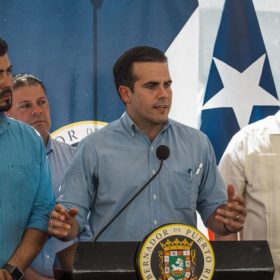
Puerto Rico goes 100% renewable as Trump Administration calls for more gas
Governor Rosselló has signed legislation moving the island to 100% renewable energy, while both the Trump Administration and the island’s utility push for a greater dependence on gas.
