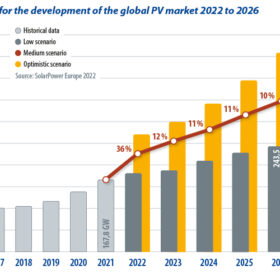
From 300 GW to 3,000 GW per year – a utopia?
The photovoltaic industry is expected to achieve annual global expansion of 300 GW as early as this year. That sounds like a lot, but is it enough? In view of climate change and rising energy demand, it is time for a new vision.
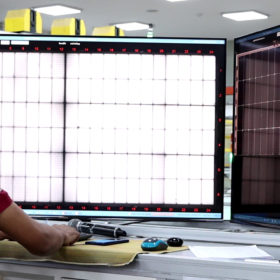
A true beginning – how the IRA persuaded us to invest in the US
The Inflation Reduction Act (IRA) has opened a new door for US solar manufacturers, as one of the executives behind a US-Jordanian project to bring PV production to the US explains.
European solar manufacturers need state aid exemptions – now
If Europe is to come up with its own Inflation Reduction Act moment, and incentivize a return of EU solar manufacturing leadership, it must lift state-aid related restrictions on the PV manufacturers who have announced a willingness to build 30 GW of production lines.

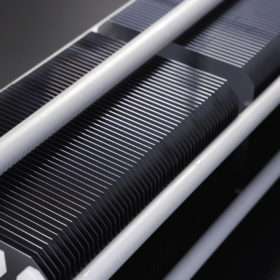
Perovskites and microgrooves can revolutionize solar
Ambitious targets for solar energy generation present challenges to an industry keen to explore new avenues for solar production. Neil Spann, chief executive of UK thin film solar manufacturer Power Roll, describes a commercial solution to the problems of over reliance on silicon solar modules.
Euro solar industry on course to support more than 500,000 jobs this year
Poland was the EU’s biggest solar jobs market last year, thanks to a national rooftop incentive program, but Germany’s push to repatriate solar manufacturing will help the bloc’s PV powerhouse back to the number one slot in three years’ time, according to SolarPower Europe.
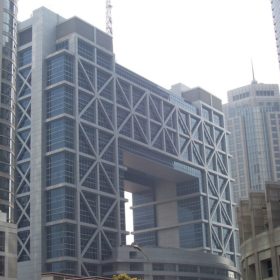
Chinese PV Industry Brief: Solar manufacturers report strong financial performances
JA Solar, TCL Zhonghuan, GCL Tech, and Ganfeng Lithium all announced increasing profits and revenue. Meanwhile, JinkoSolar expands its hydrogen business and Xinte Energy secures another big polysilicon supply deal.

Lack of European solar manufacturing could cripple RePower EU bid
Wood Mackenzie says Europe would need to dramatically raise its PV production capability to ensure the 420 GW-plus of new solar it wants this decade does not arrive in the form of Asian panels.
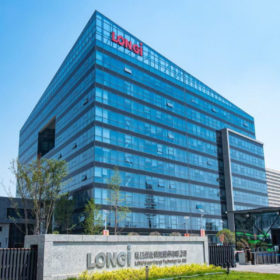
Chinese PV Industry Brief: Longi, Zhonghuan raise wafer prices
A Chinese industry group has reported rising polysilicon prices and supply chain problems ahead, but GCL Technology said this week that strong polysilicon and wafer prices were the reason its business performed strongly in 2021.
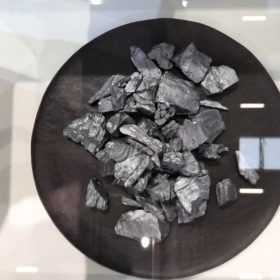
Chinese PV Industry Brief: Polysilicon prices keep rising
The cost of solar panel raw material polysilicon topped $40/kg this week, according to the China Nonferrous Metals Association, continuing a three-month upward trend.

The weekend read: Plans for a fully fledged European PV supply chain
While Europe was previously a leader in the manufacturing of solar cells and modules, the plans falling into place this year already represent a scale never before seen on the continent. And they’ll need that scale if Europe is to meet expected demand for new solar over the coming decades, without relying heavily on imported products and components. Many of the technologies at the center of these plans are brand new as well; pv magazine looks at a few of the innovators planning to scale up alongside more mainstream players, and how these fit into plans for a fully fledged European PV supply chain.
