Deployment trumps manufacturing in EU priorities
A lack of clear policy support, raw material dependency, and higher production costs are inhibiting the localization of European solar manufacturing, despite strong demand.

Wafer formats continue to evolve
Differences in wafer and module specifications, which have bedevilled solar developers in recent years, could now be narrowing.

Weekend Read: Race to the top
A flurry of clean energy announcements in the European Union this year bodes well for the expansion of renewables but there will be a race against time to get key legislation adopted before next summer’s European elections.
Solar dawn
Frank Haugwitz arrived in China in June 2002 as technical adviser to the solar-focused Sino-German Renewable Energies in Rural Areas Program. He has directly observed the nation’s rise to solar superpower status.

Weekend read: High time for solar
Cannabis prohibition drove a culture of clandestine production in the past and solar helped growers to cultivate it at remote, off-grid sites. Now, as a global commercial cannabis market emerges, solar has an even bigger role to play.
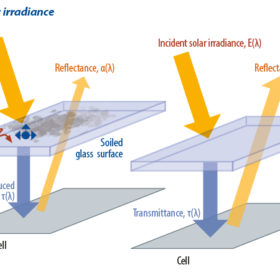
Rethinking soiling
The two dominant methods used in the industry to estimate soiling levels on solar projects go some way in mitigating losses, but there is plenty of scope for more accurate observation.
A true beginning – how the IRA persuaded us to invest in the US
The Inflation Reduction Act (IRA) has opened a new door for US solar manufacturers, as one of the executives behind a US-Jordanian project to bring PV production to the US explains.
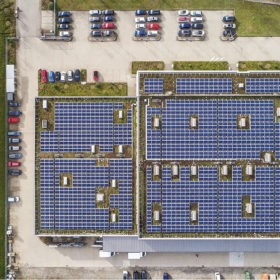
Weekend read: Is EU doing enough?
The European Union has set ambitious targets for solar PV expansion but is Brussels designing the right policies to support growth? Andreas Walstad investigates.
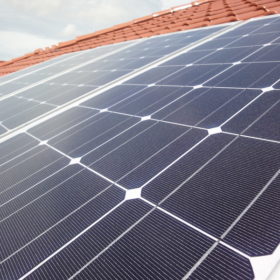
Solar module prices: A penny saved… is a panel spurned
PV module prices have finally stabilized and a slight downward trend has even started to set in. Whether this will continue depends mainly on how demand shapes up over the next few months. The softening of prices reflects a gradual build-up of inventories which need to be drawn down again this year, if possible – even if it means slashing prices. But for other PV-system components, the situation is quite different, writes Martin Schachinger of solar wholesaler pvXchange.
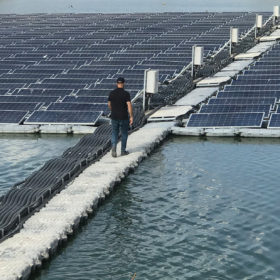
Weekend read: Back to the future: Israel’s faith in FITs
Israel’s scarce land resources and lack of interconnections to neighboring countries have driven the rise of rooftop solar. Now a number of recent policy changes, mainly due to electricity reforms, are set to reinforce the decentralization trend, reports Ilias Tsagas.
