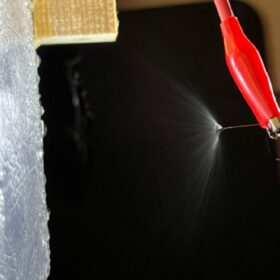
Reducing solar module temperature via electrospray cooling
Scientists in Turkey have sought to use electrospray cooling to reduce the operating temperature of photovoltaic for the first time. They said their experiments offer promising results for the potential application of this technique in real PV systems.

Rectangular wing vortex generators for solar module cooling
University of New South Wales researchers have created vortex generators that can reportedly reduce the operating solar module temperature by up to 2.5 C. They built two different prototypes, based on aluminum and a conductive 3D printable polymer, and tested them under several scenarios in an experimental setting deployed in Sydney.
Solar module cooling tech based on nanofluid jets
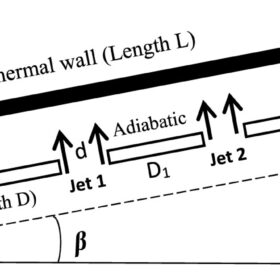
The system consists of a double jet of nanofluid in a 2D channel placed below a heating plate that adheres to the photovoltaic panel. It uses water mixed with copper nanoparticles as a nanofluid.
Cooling solar panels with bio-inspired coconut fiber
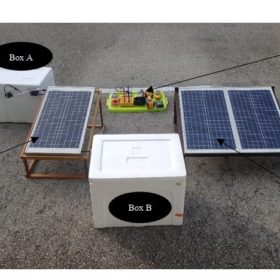
Malaysian scientists have tested bio-inspired coconut fiber to cool down solar modules. The cooling system features a moist coconut pith encapsulated with a polyurethane sheet. It is placed on the back of a PV module’s surface and acts as a heat sink.
Passive solar module cooling tech based on paraffin wax
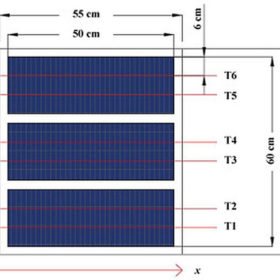
Egyptian researchers have used paraffin wax as a phase-change material (PCM) to reduce the operating temperatures of PV modules. They have found that the material improves power yield by more than 15%, compared to a reference module without cooling.

Cooling down photovoltaic panels with concrete
Scientists in Italy have proposed the use of radiative coolers made of cementitious materials to reduce the operating temperature of solar panels. The novel system configuration consists of a stack made by a reflector, a cement-based radiative cooler, and a bifacial solar cell.
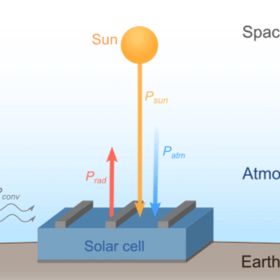
Radiative cooling for PV modules – challenges and prospects
A group of international scientists has investigated the potential use of radiative cooling in PV systems, in a newly published review focusing on challenges and opportunities for the passive cooling technology.
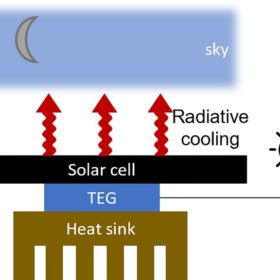
Radiative cooling-based solar cell with 50 mW/m2 of generation at night
Stanford University scientists have developed a solar cell with 24 hours of power generation via an embedded thermoelectric generator, which extracts power from the radiative cooler at night. Extra daytime power from excess heating comes from the cell itself.
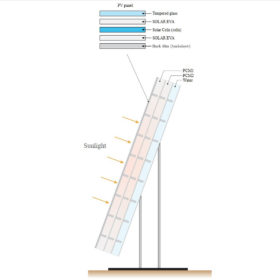
Two-layer phase change materials for solar module cooling
Researchers in Iran have tested four different two-layer PCMs across several cooling system configurations and have found that the payback time of the proposed cooling tech is still far from reaching commercial viability. The system, however, was able to improve PV power generation by more than 3% and produce hot water with a temperature of up to 48 Celsius degrees from the solar module’s excess heat.
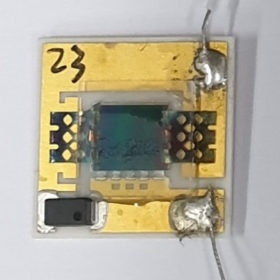
Multi-junction solar cell integrating radiative cooler
The triple-junction solar cell is based on indium gallium phosphide (InGaP), gallium arsenide (GaAs), and Germanium (Ge) and is made with a micro-grating made of glass, consisting of a two-dimensional x-framework structure fixed onto the surface of the solar cell. Its operating temperature was found to be 6 degrees Celsius lower than that of a reference cell without the cooling technique.
