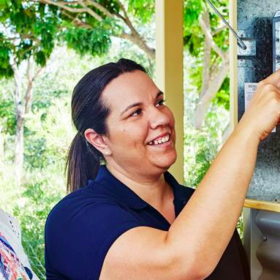
Western Australian utilities roll out advanced meters
A total of 238,000 advanced meters will be installed by utility Western Power on the state of Western Australia’s South West Interconnected System over the next three years. The move will unlock the benefits of a technology that gives consumers more control over their energy use. In another rollout, Horizon Power has made paying for power easier for 11 Aboriginal communities across the state.

Australian renewables investment to slump after 2020 on policy uncertainty — report
In a recent briefing on Australia’s renewables investment boom, BIS Oxford Economics estimates that solar and wind will attract AUD $20 billion ($14.2 billion) of private investment in fiscal 2018 and fiscal 2019, spread across more than 70 projects. But the consultants warn that investment will slow beyond 2020, pointing to the upcoming Australian federal election as critically important for the future of the country’s renewables pipeline.

Ausgrid, Reposit Power launch VPP trial in Australia
Solar households that choose to participate in the trial in New South Wales will receive direct cash payments of up to AUD $135 ($95) per year, depending on the size of their battery systems.
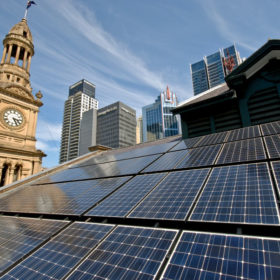
City of Sydney sets 100% renewables target
With solar panels already installed on dozens of its buildings, the city of Sydney has upped the ante by vowing to source 100% of its electricity needs from solar PV and wind. The commitment was endorsed by city council last week, with a new 100% renewable electricity contract to be negotiated in the coming months.
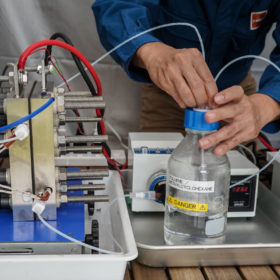
Queensland sends first green hydrogen shipment to Japan
Green hydrogen has been exported from Australia to Japan, under a trial executed by researchers from JXTG, Japan’s largest petroleum conglomerate, using Queensland University of Technology’s cutting-edge Redlands Research Facility. The Queensland government has also announced AUD 250,000 ($177,000) in funding toward the establishment of a renewable hydrogen production pilot plant.
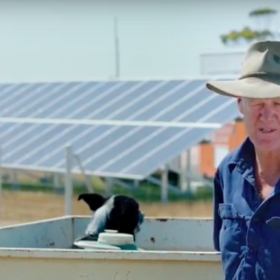
Australian government unveils $35.7m pot to power remote communities
Australia’s Coalition government has announced funding to support up to 50 off-grid and fringe-of-grid feasibility studies that will investigate whether building a microgrid is cost-effective and whether existing off-grid capabilities can be upgraded with more up-to-date technology.
Hydrogen home storage, refueling hub get financial shot into the arm
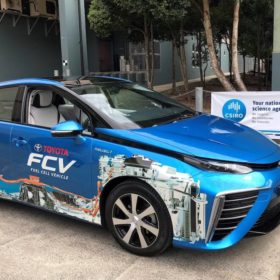
Toyota Australia will transform its former manufacturing site in West Melbourne into a renewable energy hub to produce green hydrogen with the help of funding from the Australian Renewable Energy Agency (ARENA). In other hydrogen-related news, researchers at UNSW Sydney with partners H2Store have received a $3.5 million investment from Providence Asset Group to develop a hydrogen residential storage.
Australia’s first solar farm in Antarctica opens at Casey research station
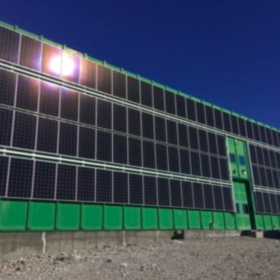
A 30 kW vertical array has been powered up at Australia’s Casey research station in Antarctica. The project is one the largest solar installations on the ice-covered continent.
Solar becomes a must-have for utilities
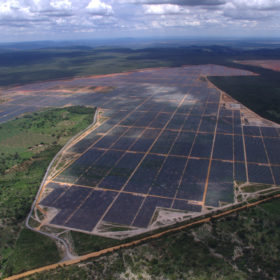
Motivated by steeply declining cost curves, leading utilities are building solar portfolios around the globe. The latest statistics show the cumulative capacity of the biggest utility-scale solar plant owners topped 18 GW at the end of last year, with power companies in China, the U.S. and India to the fore.
China’s largest renewables hybrid project adds 100 MWh battery
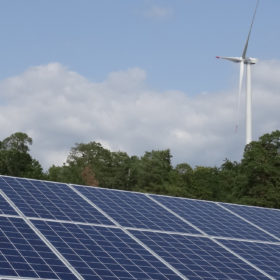
Chinese li-ion battery manufacturer CATL has delivered a 100 MWh battery storage system to the country’s largest mixed renewables plant, which features 400 MW of wind energy, 200 MW of PV and 50 MW of concentrating solar.
