
Emergency power supply vs. full home backup: Your questions answered
Solar battery systems should maintain power supply when the grid goes down. Right? Well, it’s not always that simple. A recent pv magazine Australia webinar, hosted in partnership with SMA, was looking into different homeowner needs and ways to install an emergency power or ‘full home backup’ system. Here are the answers to some of the webinar attendee’s questions.
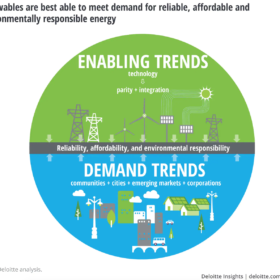
Deloitte: The case for renewables has never been stronger
Renewable energy sources, notably solar and wind, are reaching price and performance parity on and off the grid, shows a report from accountancy firm Deloitte, highlighting seven trends that are driving this transformation.
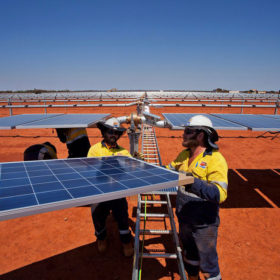
Mining sector to rely increasingly on renewables, report finds
As mining companies become more aware of the rapidly falling costs of renewables, wind and solar are set become a growing trend in powering mining operations worldwide over the coming years, shows a new report from Fitch Solutions. On the back of carbon pricing schemes, countries and companies operating in the Americas are best positioned to lead the way in the adoption of renewables in mining.
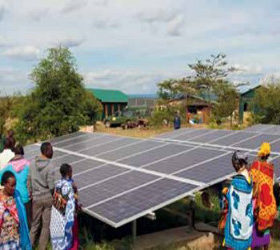
Solar to account for 9% of new energy capacity in Africa in next 2 years
An Africa power sector scorecard shows that solar will make inroads into the African energy sector over the next two years, accounting for 9% of new capacity additions, as renewables uptake across the continent continues to grow.

Milestone: Over one trillion watts of wind and solar installed
A BloombergNEF analysis states that global wind and solar PV installations have reached a trillion watts, for the first time. While this milestone took the industry 40 years, the second trillion watts are expected to be installed in five years, in 2023, with the help of storage. The investment costs required to install one trillion watts are also expected to half.

India imposes 25% safeguard duty on solar imports
The Indian government has imposed a safeguard duty of 25% on solar imports from China and Malaysia for two years. The Ministry of Finance (Department of Revenue) levied the duty based on the final recommendations proposed by the Directorate General of Trade Remedies (DGTR). While most industry players are dismayed, believing project costs could “immediately” go up by 15%, others are more optimistic.

Monitoring consolidation: AlsoEnergy acquires skytron, Draker
The renewable energy software company will keep the skytron brand and platform, as well as providing services for Draker’s customers.

F&S Solar commissions Caribbean’s largest PV plant
With a capacity of 58 MW, the Caribbean’s largest PV plant has been commissioned in the Dominican Republic. The site was developed, planned and built by German EPC, F&S Solar. It now aims to ramp the project up to 119 MW by next year.
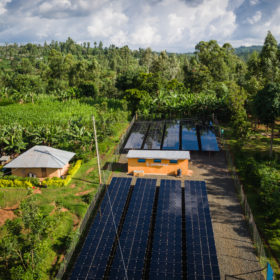
Cryptocurrency to accelerate solar minigrid rollout in Africa
South Africa-based Sun Exchange and U.S. minigrid developer, Powerhive have come together to step up minigrid deployment in rural Kenya by leveraging the crypto economy. The partnership is expected to catalyze up to $23 million of capital and fund around 150 new projects in the country’s power hungry areas.
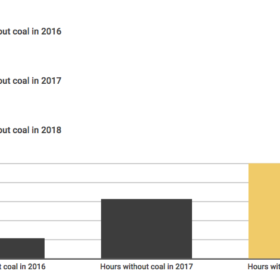
UK surpasses 1,000 hours without coal this year alone, solar shines
Reflecting its rapidly changing energy landscape, the U.K. has surpassed 1,000 hours without using coal this year, up from 624 hours in the whole of 2017, and just 210 hours in 2016. Solar PV is also currently a leading energy source in the country.
