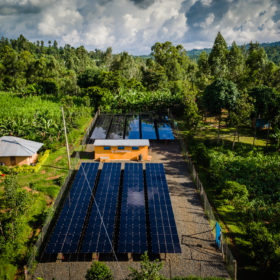
World Bank to devote $1 billion to storage in developing countries
The Accelerating Battery Storage for Development program is intended to leverage US$4 billion in new investments, and to support projects for utility-scale solar parks with battery storage, off-grid systems, including mini-grids, and stand-alone batteries.
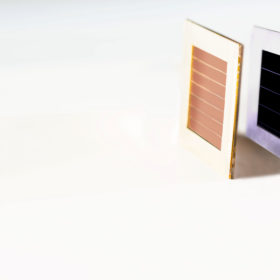
Imec claims 24.6% efficiency for tandem CIGS cell based on perovskite
The Belgian research institute developed its cell in partnership with EnergyVille, Solliance and German research center, ZSW.
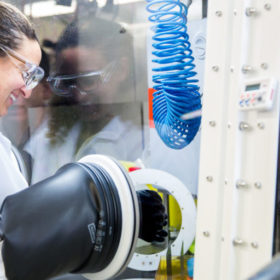
Oxford PV, Oxford University target 37% efficient perovskite solar cells
The solar company has launched a five-year research project with the British scientists, which has been funded with £2.5 million from the U.K. Government. The goal is to develop a thin film multi-junction perovskite solar cell with a 37% efficiency and long-term stability.
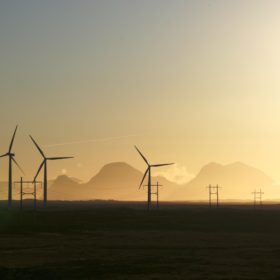
Norway’s Statkraft aims for 2 GW of solar by 2025
Norway’s state-owned hydropower and wind company plans to invest around NOK 10 billion (US$1.23 billion) in wind and solar between 2019 and 2025.
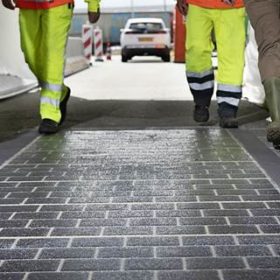
Netherlands to test viability of solar roads
Although solar energy roads are still considered economically unviable, the Dutch water management agency, Rijkswaterstaat announced it will investigate their potential as an alternative to the lack of surfaces for PV deployment in the Netherlands.

Eni joins race for Africa’s clean energy market
Via an agreement with the United Nations Development Programme (UNDP), the Italian oil company aims to increase its presence in Africa’s renewable energy markets. It already invests more than half of its budget in the region.
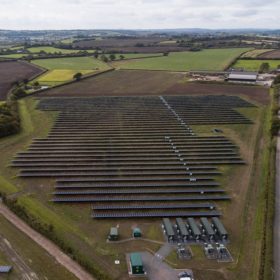
UK opposition party pledges emission-free energy system
Labour this morning unveiled plans for an energy system free of greenhouse gas emissions by 2050, but it is unclear what proportion of the party’s “clean energy” mix would be met by nuclear.
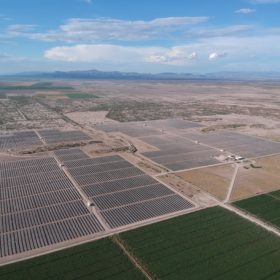
GRS plugs-in 35.4 MW solar facility in northern Mexico
The Energía Limpia de La Laguna project, owned by Mexican fund Balam, is located in the state of Durango. The plant incorporates 108,314 polycrystalline modules on 98 single-axis trackers.
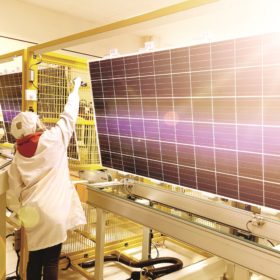
Canadian Solar unveils new 400+ Watt bifacial poly PERC black silicon module
The Chinese-Canadian module manufacturer says its P4-based BiHiKu panel, for large commercial and utility-scale solar projects, is able to provide up to 30 per cent additional output from the rear side.
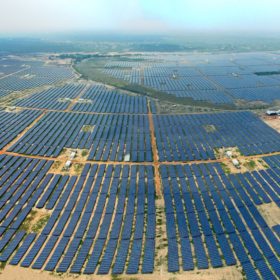
Indian state of Tamil Nadu targets 400% jump in solar capacity by 2022
The state government is proposing a range of incentives and mandates to drive PV and solar thermal installations to almost 9 GW within four years. Under the proposed policy, 10% of the public fleet would be replaced by electric vehicles.
