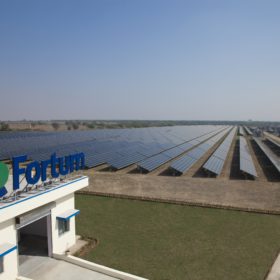
Fortum connects 100 MW PV plant in India
A 100 MW solar park in Tumkur District, Karnataka has been connected to the regional grid, reports project owner Fortum. The project is Fortum’s fourth project to be connected in India, and its largest so far, more than doubling its total capacity to 185 MW.

Hungarian government to encourage uptake of agricultural solar
Minister heading the Prime Minister’s Office, János Lázár, outlines plan to ease regulations regarding solar installations up to 500 kW installed on small one hectare sites, confirms government will offtake all solar energy produced.
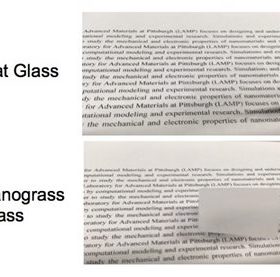
Researchers develop ‘grass like’ light-scattering nano structure for solar glass
A team of scientists from the University of Pittsburgh have created a glass surface with an etched nano structure that allows for up to 95% light transmittance, and can also scatter the light entering the glass, so that more light reaches a solar cell beneath.
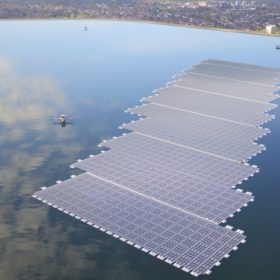
BP returns to PV with $200 million investment in Lightsource
British Petroleum makes first move in PV since 2012 with acquisition of 43% stake in British renewables firm Lightsource.
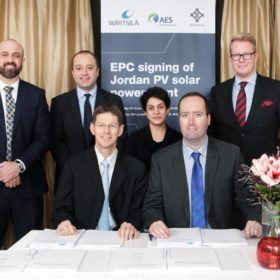
Wärtsilä to act as EPC for 52 MW PV plant in Jordan
Wärtsilä announced it has signed an agreement to supply EPC services to a 52 MW solar PV power plant in Jordan, owned by a joint venture between AES Jordan and Japanese conglomerate Mitsui & Co.
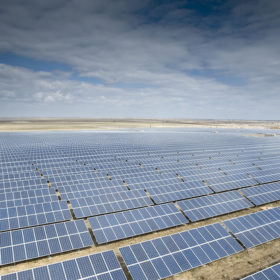
IHS Markit: Global solar installations to pass 100 GW in 2018
Market analyst IHS Markit has issued its first forecast for 2018 installations. It expects the global market to surpass the 100 GW mark for the first time ever, hitting 108 GW.
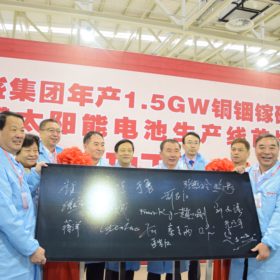
Avancis/CNBM 300 MW CIGS facility comes online
China National Building Materials (CNBM), the parent company of German module manufacturer Avancis, announced that the first modules have rolled out of its 300 MW CIGS factory in Anhui Province, China.
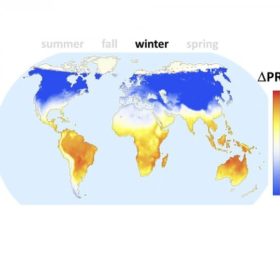
MIT researchers observe effects of climate on solar cell performance
Scientists from the Massachusetts Institute of Technology (MIT) have developed a tool to predict solar cell performance at any location worldwide. The tool utilizes a combination of global weather data gathered by satellite and cell performance data from two different locations.
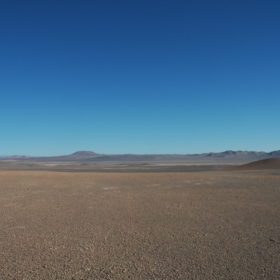
Chile launches tender to assign up to 2,456 hectares of public land for solar, RE
Interested developers will have time until February 7, 2018, to submit their projects proposals. All of the tendered areas are in Chile’s northern region of Atacama.
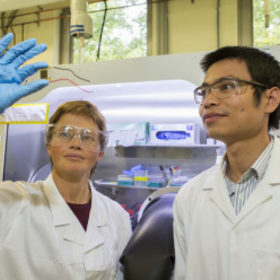
ARENA awards AU$29.2 million to 20 solar R&D projects
The Australian Renewable Energy Agency (ARENA) has announced that it will award multiple Australian universities and research institutes with a total of $29.2 million to support early-stage research into new solar innovations.
