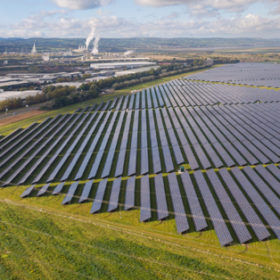
Foresight Solar Fund to issue new share placement
UK based PV project investor the Foresight Solar Fund has announced plans more than GBP 75 million ($99 million) in investments through the placement of new shares.

New transparent solar glass developed by scientists at Michigan State University
The new solar see through hardware was developed by engineers at Michigan State University, and is seen as a potential energy source which could collect to as much solar power as current traditional rooftop modules.
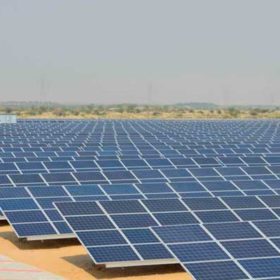
NLCIL to install 500 MW in India
NLC India (NLCIL) plans to install 500 MW of solar in the Indian state of Tamil Nadu.

Microlink Devices signs deal with NREL to produce lightweight HJT cells
U.S. based semiconductor manufacturer Microlink Devices has signed an exclusive deal with the U.S. National Renewable Energy Laboratory (NREL) to commercialize a type of lightweight heterojunction solar cell architecture, which could be utilized in powering satellites and aircraft.

Korean scientists increase stability for perovskite cell
A joint group of researchers from South Korea’s Ulsan National Institute of Science and Technology (UNIST) and the Korean Institute of Energy Research has developed a method for increasing the stability of perovskite solar cells using low cost fluorine.
India’s EESL to install 300 MW of domestically produced PV modules
Energy Efficiency Services Ltd. (EESL) has procured PV modules from several Indian manufacturers at a lower rate than it can from Chinese suppliers, setting a new benchmark for panel prices in the country.
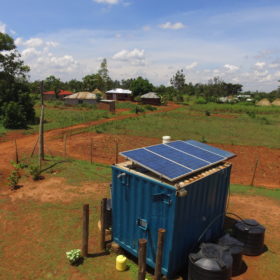
Off-grid solar has saved $5bn in energy spending since 2010, finds World Bank Group, GOGLA report
Despite 7% lower product sales, the latest global Off-grid solar market report from the World Bank Group reveals that market is thriving. However, industry needs to move quicker if it is to achieve global 2030 universal energy access goal.

European Parliament proposes nationally binding renewables targets
The European Union should aim for 35% of renewables in its energy consumption by 2030, with nationally binding targets introduced to support EU goal, European Parliament says.
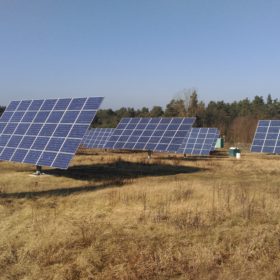
Indian large-scale solar growth could slow to 5-6 GW next year, finds Bridge to India
The Indian solar market is presently undergoing many challenges, including the GST effects, high module process and decelerating power demand. India’s utility sector is expected to stabilize at a much lower 5-6 GW growth rate per annum for the next two-three years, says Bridge to India.

A*Star researchers develop technique for cheaper solar cell production
A*Star researchers, in a bid to find an alternative to silicon-based solar cells, are investigating a new material that is more cost-effective and easier to produce that could also lead to more efficient solar cells.
