
South Korea introduces carbon footprint rules for solar modules
The regulations will come into force on June 15 and will entail panel carbon footprints being calculated according to life cycle assessments of their environmental impacts according to the KS I ISO 14040 Korean standard.
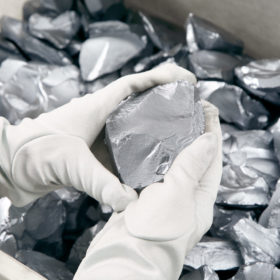
Is this the end for Korean polysilicon?
The nation’s only two poly manufacturers could both shutter factories in their homeland due to downward price pressure. OCI says it will maintain only 6,500 MT of its 52,000 MT annual production capacity in an operational state and Hanwha Chemical says it is ‘examining the situation’. Poly analyst Johannes Bernreuter has discussed the reasons for the crisis with pv magazine.

South Korean government reassures domestic PV industry
The country’s Ministry of Trade, Industry and Energy (MOTIE) has provided new market share figures for the domestic PV sector that contradict recent media claims that Chinese manufacturers have been aggressively ramping up their local presence at the expense of Korean module makers. The government has also confirmed plans to prioritize PV projects made with low-carbon, high-efficiency modules.
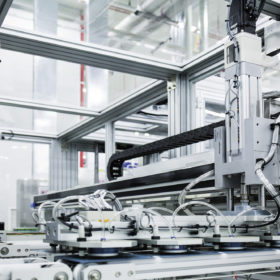
South Korea’s roadmap to drive down solar costs
The government has unveiled a plan to help the PV industry reduce the cost of solar panels from around $0.23/W to $0.10/W by 2030. The plan also aims to reach module efficiencies of around 24% – up to 35% for multi-junction cells – by the end of the next decade.

Seoul launches 1 GW rooftop solar plan
The South Korean capital has unveiled a plan to deploy rooftop PV on a million homes and all public buildings. The new initiative is designed to bring the city’s cumulative installed solar capacity to around 1 GW by the end of 2022.

South Korea’s 2.1 GW floating solar project overcomes first hurdle
The Korean Ministry of Defense has said the huge project will not interfere with the flight operations of U.S. forces stationed in a base near Saemangeum, an estuarine tidal flat on the coast of the Yellow Sea where the plant would be deployed.

Korea’s South Jeolla province is becoming a solar hub
According to Korean government, around 18,000 unlicensed projects up to 1 MW in size are being developed in the area. Restrictions on such projects, which are driving this year’s strong solar growth in the country, are being introduced to reduce their environmental impact.
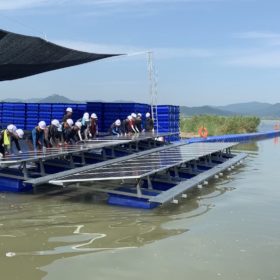
Construction begins on 25 MW floating array in Korea
South Korea’s largest PV project is scheduled for commissioning by next year. The project developer – Korean floating PV specialist Scotra – is also planning a 2.5 MW offshore solar project with the support of the government.
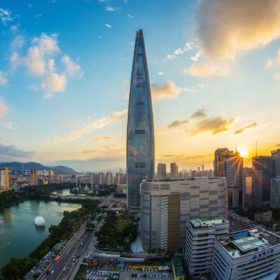
South Korea has added 1.64 GW of solar so far this year
This new development has brought the country’s cumulative installed solar capacity to more than 9.5 GW. Around 91.5% of the newly installed capacity is represented by PV systems below 1 MW in size.

Hyundai enters the solar car race with new Sonata
Hyundai has unveiled its new hybrid, the Hyundai Sonata, complete with integrated solar cells. The Sonata’s unveiling joins Toyota and Lightyear in integrating solar PV with EVs.
