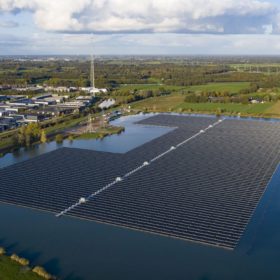
Implementing standards in floating PV
Norwegian consultancy DNV GL has gathered together big energy players, floating PV specialists and project developers into a consortium that will aim to define recommended practices for the floating solar business. Among the 14 participants are some big players in the field including EDP, EDF and Equinor, as well as French floating technology provider Ciel & Terre.
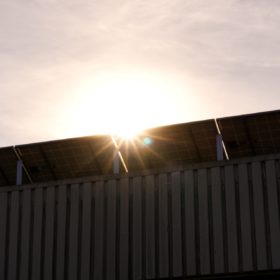
Cooling PV modules with passive technique based on finned heat sink
A Pakistani research team has assessed the performance of a passive heat sink cooling technique in two different configurations: one using rectangular fins and one based on circular fins. The rectangular configuration was the best in terms of heat rejection. Modules mounted with this solution had a 6 C lower temperature than modules without cooling systems.
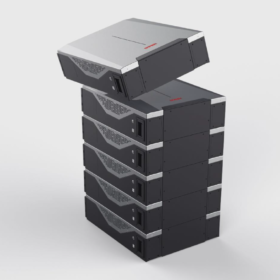
Lithium battery for low- and high-voltage storage
Dubai-based Weco has unveiled a new lithium battery solution that can operate in parallel as a low-voltage storage system or in series as a high-voltage battery with no hardware changes. The batteries can be mounted on walls or set up in a stack configuration.

Agrivoltaics works better with leafy greens, root crops
U.S. researchers have created a new model to assess the overlap between solar potential and underlying land use. The areas with the largest potential are the western United States, southern Africa, and the Middle East. The researchers concluded that croplands, grasslands, and wetlands are the top three land classes for PV projects linked to agricultural activities, while barren terrain, traditionally prioritized for solar PV system installation, ranked fifth.
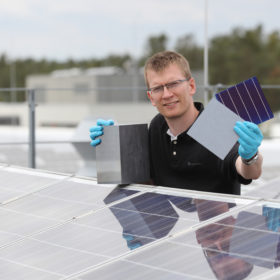
German scientists study causes of LeTID
Researchers at Germany’s Fraunhofer Institute for Integrated Systems and Device Technology IISB are trying to understand the causes of light and elevated temperature induced degradation (LeTID) in PERC solar cells. Initial investigations should provide a comprehensive understanding of the process and material dependency of LeTID and related degradation effects in monocrystalline and multicrystalline PERC solar cells.
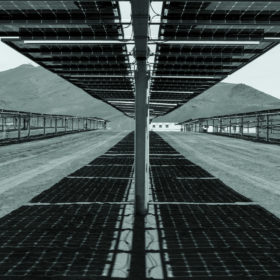
Single-axis bifacial PV offers lowest LCOE in 93.1% of world’s land area
Researchers from the Solar Energy Research Institute of Singapore have concluded that utility-scale PV projects relying on bifacial panels and single-axis trackers deliver the lowest levelized cost of energy in most of the world. They found that the combination of bifacial products with dual-axis trackers is still too expensive, despite the higher yield. The second-lowest LCOE is offered by monofacial single-axis tracker plants.
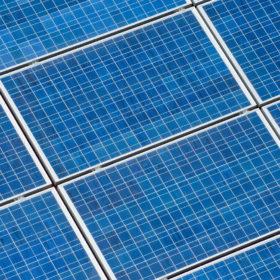
Game theory for solar module manufacturing
Researchers in Iran have applied the Stackelberg leadership model to determine whether the creation of a closed-loop solar module supply chain – including panel refurbishing – is feasible. According to their findings, a similar supply chain may only be set up with public subsidies, which would ensure that costs for R&D, module production, and recycling are distributed between the government and all the chain’s players.
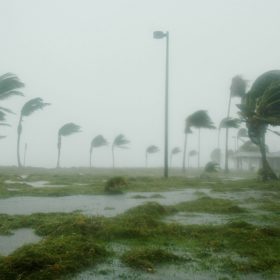
PV systems could provide up to 60% of output during hurricanes
Researchers in the U.S. have demonstrated, using simulations, PV system generation can range from 18-60% of clear-sky potential during hurricanes – provided the arrays do not suffer damage. According to them, solar installations could continue to provide back-up power when grids are down during hurricanes, especially if coupled with energy storage.
An 18.12%-efficient perovskite solar cell with reduced hysteresis
Researchers in Japan have modified the tin(IV) oxide layer of a perovskite device with a fullerene-derivative-based self-assembled monolayer to produce a cell they claim offers stability and a reduction in the hysteresis effect which makes predicting power output so tricky.

Assessing the soiling mitigation properties of anti-reflective coatings
Researchers in China have sought to understand how soiling exacerbated by anti-reflective coatings might inhibit solar panel output. In terms of effectiveness against soiling, the scientists found hollow-silica-nanoparticle coatings did better than solid silica alternatives.
