Agrivoltaics works better with leafy greens, root crops

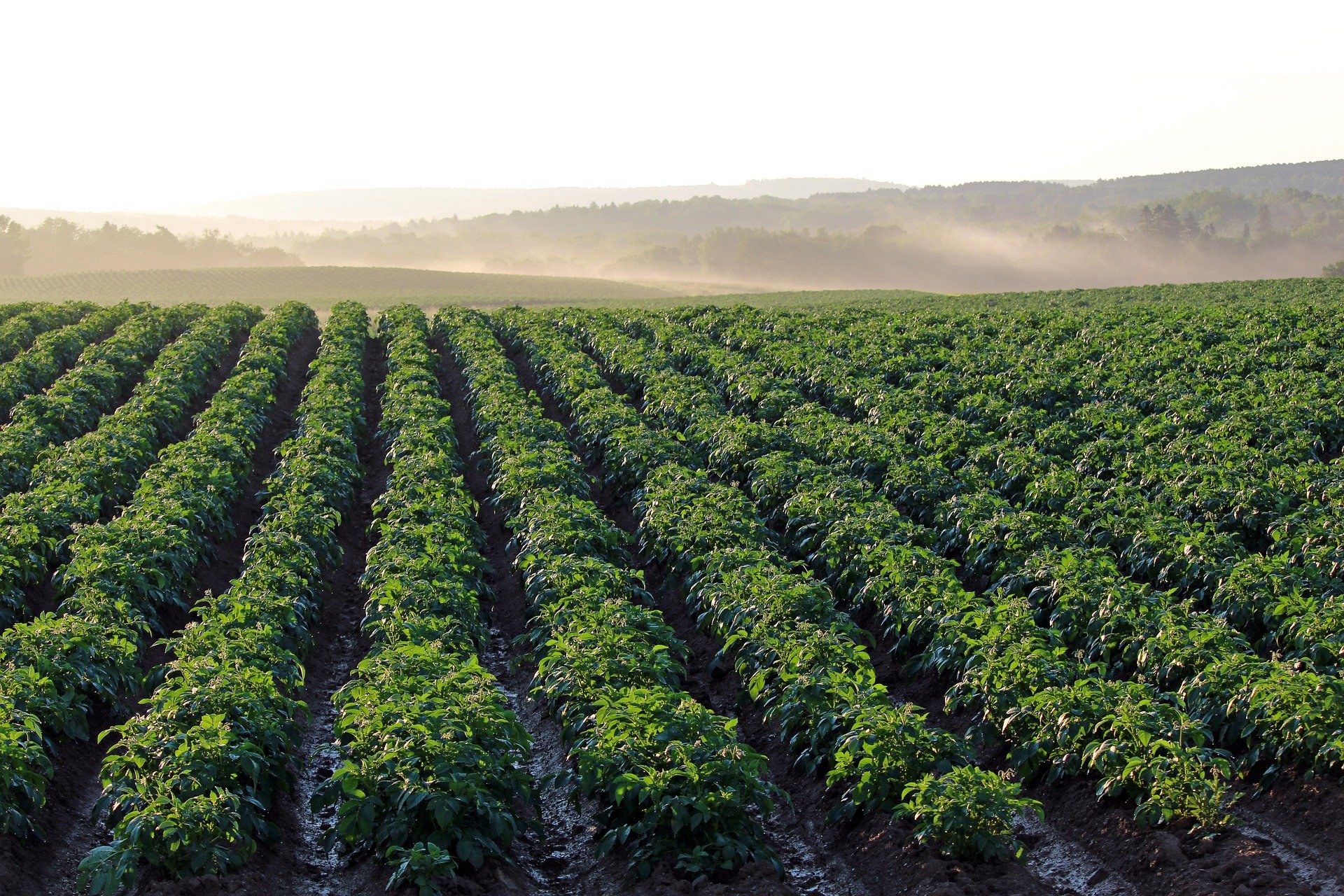
PV projects linked to agriculture have thus far shown the highest potential when combined with leafy greens such as lettuce and spinach, as well as with root crops such as potatoes, radishes, beets, and carrots. This is one of the conclusions of a recent research developed on agrivoltaics by U.S. scientist Chad Higgins from the Department of Biological and Ecological Engineering at Oregon State University.
“Pasture grasses and barley has performed very well for us here in Oregon,” Higgins told pv magazine. “Many other vegetables have also shown promising such as tomatoes and peppers, but these are more climate dependent and need hotter conditions.”
He believes that a combination such as strawberries, blueberries, raspberries and lingonberries could also provide for strong power and crop yields. “But we haven’t checked this yet,” Higgins said. “On the ‘likely not a good idea’ side are tall crops that may interfere more with the panels like corn or orchard crops.”
According to the researcher, agrivoltaic projects can increase the sustainability of food, water, energy, and climate at the same time. “It is scalable, meaning that we could deploy at large levels and see massive positive impacts,” Higgings explained, adding that agrivoltaics has a positive impact on all 17 Sustainable Development Goals (SDGs) of the United Nations. “The technology exists and is profitable in the right circumstances and has many societal ancillary benefits … It is truly a win-win-win.”
Efficiency and microclimates
Higgins and other researchers at Oregon State University published Solar PV Power Potential is Greatest Over Croplands last year in Scientific Reports. They proposed a new model for solar panel efficiency that incorporates the influence of the panel’s microclimate.
In this model, which is applied to assess the assess the overlap between solar potential and underlying land use, wind speed and air temperature can influence the panel’s heating or cooling, while water vapor alters the long wave radiation budget, and solar radiation is the primary energy source.
The model was tested on a 1.5 MW PV system at Oregon State University. “Modeled PV efficiency as a function of air temperature, wind speed and relative humidity are consistent with measured values in the Corvallis solar array,” the scientists said.
According to their findings, the solar PV efficiency diminishes as a function of air temperature at a rate of approximately 0.5% per 10 C. “Light winds lead to increased energy efficiency relative to quiescent conditions with a 0.5% increase in efficiency from 0.5 m/s to 1.5 m/s,” they explained.
Best locations
The group applied the model to develop global maps of agrivoltaic potential using data sets for the solar radiation, air temperature, wind speed and humidity.
They found that the parts of the world with the biggest potential are the western United States, southern Africa, and the Middle East. They also concluded that croplands, grasslands, and wetlands are the top three land classes for PV projects linked to agricultural activities. Barren terrain, traditionally prioritized for solar PV system installation, ranked fifth.
“Researchers have successfully grown aloe vera, tomatoes, biogas maize, pasture grass, and lettuce in agrivoltaic experiments,” the researchers noted. “Some varieties of lettuce produce greater yields in shade than under full sunlight; other varieties produce essentially the same yield under an open sky and under PV panels.”
According to a recent study from the University of Arizona, the shade from solar panels growing crops can help produce to two or three times more fruit and vegetables than conventional agriculture setups. The group presented the results of a multi-year research project investigating how chiltepin peppers, jalapenos, and cherry tomato plants grew in the shade of PV panels in a dry location.
This content is protected by copyright and may not be reused. If you want to cooperate with us and would like to reuse some of our content, please contact: [email protected].

Please login to comment

It’s good great initiative yield

[…] appropriate vegetation is dependent upon specific climatic, locational and soil characteristics, vegetation generally is shorter and thrives in partial sun-shade. Finally, where livestock is present, […]
[…] r.e. and its Dutch subsidiary, GroenLeven, are building five pilot agrivoltaic power projects in the Netherlands, where they are testing five different types of crops: […]

Many of the crops mentioned, are getting excellent results growing under hydroponics.
The key questions would be: which method is more efficient, regarding resources usage (energy, water, fertilizers), cost, land usage and yield? Agrivoltaics or hydroponics + solar? Is there any study about it?
Thanks!

Agrivoltaics is one of the very few Options… if not the ONLY Realistic one… to support a Global 100-120TW Energy System.
It should be the focus for ALL GOVERNMENTS AROUND THE GLOBE instead of “messing sround” with limited “niche/limited” Solutions or Options.
The World has barely 1TW of Solar Energy today…. so the time has come to focus and move full speed ahead….
The “Research and Expolration” Stage for a Zero Pollution World is over… if one is really serious about a Zero Pollution Solution to Mankinds Energy Needs…
There is still a lot of work left for EV’s (Battery, CAV’s…), Energy Storage and Grid Upgrade & Integration to focus on.
PV Panels are fast approaching the “theoretical” maximum of 20+/-% Efficiency… so focus here should be reduced Panel, Installation and System Integration/Regulatory Costs.
[…] Click here to view original web page at Agrivoltaics works better with leafy greens, root crops […]
[…] are many crops suitable for growing alongside a solar development. These include beets, potatoes, radishes, tomatoes, […]