French consortium develops bio-based PV modules

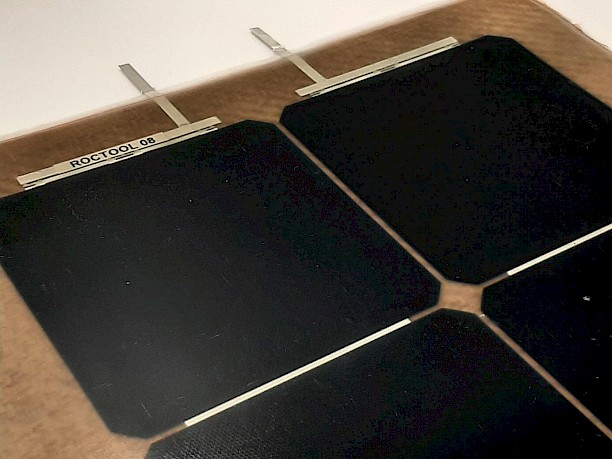
CEA-Liten, the new energy technologies and nanomaterials unit of the French Alternative Energies and Atomic Energy Commission, and French tech supplier Roctool have joined forces to build PV modules made of recycled, bio-based materials.
The consortium said it is currently testing the production of panels with a size of 300 mm x 300 mm via a technique based on Rotcool Light Induction Tooling (LIT) technology, which purportedly reduces production times by a factor of four. Roctool said LIT technology consists of a standalone solution to manufacture composites parts.
“It offers a full and accurate control over the parameters amongst which temperatures and pressures – including vacuum through the composite material,” the company said. “Its automation is delivered by a specific control unit, with the ability to connect to previous and next process cells.”
The tool is designed for production projects with difficult requirements involving temperature and pressure controls.
“Proposed as a turnkey solution, the LIT can be seamlessly integrated into current or future production lines,” said Roctool. “Its controls are fully compatible with potential specific automation around the process, and its software can export quality control data in order to optimize the production rate or the product’s performances through designed iterations. CEA noticed the relevance and performance possible thanks to these increasingly innovative and eco–responsible processes.”
CEA-Liten said in a separate press release that “several series of panels are still being tested to verify their performance and mechanical resistance, and aging tests of at least 1,000 hours are also being carried out.” It added that the first module prototypes will be unveiled between the end of this year and the beginning of 2022.
The partners did not reveal any additional technical details about the manufacturing process or the materials that will be used. The research project is part of the asyPOC initiative, which is 100% financed by the authorities in France’s Auvergne-Rhône–Alpes region.
This content is protected by copyright and may not be reused. If you want to cooperate with us and would like to reuse some of our content, please contact: [email protected].

Please login to comment
[…] 法国主要研究机构CEA-Liten、INES和IPVF将携手德国康斯坦茨国际太阳能研究中心(ISC Konstanz),共同为Carbon提供支持,助力其实现2030年达到30 GW产能的目标。 […]