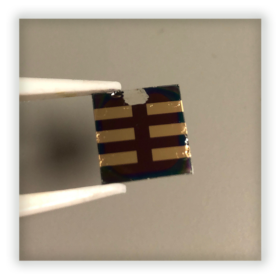
Paired with ‘wonder material,’ over 21% efficiency demonstrated in perovskite solar cells
The use of phosphorene nanoribbons boosted the cell, putting it on par with traditional silicon cell output levels.
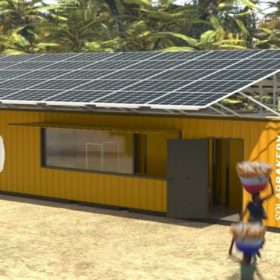
Solar bakery as a containerized solution
The 52 kW containerized solution is being developed by German start-up Solarbakery. The bakery’s production process was adapted in such a way that the majority of electricity consumption is already incurred during the day and is only baked briefly in the dark before dawn.
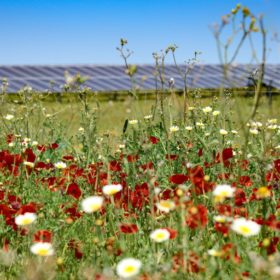
Baywa re wraps up major virtual PPA with Finnish packaging giant
The German clean power company and Huhtamaki have signed a 10-year deal that will ensure the construction of two solar farms in southern Spain with an aggregate generation capacity of around 135 MWp.
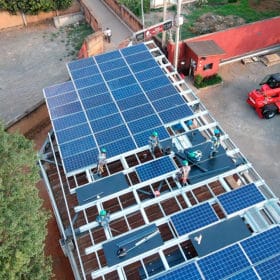
‘Africa’s leaders need to walk the walk on solar’
Attendees at an online event dedicated to rooftop solar in Central Africa called for customer incentives, tax exemptions for solar kit, feed-in tariffs, installation standards, affordable finance, grid connections and recycling policies across the region.
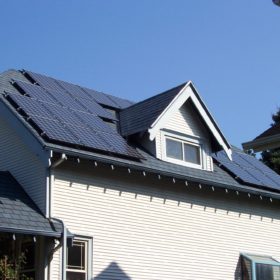
High energy prices mean big gains for smart-metered Belgian PV system owners
In the Belgian macro-region of Flanders, residential PV system owners that decided to install smart meters and abandon net metering are currently seeing their injection tariffs being paid at €0.11, up from just €0.03 in January. This gain adds to the high value of the kilowatt-hours they self-consume and it is helping them halve the payback time of their installations.
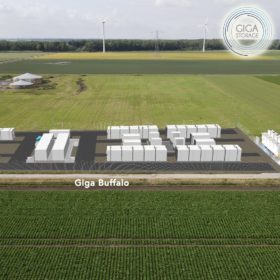
Wartsila to supply Netherlands’ largest battery
The 25MW/48MWh battery will be the country’s largest energy storage system to date. The project is touted as the first large-scale battery project based on lithium iron phosphate (LFP) chemistry in Europe.
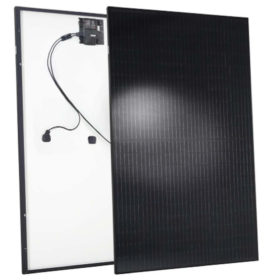
Hanwha Q Cells, Enphase launch 20.6%-efficient AC module in Europe
The AC module incorporates Enphase IQ 7+ microinverters and has now a higher wattage of 385 W.

Norwegian investor raises stake in company developing ‘perovskite-boosted’ solar cells
Swedish business Evolar is working on a bolt-on piece of production equipment which would upgrade the cell lines of conventional manufacturers with a perovskite lift in performance.
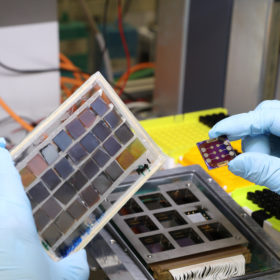
Perovskite solar cell retains 99% of initial efficiency after 1,450 hours
Developed by German researchers, the 20.9%-efficient device was built with an architecture avoiding the use of the ionic dopants or metal oxide nanoparticles that are commonly used to contact the cell, as these can be subject to secondary reactions at higher temperatures.
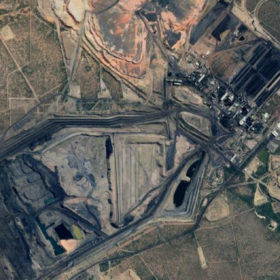
China and India to drive record world coal demand next year
Advances in solar power and other clean energy technologies have failed to keep up with demand for electricity as economies rebound from the Covid crisis and China and India’s fossil fuel appetite will ensure the world stays well short of what is needed for a net zero 2050 for at least the next three years.
