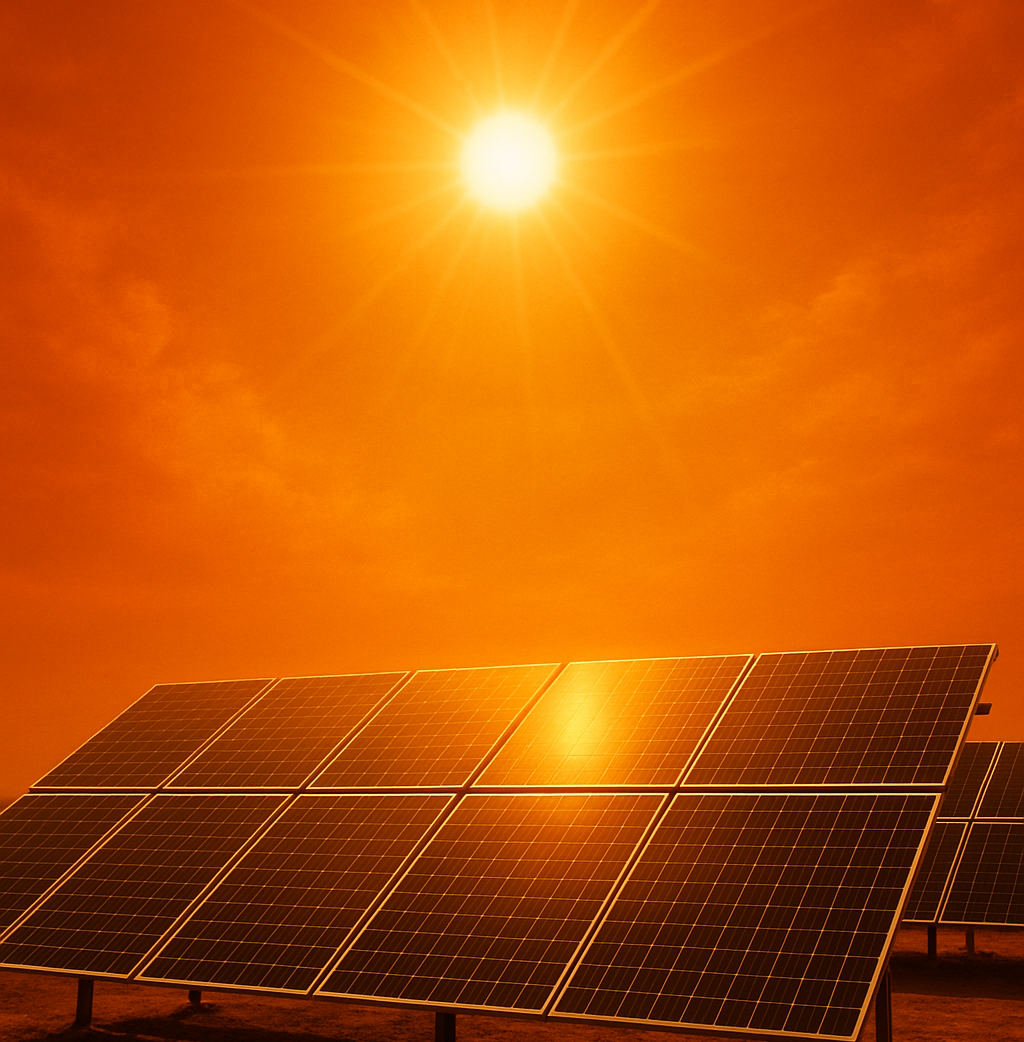





A group of scientists led by Portuguese research center Instituto de Telecomunicações and the University of Lisbon has utilized the so-called Arrhenius equation to assess the reliability of monocrystalline PV cells and modules.
The Arrhenius aging model is an empirical equation that describes the effect of temperature on the velocity of a chemical reaction. It is the basis of all predictive expressions used for calculating reaction-rate constants.
The Arrhenius model describes the collision between charge carriers – electrons and holes – for different temperatures,” the research's corresponding author, Ricardo A. Marques Lameirinhas, told pv magazine. “Electronic devices age due to carriers collisions, then this model is suitable to characterise the ageing processes of any electronic and optoelectronic device, as solar cells. This is done by accelerated ageing processes and considering temperature cycles in ovens at high temperatures. ”
The scientists tested several small-sized monocrystalline solar modules provided by Chinese providers Seed Studio and Osepp in different time intervals for 135 h at constant temperatures from 65 C to 95 C, with the accelerated ageing temperature being conducted by controlling only the temperature.
“This combination of time and temperature led us to have operation times around thousands of hours, for instance, 135 h at 95 C is equivalent to more than thousand hours at nominal operation at 48 C,” Lameirinhas stated “Thus, we verified that the power degradation follows a logarithmic decline trend with temperature, as expected by the Arrhenius ageing model.”
In the study “Experimental determination of Arrhenius degradation coefficients for monocrystalline photovoltaic solar cells,” published in Results in Optics, Lamerinhas and his research group explained they measured current and voltage through GW Instek GDM-8135 multimeters, both in DC Voltage mode.
This content is protected by copyright and may not be reused. If you want to cooperate with us and would like to reuse some of our content, please contact: editors@pv-magazine.com.


By submitting this form you agree to pv magazine using your data for the purposes of publishing your comment.
Your personal data will only be disclosed or otherwise transmitted to third parties for the purposes of spam filtering or if this is necessary for technical maintenance of the website. Any other transfer to third parties will not take place unless this is justified on the basis of applicable data protection regulations or if pv magazine is legally obliged to do so.
You may revoke this consent at any time with effect for the future, in which case your personal data will be deleted immediately. Otherwise, your data will be deleted if pv magazine has processed your request or the purpose of data storage is fulfilled.
Further information on data privacy can be found in our Data Protection Policy.