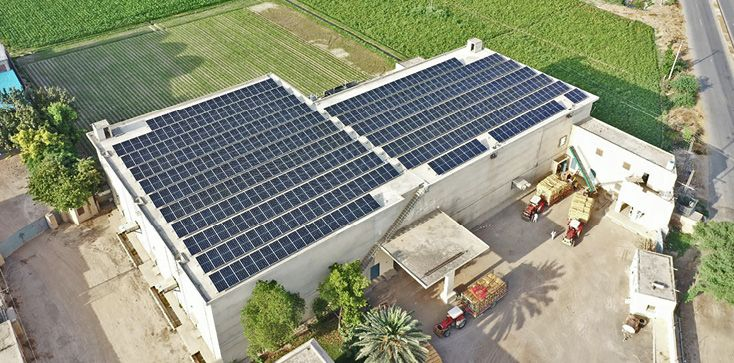





Pakistan’s NEPRA has launched a public consultation on new rules it intends to apply to PV systems up to 1 MW operating under the country's net metering regime.
The Prosumer Regulations 2025 are intended to replace the Net Metering Regulations issued in 2015.
Under the new rules, the sale of surplus power to the grid will be made through a new net billing arrangement, with PV system owners being credited based on a nationally determined average energy purchase price rather than full one-to-one net credits.
Furthermore, surplus power will be purchased by the utility at Pakistan’s national average energy purchase price, which will likely be lower than current incentive rates. According to local media outlet Daily Times, the tariff may drop from around PKR 26 ($0.093) per kWh to PKR 13 per kWh.
Moreover, the standard net metering agreement term should be reduced from 7 years to 5 years, with extensions being possible by mutual consent of prosumers and utilities. The existing agreements under the 2015 regulations will continue until their terms expire. Afterward, new terms under the 2025 rules would apply.
The proposed changes, if implemented, will mean the country will transition from a pure net-metering mechanism toward a net billing approach, which NEPRA says will balance renewable adoption with utility sustainability and grid reliability.
Distributed solar under net metering, on the other hand, has seen a vertiginous development in Pakistan over the past two years.
The country installed 1.2 GW of net-metering capacity across the first six months of 2025, according to figures from the Islamabad-based think tank Renewables First.
Cumulative net-metering capacity increased from 4.9 GW at the end of last year to 6.1 GW by the end of June. The growth rate is slower than that recorded during the second half of 2024, when 2.5 GW of net-metering capacity was added.
Rabia Babar, manager data for energy and climate at Renewables First, told pv magazine that while H1 2025 saw a surge in net-metering applications, the pace of issuance slowed. “As of June, over 4,000 new net metering connections were pending with various utilities, with regulatory bottlenecks contributing to a growing backlog,” Babar explained.
This content is protected by copyright and may not be reused. If you want to cooperate with us and would like to reuse some of our content, please contact: editors@pv-magazine.com.



By submitting this form you agree to pv magazine using your data for the purposes of publishing your comment.
Your personal data will only be disclosed or otherwise transmitted to third parties for the purposes of spam filtering or if this is necessary for technical maintenance of the website. Any other transfer to third parties will not take place unless this is justified on the basis of applicable data protection regulations or if pv magazine is legally obliged to do so.
You may revoke this consent at any time with effect for the future, in which case your personal data will be deleted immediately. Otherwise, your data will be deleted if pv magazine has processed your request or the purpose of data storage is fulfilled.
Further information on data privacy can be found in our Data Protection Policy.