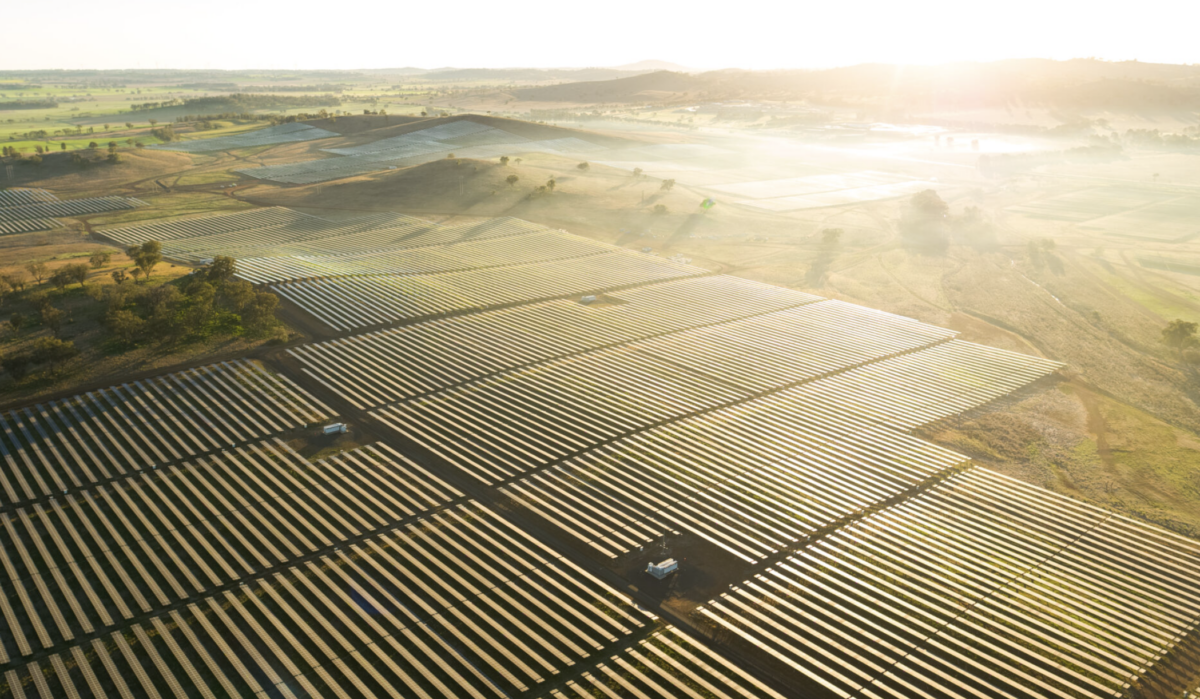





The Australian Centre for Advanced Photovoltaics (ACAP) researchers from the Australian National University (ANU) and University of New South Wales (UNSW) have quantified the Australian Renewable Energy Agency (ARENA) ultra-low-cost (ULC) solar target to demonstrate national energy systems could deliver 1,000 TWh per year for domestic use and 2,600 TWh per year for export.
The ARENA 30-30-30 vision for ULC solar represents 30% solar module efficiency and an installed cost of $0.30 (USD 21 cents) per watt by 2030.
Using innovative system-level energy modelling, the researchers show that ULC solar could potentially support national energy systems by delivering 1,000 TWh/year for domestic use and 2,600 TWh/year for export, creating a 2,000 GW-scale solar market in Australia.
An ACAP statement describes the scale as a requirement to power a fully decarbonized economy while enabling large-scale production of green metals for global markets.
‘Mapping the market opportunities for ultra low-cost solar’ modelling project contributor ANU School of Engineering Research Fellow Dr Bin Lu said used smartly, 2,000 GW of solar could power a fully decarbonized domestic economy.
“[It would also] support large-scale production of green metals for export – positioning Australia as a global supplier of green products while dramatically reducing national emissions,” Lu said.
The modeling shows that ULC solar can change the economics of Australia’s energy transition, where electricity markets can deliver reliable 100% renewable power at costs well below current wholesale prices, and cost reductions flow directly into heavy industry.
Using an integrated, system-level approach, the study captures interactions between industrial decarbonisation, electricity market transformation and green commodity production, rather than treating them separately.
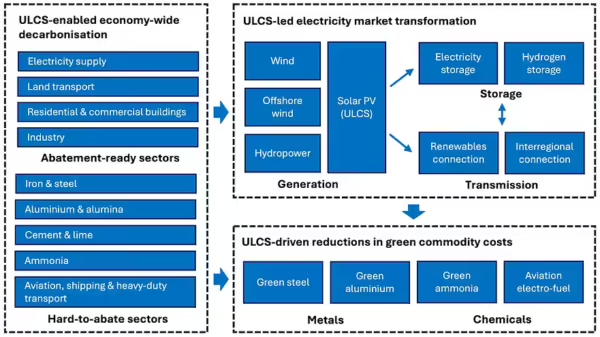
Consequently, the 30-30-30 target model found green aluminium, ammonia and steel production can reach cost parity with conventional production, and aviation electro-fuels move significantly closer to commercial viability.
“Australia has abundant solar resources, and some of the world’s richest mineral reserves, such as iron ore and bauxite. Used smartly, cheaper renewable technologies could power Australia’s transition to a global supplier of green products,” Lu said.
The techno-economic modeling evolves from an electricity-sector optimization framework into an integrated, economy-wide energy system model that enables coordinated modeling of sectoral energy transitions.
The collaborative project is led by ANU School of Engineering professors Kylie Catchpole and Andrew Blakers with contributions from Dr Lu, and UNSW School of Engineering Dr Nathan Chang and Dr Simao Lin.
ACAP reports that follow-on analyses is now examining electricity network transitions and export-oriented clean energy pathways.
This content is protected by copyright and may not be reused. If you want to cooperate with us and would like to reuse some of our content, please contact: editors@pv-magazine.com.

By submitting this form you agree to pv magazine using your data for the purposes of publishing your comment.
Your personal data will only be disclosed or otherwise transmitted to third parties for the purposes of spam filtering or if this is necessary for technical maintenance of the website. Any other transfer to third parties will not take place unless this is justified on the basis of applicable data protection regulations or if pv magazine is legally obliged to do so.
You may revoke this consent at any time with effect for the future, in which case your personal data will be deleted immediately. Otherwise, your data will be deleted if pv magazine has processed your request or the purpose of data storage is fulfilled.
Further information on data privacy can be found in our Data Protection Policy.