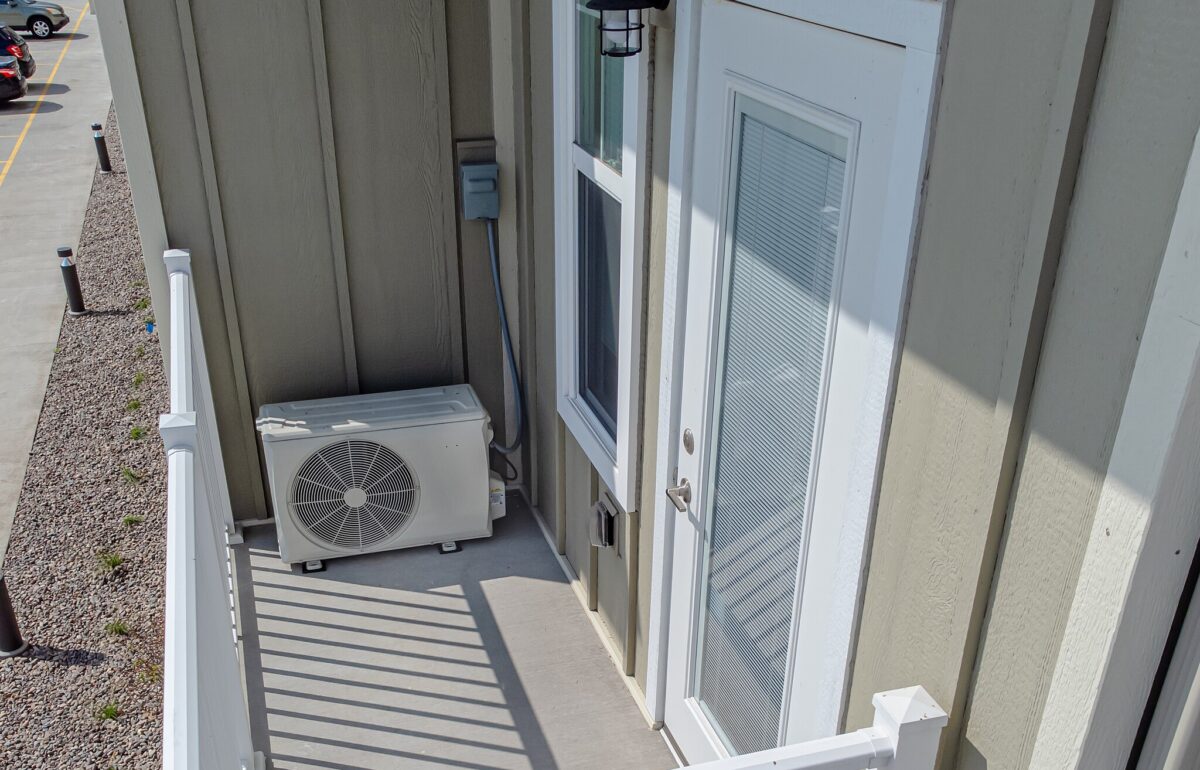





Heat pumps are portrayed generally positively in Germany’s media landscape, according to new research, but have experienced periods of negative coverage over the past few years.
The research paper “Tracking the public perception of heat pumps: A sentiment analysis of German news articles,” available in the journal Energy and Buildings, explains that heat pumps have struggled to gain legitimacy in parts of the German public, with adoption remaining relatively low compared to other countries.
It says challenges impacting uptake were pronounced during public debates in early 2023 concerning Germany’s Gebäudeenergiegesetz (GEG), or heating law, a move designed to accelerate heat pump installations but which faced resistance from the public.
Researchers Sebastian Losacker and Lukas Kriesch, from the Justus Liebig University Giessen, used natural language processing techniques to analyze a dataset totaling 33,131 German news articles on heat pumps published between 2018 and 2023. This analysis allowed them to explore how residential heat pumps are framed in German public discourse and how major events, including debates around the GEG, relate to shifts in perception.
Their findings highlight that overall, heat pumps have enjoyed a generally more positive sentiment than the broader news landscape, indicating a positive portrayal. However, two significant decreases in mean sentiment were recorded, one following the cut in Russian gas supply during the summer of 2022 and a more drastic drop in early 2023 related to the heating law debate, when sentiment scores fell into the negative spectrum.
Losacker explained to pv magazine sentiment remained very negative for a few weeks. “During this period, most articles also focused on the heating law debate, and the overall number of articles increased sharply,” Losacker said.
He also stressed that the analysis helped to obtain a broader picture of how heat pumps were discussed in the mainstream media, rather than a measure of direct acceptance. “We therefore see this more as a proxy for public discourse than for individual acceptance,” he explained. “This is an important distinction when trying to understand the societal dimensions of the clean energy transition.”
Losacker added that one important takeaway from the research was that discourse is volatile and can change drastically in response to exogenous events.
“These may be political, but they may also be economic. Think, for example, of how the German PV industry lost its competitive advantage in the late 2000s due to increased competition from China. This likely also translated into more negative sentiment in PV-related news coverage at the time,” he said.
Losacker also pointed out that sentiment in heat pump-related articles improved once the heating law debate cooled down. “I think this may also translate into greater individual acceptance,” he continued. “As fossil energy becomes more expensive over time, and as awareness of the benefits of heat pumps continues to grow, I would expect acceptance of heat pumps to increase in the medium to long term. At the same time, the energy transition is a complex process, and developments are difficult to predict with certainty.”
Regression results featured in the paper highlight that sentiment values varied significantly across topics, with articles on the heating law debate, rising heat costs and heat pump thefts showing more negative sentiments and articles on district heating planning and heat pump adoptions receiving a more positive tone.
“From a practical perspective, our results underline that the public framing of heat pumps is neither uniform nor stable. It differs strongly by topic and can shift quickly in response to major policy debates and energy-related events,” the research paper states. “This suggests that policymakers and practitioners should not only focus on deployment targets and subsidy design, but also pay close attention to how policy changes are communicated and contested in the public sphere.”
In the research paper’s conclusion, Losacker and Kriesch add that their study demonstrates the value of scalable, text-as-data approaches for monitoring acceptance-relevant discourse around green technologies. “In principle, the analysis could be repeated for other clean energy technologies, such as PV, wind energy, or more niche technologies like carbon capture,” Losacker told pv magazine. “If we looked at another technology, the findings would probably be quite different, both in terms of sentiment dynamics and dominant topics.”
Losacker referred to the energy transition as a highly politicised topic strongly shaped by ideology, both among those who support heat pumps and those who try to block their adoption. “If we look at the technical facts, the ideological positions of those opposing the transition to heat pumps are often less well informed and do not adequately reflect the actual benefits of the technology,” he said. “But again, technology is always socially constructed. This means that, as a society, to understand the energy transition, we cannot completely separate a technology from its societal embeddedness.”
This content is protected by copyright and may not be reused. If you want to cooperate with us and would like to reuse some of our content, please contact: editors@pv-magazine.com.


By submitting this form you agree to pv magazine using your data for the purposes of publishing your comment.
Your personal data will only be disclosed or otherwise transmitted to third parties for the purposes of spam filtering or if this is necessary for technical maintenance of the website. Any other transfer to third parties will not take place unless this is justified on the basis of applicable data protection regulations or if pv magazine is legally obliged to do so.
You may revoke this consent at any time with effect for the future, in which case your personal data will be deleted immediately. Otherwise, your data will be deleted if pv magazine has processed your request or the purpose of data storage is fulfilled.
Further information on data privacy can be found in our Data Protection Policy.