
RWE drops 99.9 MW solar project in Wales on grid constraints
RWE has scrapped its 99.9 MW Butterfly solar‑plus‑storage project in Wales after determining that grid connection availability made it unviable, in a move that comes amid sharply rising connection demand and mounting pressure on the United Kingdom’s queue reform process.
European power grid investment set to rise sharply by 2027
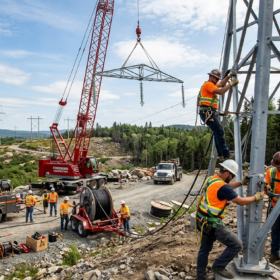
The EU Agency for the Cooperation of Energy Regulators (ACER) says distribution grid investment has risen 51% since 2021, but warns that fragmented planning rules and regulatory distortions could limit efficiency and slow the energy transition.
Japanese rail operator to procure 98 MW of new solar via corporate PPA
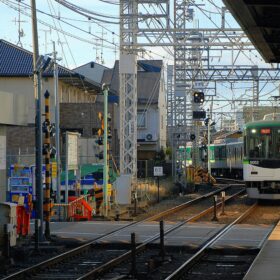
Tokyu Corp. and partners will supply Tokyu Railway with newly built solar power under a corporate power purchase agreement (PPA), covering about 30% of traction electricity demand.

Hydro-Québec launches grant for residential, commercial solar
Hydro-Québec has introduced a grant offering up to CAD 1,000 ($718.40) per kilowatt installed, covering up to 40% of eligible costs to accelerate rooftop solar adoption and reduce payback periods for residential and business customers in the Canadian province of Québec.
South Korea targets 2,500 community solar cooperatives by 2030
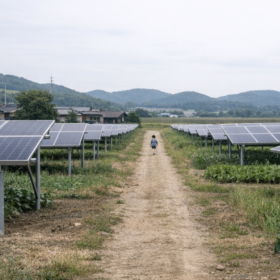
The South Korean government has launched a national drive to establish community-owned village solar cooperatives across the country, with more than 500 sites to be selected this year and KRW 550 billion ($366.4 million) in national funds earmarked for 2026.

Solar curtailment reaches Tokyo, Japan’s last holdout grid area
Tokyo’s grid has joined every other transmission system operator area in Japan in experiencing economic curtailment, as solar output growth outpaces the flexibility of the country’s largest regional power market.
Japan sets FIT terms for small PV, rooftop solar as large-scale auctions end
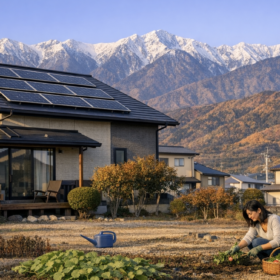
The Japanese government has set 2026 feed-in tariff (FIT) terms for solar below 250 kW, set the renewable energy levy at JPY 4.18 ($0.026)/kWh, and confirmed that feed-in premium (FIP) auctions for large-scale solar will end after 2026.
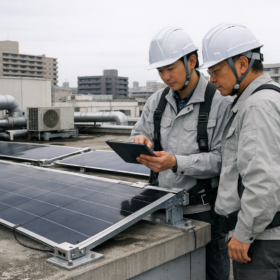
Japan publishes new guidelines for flexible solar cell installations
Japan’s New Energy and Industrial Technology Development Organization (NEDO) says its new design and construction guidelines for flexible PV and perovskite solar installations will help ensure the safety and reliability of systems deployed on low-load rooftops and wall surfaces where conventional panels cannot be installed.

Japan establishes national benchmarks for agrivoltaics as sites expand
The Japanese government has defined new standards for agrivoltaics as regulators begin tightening oversight in response to nearly one-quarter of projects reporting reduced crop yields or sub-standard cultivation beneath solar panels.
EU solar auctions, corporate PPAs delivered 92 GW in 2022-25 period
Public solar auctions and corporate power purchase agreements (PPAs) supported 92 GW of EU solar capacity from 2022 to 2025, supplying enough electricity for 28 million households. SolarPower Europe says the figures underscore the role of long-term contracts in stabilizing energy prices and strengthening energy security.
