
Floating solar offers Morocco’s dams antidote to evaporation loss
Moroccan researchers say floating PV (FPV) installations on the country’s dams could simultaneously cut evaporation losses and generate electricity, but the country lacks a regulatory framework to enable large-scale deployment.
Germany risks €45 billion taxpayer hit on hydrogen overbuild, warns IEEFA
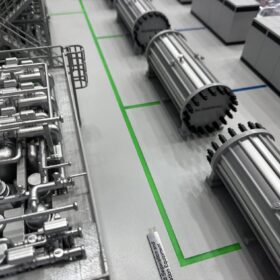
Germany risks leaving taxpayers liable for at least €34.7 billion ($40.8 billion) in unrecovered hydrogen infrastructure costs by 2055, the Institute for Energy Economics and Financial Analysis (IEEFA) says in a new report, putting the true regulated cost base at approaching €50 billion against the commonly cited €19.8 billion construction figure.
Meta, Amazon and J&J power Perigus Energy’s European CPPA portfolio
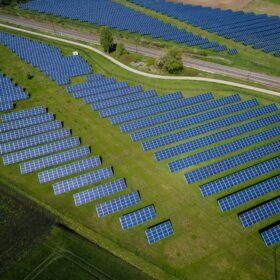
Perigus Energy has named Meta, Amazon, Johnson & Johnson, Flogas, and SWW Wunsiedel as corporate power offtakers, confirming that 204.85 MW – just more than 35% of its 578 MW operational portfolio – is contracted through corporate power purchase agreements (PPAs).
Longer-duration BESS finds footing in Germany’s toll market
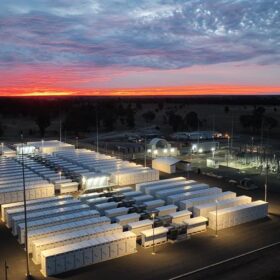
BlackRock‑backed developer Akaysha Energy says lenders require 60% to 80% contracted revenue before committing project debt to utility‑scale battery energy storage system (BESS) projects in Germany – a threshold that structured offtake products borrowed from its home market can meet.
South Korean utility to install 95 MW of solar at substations by 2030
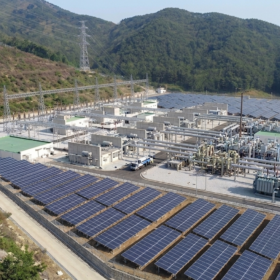
Korea Electric Power Corp. (KEPCO) says it will install 95 MW of solar capacity across 500 substation sites nationwide by 2030, using surplus substation land to meet South Korea’s K-RE100 public-sector renewable energy target.

Egypt’s National Bank takes 20% stake in Scatec’s Obelisk project
National Bank of Egypt has acquired a 20% equity interest in Scatec ASA’s 1.1 GW Obelisk solar and battery energy storage system (BESS) project, reducing the Norwegian developer’s economic interest to 40% while leaving it in majority control through a layered ownership structure.
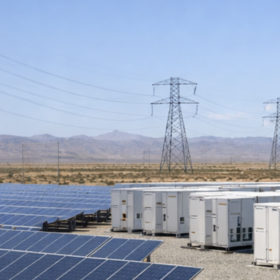
Firm solar and storage costs fall to $54/MWh, says IRENA
A new report by the International Renewable Energy Agency (IRENA) finds that round‑the‑clock solar and wind paired with battery storage deliver power at lower cost than new fossil fuel generation in high‑quality resource regions.
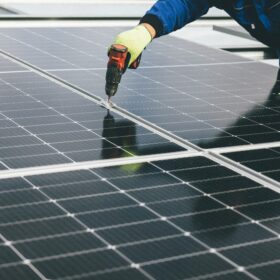
Sinovoltaics launches free tool for project-specific PV module test scopes
Dutch-German quality assurance firm Sinovoltaics has released a free browser-based tool that generates project-specific reliability testing strategies for utility-scale solar projects, sorting recommended lab tests by priority and producing downloadable scope reports.
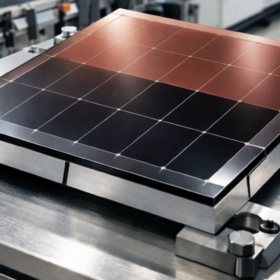
Fraunhofer ISE opens perovskite-silicon tandem scale-up lab
Fraunhofer Institute for Solar Energy Systems ISE has opened a dedicated lab in Freiburg, Germany, to scale perovskite-silicon tandem cell designs to large wafer formats using industry-standard processes.
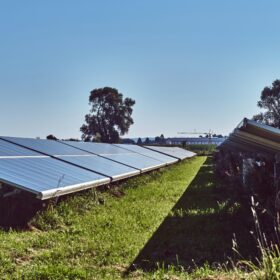
EU solar and storage push could cut power system costs by nearly half
A scenario analysis by SolarPower Europe, modeled by Rystad Energy, finds that accelerating PV and battery storage deployment could save the European Union €223 billion ($260.7 billion) in gas imports between 2026 and 2030 and reduce wholesale electricity prices by 14% compared with 2025 levels.
