David Carroll


BNEF report shows drop-off in support for standalone PV in Australia
Investment in utility-scale solar in Australia dropped 35% in the second half of 2025 compared to the previous six months with BloombergNEF (BNEF) saying the growth of rooftop solar and a booming battery market are among the reasons for the precipitous decline.
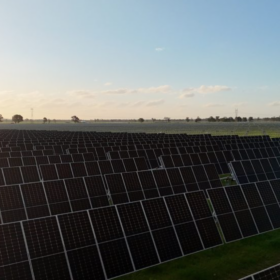
Australia’s National Electricity Market adds 1.8 GW in Q4 2025
Nine generation and battery projects totaling 1.8 GW reached full output in Australia’s National Electricity Market (NEM) during the fourth quarter of 2025, according to the Australian Energy Market Operator.
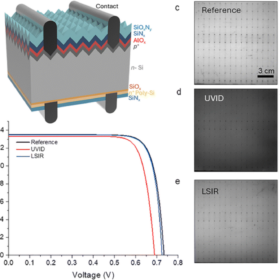
Australian researchers track self-repair in silicon solar cells after UV damage
Engineers at the University of New South Wales have developed a real-time monitoring technique that reveals how silicon solar cells can self-repair following ultraviolet-induced damage, offering new insights into solar panel degradation and lifetime performance.
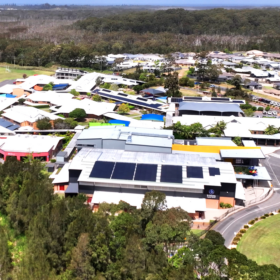
Wireless rooftop PV shares generation across Australian school campus
A new wireless, wifi-connected solar solution featuring three Sungrow 100 kW inverters is now allowing more than 300 kW of solar generation to be dynamically balanced across distribution boards throughout a school in Australia, significantly offsetting grid electricity use.
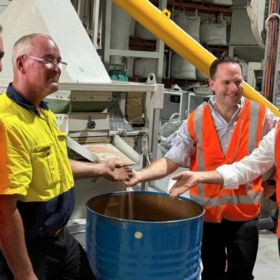
Australia to fund national solar panel recycling pilot
Australia’s federal government will invest AUD 24.7 million ($16.9 million) over three years in a national pilot to recycle end-of-life solar panels, aiming to reduce landfill disposal and recover valuable materials from the country’s growing rooftop solar fleet.
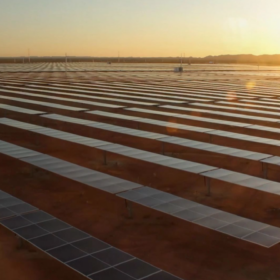
Australia approves Fortescue 644 MW Turner River solar farm
Fortescue’s plans to build one of Australia’s largest solar farms have cleared another regulatory hurdle with the federal government’s environmental watchdog providing the tick of approval for the 644 MW project planned for Western Australia.
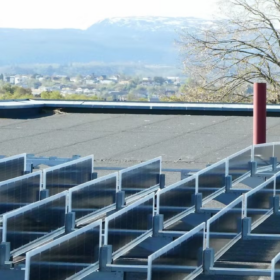
Smart Commercial to roll out prefab vertical rooftop PV system
Smart Commercial Energy has unveiled a new prefabricated vertical rooftop solar system for the Australian market as part of a collaboration with Norwegian clean energy company Over Easy Solar.
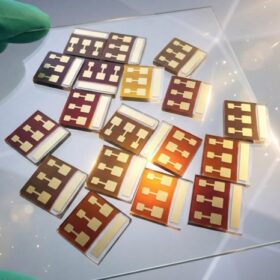
UNSW researchers set new efficiency record of 11.02% for antimony chalcogenide solar cell
The Australian scientists designed the cell with a sodium sulfide additive to achieve uniform sulfur and selenium distribution, improving charge transport.
This controlled elemental layering reduces energy barriers and defects, enabling a certified efficiency of 10.7%.

World’s largest battery-electric ship begins harbor trials in Australia
Incat Tasmania has started harbor trials of the largest battery-electric ship constructed to date. The 130-meter vessel is now moving under its own battery-electric propulsion for the first time.

CSIRO puts battery chemistries to test in tropical conditions
Researchers from Australia’s national science agency are working with Malaysian authorities to assess how different battery chemistries perform under tropical conditions, including high temperatures, humidity, and corrosion, and how these factors affect durability, safety, and cost effectiveness.
