Emiliano Bellini

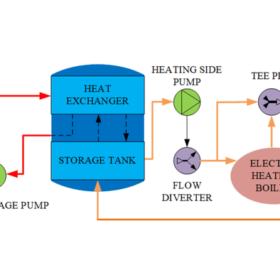
PVT-biomass system for space heating in small homes
A US-Chinese research group has developed a hybrid system proposal based on photovoltaic-thermal (PVT) modules, a heat pump, a backup electric boiler, and biomass generating units. They say it could be used as space heating in a single-floor home.
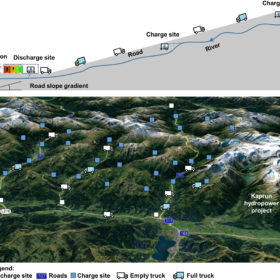
Storing hydropower via regenerative braking in electric trucks
An international research team has proposed the use of water from high-altitude rivers and regenerative braking in electric trucks to store electricity for reuse in power networks, or for transport purposes.
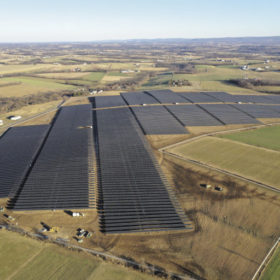
Italy allocates 300 MW of solar in latest renewables auction
Italy’s energy agency has awarded 300 MW of solar capacity at 34 locations, but it only selected a 6 MW wind project in its latest auction. All developers offered a maximum discount ranging from 2% to 3.02% off the auction ceiling price of €0.065 ($0.07)/kWh.

Japan launches rebate program for solar on farmland, water reservoirs, waste sites
The Japanese authorities will provide a maximum rebate of JPY 303,500 ($2,350)/kW for solar projects ranging in size from 10 kW to 50 kW. Projects above 50 kW will be assigned a rebate of JPY 205,900/kW.

Floating solar, tidal energy plant goes online in China
CHN Energy has linked a 100 MW floating PV plant to an existing 4.1 MW tidal energy system in China’s Zhejiang province. The tidal power station was commissioned in 1980 and is the fourth-largest system of its kind in the world.
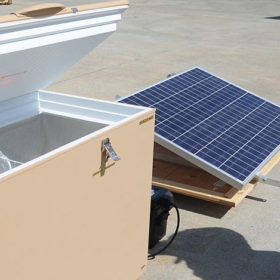
Photovoltaics for refrigeration
Scientists in Saudi Arabia looked at the potential of different solar technologies to meet energy demand for cooling systems. They found that PV is the best cost-effective option, especially for compression refrigeration cycles in hot climates.
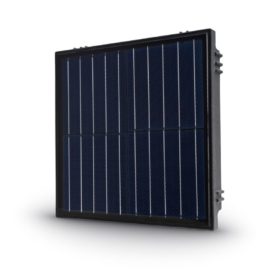
New solar module for pavement applications
Hungary’s Platio Solar has developed a new PV module line featuring monocrystalline and polycrystalline cells with clear or opal glass.

Fraunhofer ISE achieves 47.6% efficiency with III-V four-junction CPV cell
Fraunhofer ISE have improved the performance of a cell structure originally developed by France’s Soitec in 2014. The German scientists managed to reduce resistance losses and the reflection on the cell front side.

China’s first salt cavern for compressed air energy storage goes online
Huaneng Group has finished building a 300 MWh storage project in Changzhou, in China’s Jiangsu province. The state-owned company has already started operating the facility, which is situated in a salt cavern.
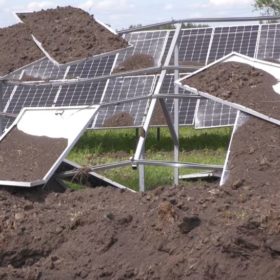
Missile strike destroys solar plant in Ukraine
Two Russian missiles have hit a ground-mounted solar plant near Kharkiv, Ukraine. According to the manager of the plant, the missile attacks produced holes at the site that measured 6 meters deep and 11 meters in diameter.
