Emiliano Bellini

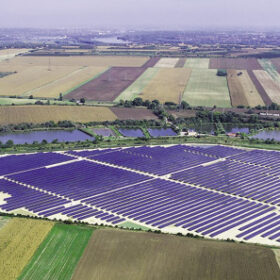
Hungary launches third renewables auction
The Hungarian energy regulator expects to contract around 300 GWh of renewable energy in the procurement exercise.

Offshore floating PV platform unveiled in the Netherlands
Dutch floating structure specialist Solarduck has built a pilot 65 kW floating PV array that will be connected to a 10 kW electrolyzer to produce hydrogen bonded with a liquid organic hydrogen carrier. The system is relying on the company’s proprietary floating technology that resembles an offshore oil platform.
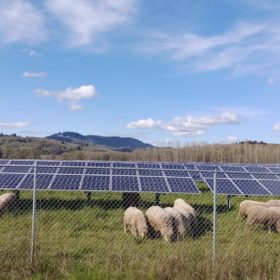
Agrivoltaics increases land productivity, improves animal welfare
New research from the United States has shown the numerous advantages of combining lamb grazing with solar power production. The researchers found, in particular, that the overall return from grazing was the same in both solar pastures and open pasture fields with no PV panels.
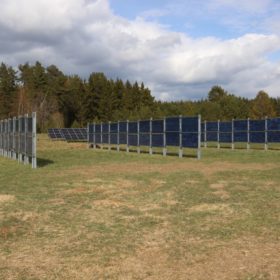
Optimization algorithm for vertical agrivoltaics
Developed by Swedish scientists, the proposed algorithm is said to calculate a project’s ideal design by combining climatological data with figures on expected solar power generation, shading distribution, water for irrigation, and agricultural yield. Its creators spoke with pv magazine about the key parameters that the model seeks to determine, one of which is the optimal distance between the solar module rows depending on the kind of crop.
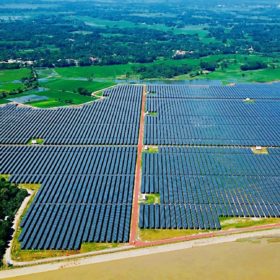
Bangladesh’s largest PV plant comes online
The solar facility will sell power to the Power Grid Company of Bangladesh under a 20-year PPA.
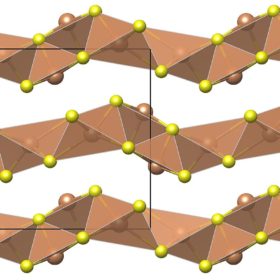
Antimony selenide solar cell with 6.4% efficiency
Scientists in the United States have fabricated a solar cell using antimony selenide films with favorable crystalline properties. They achieved the remarkable conversion efficiency for this early-stage PV material by focusing on the selenization temperature.
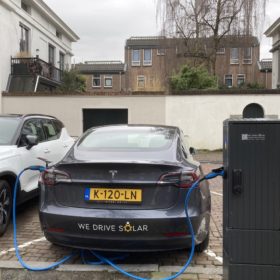
Electric cars to store renewables in the Netherlands
We Drive Solar and Hyundai are planning to set up a network of 500 bi-directional EV recharging stations in the city and region of Utrecht. Through this technology, electric cars may contribute to the storage of renewable energy in a country affected by grid constraints.
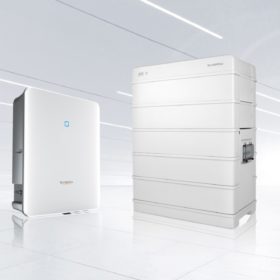
Sungrow launches high-voltage battery and hybrid inverter for residential applications
The Chinese manufacturer will begin selling its new products in Australia and Europe. The hybrid inverter has an efficiency of up to 98.4% and the lithium iron phosphate battery features a storage capacity between 9.6 kWh and 102.4 kWh, depending on the number of modules.

Turkey’s 1 GW PV tender sees lowest bid drop to $0.022/kWh
The first phase of the procurement exercise is expected to be finalized by the end of the week. The record low bid, for Turkey, was submitted for a 10 MW project in the Antalya region, in the sunny southern part of the country.
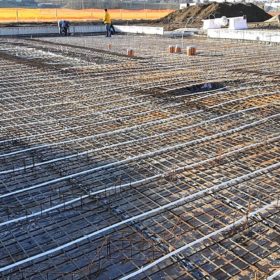
Excess PV power to activate floor heating in commercial buildings
Austrian heat and PV specialist my-PV is proposing a new solution to use surplus PV electricity for thermal concrete-core activation in commercial buildings.
