Emiliano Bellini

Is China really opening its energy market to EU enterprises?
In an interview with pv magazine, Frank Haugwitz – the director of the Asia Europe Clean Energy (Solar) Advisory (AECEA) – explained how the recent China-EU investment deal could offer more opportunities to European companies in China’s renewable energy market. He said the agreement shall provide transparency over policies, regulations, financing, and subsidies. And competition shall grow, especially in the C&I solar segment, he added.

Smart meters disrupt residential PV segment in Belgium’s Flanders region
A recent ruling of the Belgian constitutional court has canceled the 15-year grace period granted to residential PV system owners to keep operating under net metering despite the arrival of smart meters. The Flemish government said it will provide some compensation for the financial losses that this decision will cause.
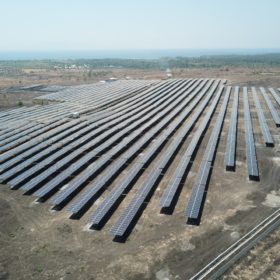
Eastern Indonesia may become hub for large scale PV deployment
The Indonesian government has announced the construction of a big PV plant in the eastern part of the country, explaining that the region is particularly suitable for solar development due to its dry climate and high solar radiation levels. The region is indeed the most suitable area for solar parks, due to land availability and high electricity generation costs.

Japan PV auctions not a failure, says IRENA
Land scarcity and grid congestion are the main reasons for unexpectedly low capacity allocations in Japan’s five PV auctions between 2017 and January 2020. However, the auction outcomes should not be seen as disappointing, as the average final prices were close to the cost of electricity for solar, says the International Renewable Energy Agency.
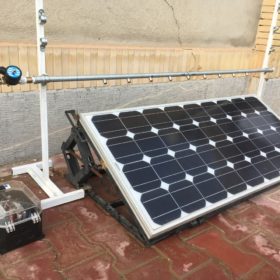
Pulsating spray cooling system for PV modules
Iranian scientists have assessed a new active approach for solar module cooling based on water spraying. Water sprayed from different angles can reduce the operating temperature of PV modules, with limited water consumption. However, the team noted that they have yet to assess the economic viability of the system.
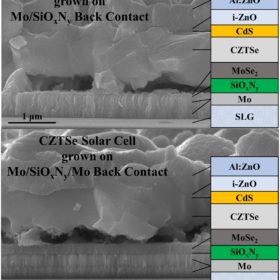
New manufacturing method for kesterite solar cells
German scientists have designed a manufacturing process to reduce the thickness of the molybdenum diselenide interface layer in kesterite solar cells. They used two different configurations of silicon-oxynitride diffusion-barrier layers.

North Macedonia announces 60 MW solar tender
The procurement exercise has been planned for the first quarter of the year.
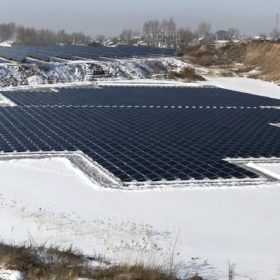
What happens to floating PV when the water surface freezes?
What happens to a floating PV system located in cold climates during freezing temperatures? How is the plant handled and which kind of risks could be associated with these unfavorable climatic conditions? We have sought to answer these questions with the help of Kane Wang, manager of Sungrow Floating’s system solution department.
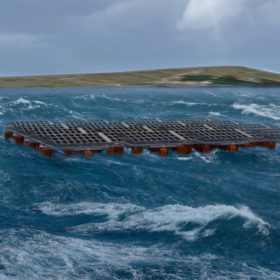
Equinor, Saipem test offshore solar in Norwegian Sea
The two companies want to test a floating PV array under harsh weather conditions in rough waters for at least a year. The system will be based on a floating solar technology developed by Maritime Moss, a unit of Saipem.
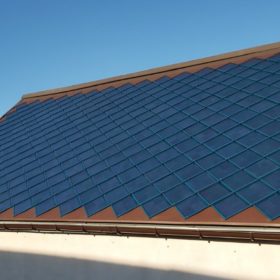
A 19.5% efficient solar tile with five-busbar technology
The tile has a power output of 45 W, an open circuit voltage of 5.63 V and a short-circuit current of 10.12. The product costs $1.38/W and has a 25-year performance guarantee
