Emiliano Bellini


Rooftop PV has reached grid parity in main EU markets
Researchers have developed a high-resolution geospatial method of assessing the solar potential of all buildings in the EU and concluded rooftop PV could provide a quarter of the bloc’s electricity needs. The scientists say grid parity for rooftop solar has been reached outside eastern member states with cheap fossil fuel electricity.

Algerian diesel-solar tender concludes with lowest bid of 11 cents
State-owned gas and power provider Sonegalz intends to develop five hybrid projects in off-grid areas in the south of the country. The highest bid came in at the equivalent of $0.13/kWh.

Exciting excitons
A research team from Columbia University has designed organic molecules that can produce excitons with a longer lifecycle than inorganic equivalents. The excitons have the potential to amplify the amount of electricity generated by the photons a solar cell absorbs.
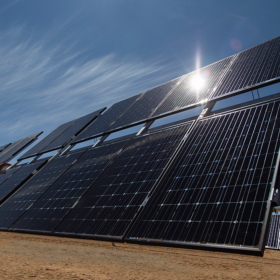
Power deal signed for 230 MW solar plant in Chile
Atlas Renewable Energies has agreed to provide the Chilean unit of French energy giant Engie with 550 GWh annually for 15 years. The electricity will be supplied by the Sol del Desierto project Atlas is building in northern Chile.

Commercial solar at grid parity in China but a hard line is needed on soft costs
Deploying commercial and industrial PV in China without subsidy is already profitable in some areas, according to a new study, but prohibitive soft costs and cheap electricity are the main barriers for such installations in areas where grid parity remains out of reach.

The tide is changing for ground-mounted PV in Ireland
Ireland appears ready to embrace PV after years of failed announcements. Globaldata predicts the EU member state will deploy around 1.3 GW of solar by 2030, with renewables potentially meeting 65% of electricity demand. Furthermore, Irish Water has announced it wants to deploy solar at its water treatment plants.

A new spectroscopic method to understand the physical principles of organic PV
A German research team claims to have created a new visualization technique it says can enable detailed mapping of the energetic landscapes of organic PV cells on a nano scale. The technique could lead to organic cells with reduced power losses.

Cameroon to improve power supply with 25 MW solar projects
Energy of Cameroon wants to build two solar parks to improve power supply in the country’s northern regions. The projects will be developed by a consortium led by Norwegian solar company Scatec.

Botswana kicks off 100 MW solar tender
Botswana Power Corp is seeking independent power producers to build two 50 MW solar parks. The projects are intended to reduce the nation’s dependence on power imports from troubled South African utility Eskom.
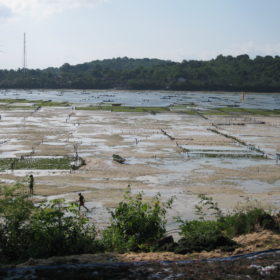
Aquavoltaics in the Philippines
An EU funded solar-plus-storage project has been tendered in the Philippines. The United Nations is seeking bids for the system, to support the seaweed industry on the island of Tawi-Tawi. Combining PV with aquaculture brings many advantages for both, including water conservation, a more controlled aquatic environment, and ecosystem restoration.
