Emiliano Bellini

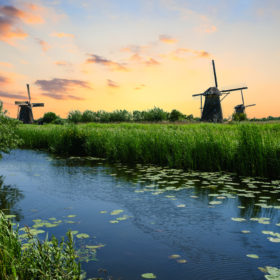
Global renewables R&D will further drive down energy transition cost
The Netherlands’ Organisation for Applied Scientific Research says renewables would not only contribute to a cheaper energy system but would also create more opportunities for new business, exports and jobs – as well as a cleaner environment.
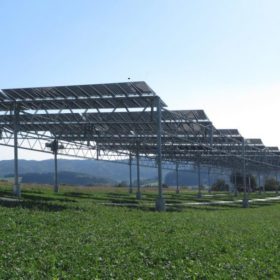
Agro PV raised efficiency of land by shielding crops from harsh sunlight
Germany’s Fraunhofer Institute for Solar Energy Systems has demonstrated combining solar generation with agricultural activity is now not only viable at lower costs, but may be particularly suitable for arid regions.
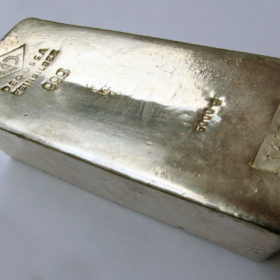
UK researchers warn of potentially rising silver costs
A study has highlighted that the two growth phases of solar panel manufacturing – after the 2008 global downturn and again after 2011 – coincided with higher prices for the precious metal.
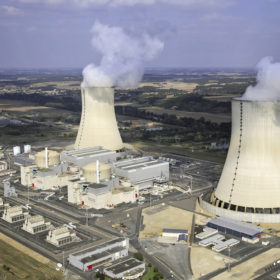
“There is no such thing as a zero or near-zero-emission nuclear power plant”
Stanford professor Mark Z Jacobson has said new nuclear plants may cost up to 7.4 times more than wind and solar facilities, with construction times longer by up to 15 years. Such a delay, he said, may see an huge amount of extra carbon emissions from fossil fuel power sources. His verdict comes as China this month set new guaranteed tariffs for nuclear power.
AE Solar to open 500 MW European module factory in Georgia
The German panel maker said the new factory, which will add to its 525 MW facility in China, will expand its production capacity to 1 GW. With plans in the pipeline to enter the PV project business, that figure could rise to 2 GW by the end of next year.

Getting (almost) all our energy from the sun by 2050
Solar could meet approximately 68% of global energy demand with other renewables making up the rest, according to a new report. A 100% renewable energy system could also create 22 million solar jobs by 2050, the study claims. Keeping global warming below 1.5 degrees C, though, would require FITs for projects up to 40 MW in capacity, auctions for bigger systems, removing fossil fuel and nuclear subsidies and providing more education and R&D and less red tape.
Cross-mating of connectors was chief cause of Netherlands PV fires
According to an investigation conducted by public bodies, cross-mating of connectors was the main common denominator of the incidents studied.

Polish PV potential yet to be realized
Only 36% of the 360 MW of capacity allocated in Poland’s first two solar auctions is grid connected, according to research institute the IEO. With the completion deadline for the first exercise having expired last year, there is also little time left for developers selected in the second auction to finalize projects. In three auctions held by the Polish government, a combined capacity of 870 MW has been allocated.

Venezuela plans its first utility scale PV projects
Although details are vague, the Vice Ministry of Alternative Energies is reportedly developing the country’s first medium sized projects to be connected to the national grid. It is also planning to implement distributed generation projects ranging in size from 1.5 MW to 3 MW in the crisis-torn nation.
EDP to build Portugal’s first MW-sized PV plant coupled with storage
The 3.8 MW project is conceived for self-consumption of two facilities of the lead-acid battery manufacturer Exide in Castanheira do Ribatejo and Azambuja.
