Emiliano Bellini

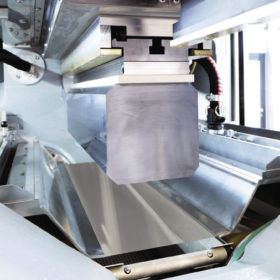
Zhonghuan Semiconductor and GCL-Poly to expand production of mono wafers by 25 GW
The joint venture of the two giant manufacturers will expand its capacity from around 30 GW currently to 55 GW over the next three years. This plan is expected to require an overall investment of $1.34 billion.

Solar-plus-storage gets its share in Brazil’s auction for non-interconnected state of Roraima
Although only two of the nine projects selected in the auction are for hybrid biomass-solar power plants with some storage, seven will rely on renewable energy sources. The largest selected project, however, is a 123 MW gas power plant in the city of Boa Vista.
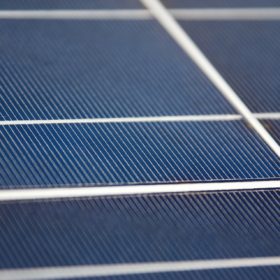
URE lowers solar cell production in response to declining demand
The Taiwanese manufacturer has confirmed plans to focus on PERC cell production, while scaling down its operational cell capacity from 5 GW to 2.5 GW. It said it could return to full capacity if cell demand rises again, however.

Renewables & Geopolitics: China
In a new interview in a series on renewable energy and geopolitics, Indra Overland describes the possible trajectory of China’s bid to become the world’s solar energy leader. After building a leading position in key technologies and manufacturing, China may find a potential partner in the European Union, especially if the U.S. government pushes forward with its trade war against Beijing, Overland says. Solar and renewables are also helping the country expand its influence in Southeast Asia, fuelling concerns among some of its neighbors, he adds.
Russian scientists aim to enhance cell efficiency with gadolinium oxide nanoparticles
A Russian research team believes that the addition of rare-earth ions into the structure of photonic nanoparticles could help to increase the efficiency of industrial solar cells to 25–30%. However, they also said that further research is necessary.
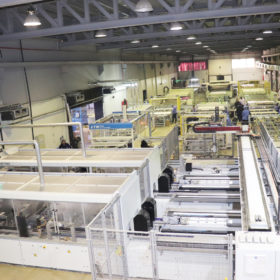
Philadelphia Solar raises module capacity to 500 MW
The Jordanian PV module manufacturer plans to add two new production lines at its factory in Amman over the next 12 weeks. The new lines will add half-cell and bifacial mono PERC modules to the company’s product range.

EDP plans first MW-scale floating PV project in Portugal
The Portuguese utility is seeking permission to deploy a 4 MW floating solar plant at the Alqueva water reservoir in southern Portugal. The solar array will feature around 10,000 PERC half-cell solar modules.

Brazil sets ceiling price of $69.7/MWh for upcoming A-4 auction
The tender is on June 28. This year’s procurement exercise may allocate less capacity than previous auctions, due to lower demand for contracting new projects.

Chile to issue $1.5 billion green bond
The funds will be used for renewable energy facilities and projects associated with the bond have already obtained Climate Bond Initiative certification.

Argentina “mini” renewables auction moves forward
Some 56 bids were submitted for the fourth round of the RenovAr program for large scale renewables. Projects will be selected on July 22. With this procurement the Argentinian government wants to allocate a total of 350 MW of solar and wind generation capacity, with a 10 MW size limit per project.
