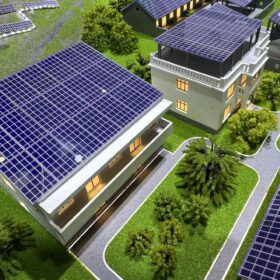
Novel sizing approach for PV, battery storage in smart homes
Scientists in Iran have developed a novel framework to optimize the capacity of PV and battery storage in smart homes, using a two-stage stochastic programming model. They considered the uncertainties in the grid, market price, and PV output, while also looking at different operation cases.
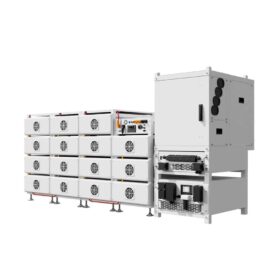
Deye launches C&I power conversion system with battery storage
Deye has developed a new power conversion system (PCS) optimized for solar integration, with modules ranging from 100 kW to 125 kW. The Chinese manufacturer says the PCS supports flexible system design and targets commercial and industrial (C&I) applications.

Combining PV-driven heat pumps with district heating in multi-apartment buildings
An international research group has investigated how PV-powered heat pumps and district heating could be combined to heat a multi-apartment building in Sweden and have found that, of the three combinations they evaluated, relying on heat pumps as the primary heat source was the “most beneficial solution” in terms of operating costs and environmental impact.

K2 Systems launches new pitched roof mounting solutions
K2 Systems has introduced two new pitched roof mounting components for residential solar: the SingleHook 3S Light, made of aluminum and stainless steel, and the InsertionRail 2.0, an aluminum mounting rail.
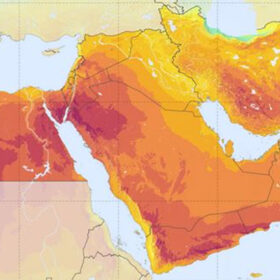
New method for PV site suitability mapping
Scientists in Malaysia have developed a novel deep-learning method for PV suitability mapping. Applying the new approach to the Middle East, they found that approximately 5.8% of the region has very high suitability and 11.5% is highly suitable for PV energy development.
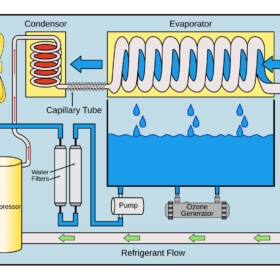
Photovoltaics for atmospheric water harvesting
A scientist in Turkey has simulated eight PV-supported hybrid atmospheric water harvesting systems and compared their performances. They were all considered to operate with R1233zd(E), R1234yf, and R600a, as well as R32 refrigerants. The required PV system size was as low as 20 m2.

How albedo interacts with different rooftop PV system patterns
Researchers have simulated 160 cases of PV rooftop installation in southern and northern Italy. Among changing parameters were size and type of the panels, as well as their roof cover rate. The considered albedos were 20%, 40%, 60%, and 80%, representing different types of roof materials.

Photovoltaics vs. photovoltaic-thermal
Researchers in India say that photovoltaic-thermal (PVT) systems offer greater performance stability than conventional PV systems in hot climates. Using irradiance and temperature data, the team applied a Random Forest model that predicted efficiency classes with 97% accuracy.

The best tilt angle to improve PV system performance on low-cost buildings
Researchers have demonstrated that the theoretical optimal tilt for rooftop solar energy production in low-cost buildings in Nigeria is approximately 5.67°. Their modeling suggests to adopt south-facing roofs for PV generation in the Global South.
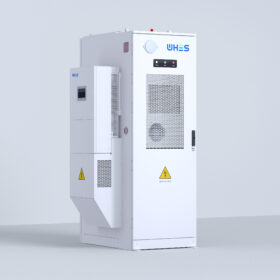
WHES releases new C&I storage system series
WHES has launched a new series of commercial and industrial (C&I) storage systems with integrated hybrid inverters, offering capacities from 57 kWh to 100 kWh and PV input up to 96 kW. The China-based manufacturer claims the systems support 200% PV overloading.
