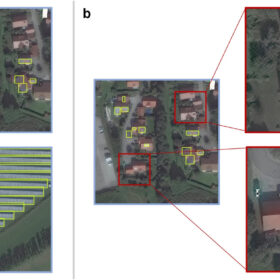
High resolution satellite imagery for residential PV system detection
US-based Maxar Technologies used satellite imagery imagery with resolution of 31 cm to 15.5 cm to identify rooftop PV systems in southern Germany. The company claims its new approach was able to identify 97.8% of the solar arrays with high confidence.

New model for day-ahead solar forecasting in areas with limited data
South Korean researchers have developed a long-term solar irradiance prediction method based on a reinforcement learning algorithm. They claim that the new model is able to forecast solar radiation for more than a year using just two weeks of solar radiation learning.
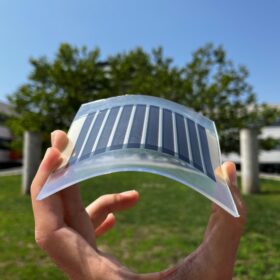
European research group creates injection molding plastic solar cells
A French-Spanish research team developed organic photovoltaic modules embedded into plastic parts through high throughput injection molding. The researchers injected thermoplastic polyurethane in the modules and found it enhances their mechanical stability while keeping a high flexibility.
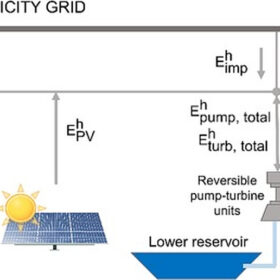
Techno-economic dispatch model to combine pumped hydro with solar, wind power
A research team in Spain has developed an hourly mathematical model that reportedly allows for the optimal management of grid-connected renewable generation facilities and pumped hydro-energy storage with reversible pump turbine. The scientists tested the model on a potential pumped hydro-solar-wind complex in northern Spain and found that the combination of the three technologies may achieve considerable savings.
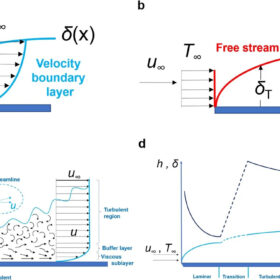
Wind speed increases could cause PV yield losses
A Spanish research group says air flux variations over different parts of solar plants could also lead to mismatch losses. Past. studies have only looked at the benefits of high wind speed on PV arrays, which enhances module cooling.

EV sharing to provide stationary storage services via V2G tech
We Drive Solar and MyWheels have announced plans to transform the Dutch city of Utrecht into the world’s first municipality with a “neighborhood battery on wheels.” The system will feature 25 Ioniq 5 vehicles equipped with vehicle-to-grid (V2G) tech from Hyundai Motor.
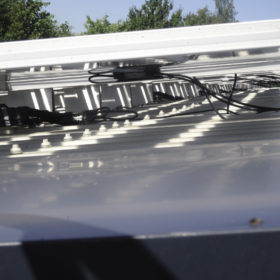
Solar geometry-based model to assess performance of bifacial PV systems
Scientists in India utilized solar geometry to create a novel energy estimation model that reportedly accurately predicts both the front and back irradiance of bifacial PV modules. The model achieved correlation coefficients of 1.04 and 1.40 for the front and rear side, respectively.

Powering bio-based earth homes with photovoltaics
Moroccan researchers have investigated the potential energy savings of PV systems integrated with biomaterial-based walls in rural areas. They say that solar-powered earth homes could achieve a levelized cost of electricity (LCOE) of $0.218/kWh.
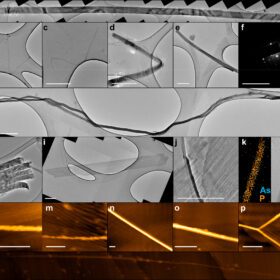
Phosphorus-arsenic nanoribbons may improve solar cell performance
UK researchers have developed ultra-thin nanoribbons, just 1 atom thick, by combining phosphorus and arsenic alloys. The nanoribbons offer excellent conductivity, even at temperatures exceeding -143.15 C, and have the potential to enhance charge flow in solar cells.
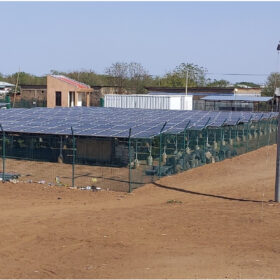
Assessing non-linear tradeoffs in photovoltaic mini-grids
Researchers in Sweden investigated the complex non-linear tradeoffs between capacity expansion costs and reliability levels of off-grid PV mini-grids and found that capacity expansion based solely on cost-minimization may result in several reliability issues.
