Marija Maisch

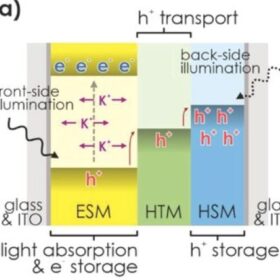
Solar batteries with simultaneous light absorption, storage
Scientists at the Max Planck Institute for Solid State Research have developed a bifunctional solar battery device that enables simultaneous light charging, charge storing, and electric discharging. The device relies on a bifunctional carbon nitride photoanode to harvest sunlight and store its energy via trapped electrons.
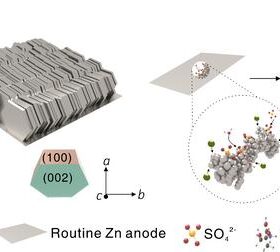
Aqueous zinc-ion battery with high stability
Researchers in China have found that the addition of serine cations to the electrode/electrolyte interface of aqueous zinc-ion battery could effectively inhibit zinc dendrite growth and enable a highly reversible zinc anode.

UK coal-fired power plant site to host 1,040 MW/ 2,080 MWh battery
Independent energy infrastructure developer Carlton Power has secured planning consent for a 1,040 MW/ 2,080 MWh battery energy storage system (BESS). The project is expected to strengthen the resilience of the energy system in northwestern England.
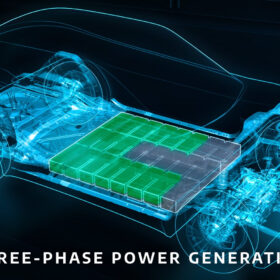
Stellantis, Saft unveil battery with integrated inverter, charger functions
After four years of development, French-Italian carmaker Stellantis, French battery company Saft, and the French National Center for Scientific Research (CNRS) have unveiled the Intelligent Battery Integrated System (IBIS), which integrates the electric charger and inverter functions. It can be used in automotive and stationary storage applications.
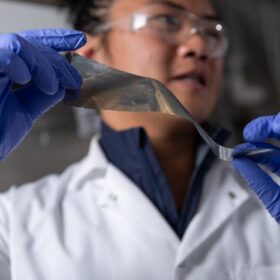
Solid-state lithium-ion batteries based on foil-based negative electrodes
Georgia Institute of Technology researchers have used aluminum foil-based negative electrodes with engineered microstructures in an all-solid-state lithium-ion cell configuration. They have reported hundreds of stable cycles with practically relevant areal capacities at high current densities.
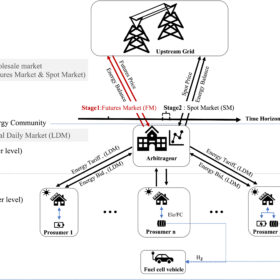
Energy communities operating on hydrogen, batteries
Researchers in Spain have studied the impact of hydrogen production and storage technologies in risk management for energy communities with internal price-tariff systems. They found that the optimal involvement in futures markets and spot markets will depend on a community’s risk aversion and self-sufficiency.
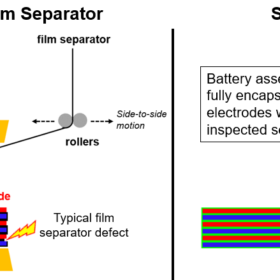
Separator tech to prevent battery fires
Nuvola Technology says it has developed a direct deposition polymer separator technology that can eliminate the primary cause of lithium-ion battery fires.
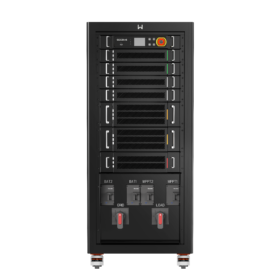
GoodWe unveils new inverters for C&I applications
China-based GoodWe has developed two new solutions – the ETC 100 kW hybrid inverter and the BTC 100 kW retrofit battery inverter – for commercial and industrial (C&I) solar applications.
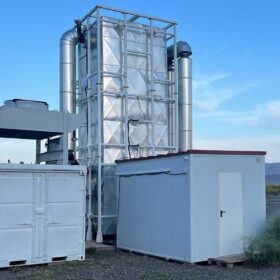
Thermal energy storage system based on recycled ceramics
Serbia-based Storenergy has developed a thermal energy storage (TES) solution that uses recycled ceramics as the storage medium. It says its solid-state storage solution is designed to ensure long lifespans and low maintenance costs.
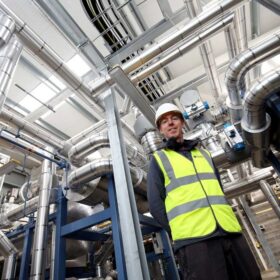
European utilities turning to large heat pumps
Utilities increasingly recognize heat pumps as a critical technology for heat decarbonization. They are deploying multi-megawatt systems in different parts of Europe to simultaneously serve multiple users and offer new avenues for the decarbonization of buildings.
