Mark Hutchins

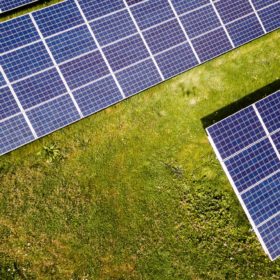
From power to energy rating, for a better choice of PV module
A new report published by the International Energy Agency’s Photovoltaic Power Systems Program (IEA PVPS) outlines the need for PV module standards and testing to focus on ‘energy rating’ – an estimate of actual performance in a variety of climate conditions, rather than nominal power output or efficiency. The report finds that the IEC and other standards bodies are already beginning to make encouraging moves in this direction, but more work, and more data, are needed to make the most out of this approach.
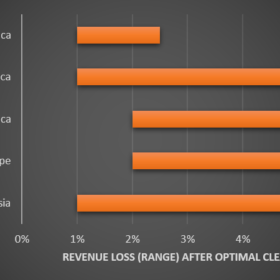
New model to predict PV module cleaning cycles and resulting profits
A group of scientists in Bangladesh has developed a model to determine the optimal cleaning schedule for a PV installation at any location in the globe, requiring only the average insolation and soiling rate for a given site to make the calculation. The study also draws new conclusions regarding the influence of sandstorms and rain on soiling, and aims to be among the first studies to paint a global picture of soiling trends by region.
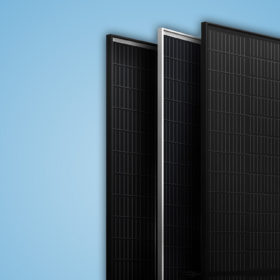
Assessing the impact of large-wafer modules
Energy consultancy DNV GL has published new results comparing the performance of modules based on 166mm, 182mm and 210mm silicon cells. The assessment compares Trina Solar’s Vertex modules, which use the largest cell dimension, with unnamed competitors utilizing the other two sizes. Results from system simulations show a clear advantage for the two larger sizes, with 210mm edging ahead in terms of levelized cost of electricity.
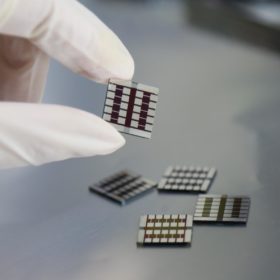
A pinch of chili gives perovskites a kick
Scientists in China found that capsaicin, the natural compound responsible for a chili pepper’s spicy flavor, can also act as a ‘secret ingredient’ in perovskite solar cells, making them both more efficient and stable. The group added capsaicin to the precursor materials of a common perovskite, leading to dramatic improvements in the resulting solar cell.
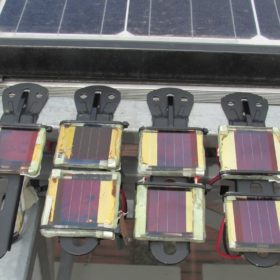
Measuring outdoor performance in perovskites
Scientists in Spain and Colombia took a closer look at the degradation mechanisms affecting perovskite solar cells, and developed a new, high throughput method to characterize their performance in an outdoor setting. The group evaluated the method through outdoor testing on perovskite modules manufactured in a lab. it expects its findings to offer easier device characterization and better understanding of the degradation mechanisms affecting perovskite solar cells, both important factors in the technology’s development.

‘SolarEV City’ concept can cut both costs and emissions
Scientists applied a model where rooftop PV and electric vehicle batteries are integrated into the energy system of nine Japanese cities. Their findings suggests that such a system could meet more than half of every city’s total energy demand by 2030, and as much as 95% in some cases. The model also reveals opportunities to cut both pollution and energy costs for urban populations in Japan.

Complementary hybrid PV systems can reduce reliance on storage
Looking back over years of research into the topic of hybrid systems based on different combinations of solar, wind, hydro and other renewables, an international group of scientists found strong potential for strategies to exploit complementarity between the different sources integrate more intermittent renewables onto regional and national grids. The scientists present a series of conclusions and recommendations that aim to push research in hybrid renewables forward.
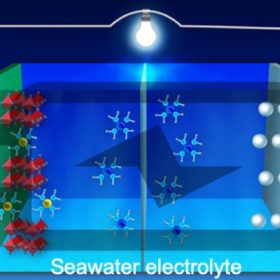
Seawater aqueous battery based on alloy of zinc and manganese
Scientists in the United States developed a new anode for aqueous batteries. A working battery utilizing this anode, with seawater as an electrolyte, demonstrated impressive energy density, and remained stable after 1,000 hours of high current cycling. The group is already discussing the potential of their approach in large-scale manufacturing.

Fossils fuels to lead as Africa doubles its energy capacity this decade
Researchers led by Oxford University have put together a comprehensive forecast of energy developments across the African continent up to 2030. Based on analysis of data on more than 3,000 power plant projects across 54 countries, the report predicts a doubling of generation capacity in Africa over the next decade, with fossil fuel projects to represent 60% of the total. Based on this, the authors warn of the need for both the public and private sectors to change to tack to avoid a missed opportunity for renewable energy.

Hard carbon for a high energy sodium battery
Scientists in Japan demonstrated a hard-carbon electrode that can greatly increase the capacity of a sodium-ion battery. With further work on the long-term performance, the discovery could make sodium-ion batteries better able to compete on energy density with their lithium-ion counterparts.
