Mark Hutchins

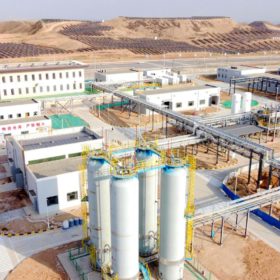
China’s ‘Liquid Sunshine’ project demonstrates PV powered methanol
A pilot project in China was brought online this month, combining 10 MW of PV with electrolyzers for hydrogen production and carbon dioxide hydrogenation to synthesize methanol. The methanol is supplied to the chemical industry, or can be converted back into hydrogen for energy use. And the project’s creators say their next goal is scaling the project up to 10 or even 100 times its current size.
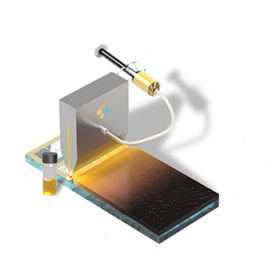
23.8% efficient tandem cells via slot-die coating
Scientists in Saudi Arabia demonstrated a slot-die coating process for production of perovskite solar cells from a specially engineered ‘ink’. Using the process, the group fabricated a perovskite/silicon tandem cell that recorded 23.8% efficiency.
Carbon nanotube gives batteries a boost
Scientists in the U.S. examined the use of different conductive filler materials in a lithium-ion battery electrode, finding that adding single walled carbon nanotubes to a nickel-cobalt-manganese cathode resulted in better electrical conductivity and higher rate capability for the overall battery. The results, according to the group, could provide new insights into design of high power, high energy battery electrodes.
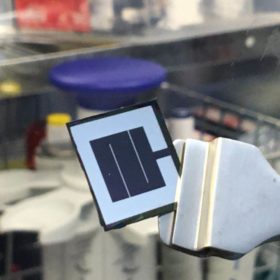
Hidden costs for scaling perovskite cells
Scientists in Australia conducted a detailed cost analysis for perovskite-on-silicon tandem PV cells, based on several possible iterations of the technology. The research identifies areas where unexpectedly high costs might prove a bump in the road toward commercialization and suggests ways these might be reduced.

Dual-ion battery prototype promises safe and cost-competive energy storage
Scientists have fabricated a working battery using a new type of dual-ion chemistry. The design avoids many of the rare or expensive materials found in today’s lithium-ion batteries, and also comes with an inherently lower risk of fire. The battery showed promising performance, and its creators say they have identified several areas where performance could potentially be improved.
Holistic approaches to reliability
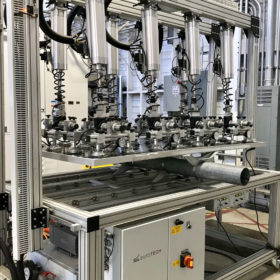
A new report published by the European Technology and Innovation Platform outlines the need for continuing research into the reliability of PV systems and components, and for the collection and sharing of performance data. The report recommends a holistic approach to reliability, going beyond current testing standards to identify new degradation mechanisms, and making use of sensors and drone imaging to monitor systems in the field to prevent and report on system failures.
Shedding light on amorphous silicon
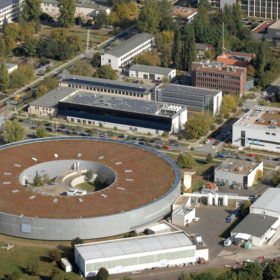
Scientists in Europe took a very close look at the thin amorphous silicon layers used in heterojunction and tandem solar cells, building a full picture of the material’s structure at the nanoscale. Their findings could help scientists solve the long-standing mystery of light induced degradation.
Terawatt scale by 2050
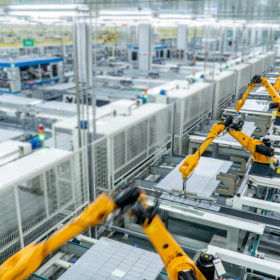
In a new paper published in the journal of Renewable and Sustainable Energy, renowned PV scientist Pierre Verlinden examines the solar industry’s trajectory towards the 70 TW of installed capacity that will be needed by 2050, as the best choice for meeting climate targets set out in the 2015 Paris agreement. Silver consumption and recycling, according to Verlinden, will be the biggest challenges in the years to come, as well as ensuring balanced growth and avoiding a major installation rush in the years close to 2050.
Understanding perovskite degradation
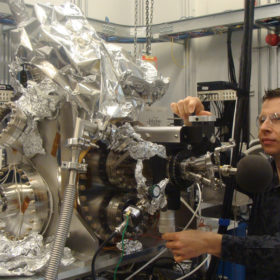
Scientists in the US took a closer look at the mechanisms causing perovskites to degrade under light and raised temperatures. By testing perovskite cells with various additives and other recipe tweaks, the group was able to identify pathways to improving long-term stability.
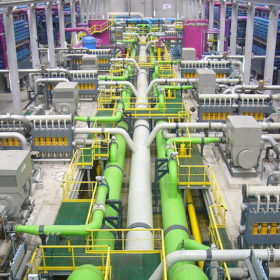
PV powered desalination is “the most competitive design”
Scientists in France conducted an analysis on the competitiveness of water desalination, taking a large scale project planned for Morocco as a case study. The research concludes that PV without storage is the cheapest option to power desalinators, and will likely remain so until at least 2030.
