Mark Hutchins

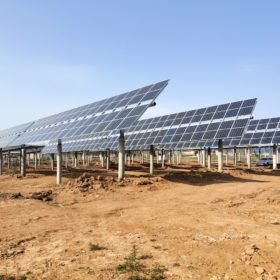
Big wafer benefits extend to n-type, says Trina Solar
China’s Trina Solar has published a white paper on its latest n-type TOPCon modules, with cost calculations and figures from demonstration projects. The Chinese PV manufacturer claims better performance from its 210 mm cells than with other n-type products based on smaller, 182 mm cells.
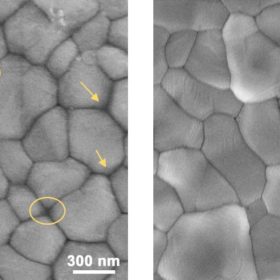
New ‘cushion’ solution to take stress off perovskite solar cells
Scientists in Germany have discovered a polymer compound that, when added to perovskite thin-film precursor materials, wraps itself around the perovskite crystals, acting as a cushion to protect the perovskite structure from thermomechanical stress. They used the additive to fabricate cells with up to 24.6% efficiency, retaining 96% of their initial performance after accelerated testing equivalent to one year in the field.
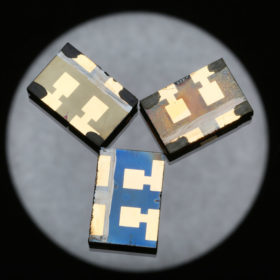
A look into a crystal ball reveals the secrets of perovskite solar cell stability
Scientists in Switzerland and South Korea looked deep into the crystalline structure of a perovskite thin-film to better understand the mechanisms behind the sensitivity to heat and moisture that causes so many stability issues for solar cells based on these materials. They discovered a part of the crystal’s surface that is particularly vulnerable to moisture-induced degradation, and developed an approach to grow perovskite thin-films with strong resistance to moisture and thermal stress.
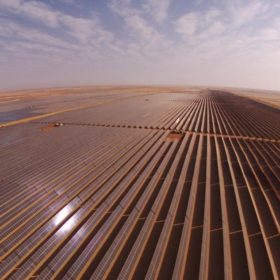
Africa closing in on gigawatt-level solar
Solar installations across Africa hit 949 MW in 2022, bringing cumulative capacity past the 10 GW mark, according to the African Solar Industry Association (AFSIA). While that may seem underwhelming for such a huge region, it shows that countries are taking big steps toward realizing the entire continent’s PV potential.
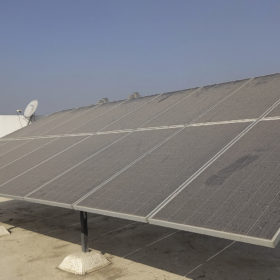
Soiling – a multibillion-dollar issue
A new report by the International Energy Agency’s Photovoltaic Power Systems Programme (IEA-PVPS) estimates that lost revenue from PV module soiling amounts to more than €3 billion ($3.2 billion) per year – an amount that is only set to increase as PV systems grow larger and more efficient.
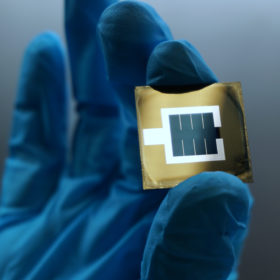
Pathways for perovskite PV
Perovskite solar cells have created excitement in recent years, given their potential to improve virtually every area of PV, but we have yet to see such devices produced at scale. Scientists in Australia have outlined some of the challenges holding them back.

Why solar needs to slim down on silver
New research from UNSW in Australia outlines the need for solar cell and module makers to reduce or eliminate the use of silver in their products. Based on expected PV growth, in line with climate change commitments, solar manufacturers would require at least 85% of global silver reserves, according to the new study.

pv magazine Award 2022 winners
Hopefuls from 40 different countries submitted entries to the pv magazine Awards in 2022, with more regions represented than ever before. This reflects the industry’s increasing global relevance and the importance all regions are placing on local innovation and production. Here we present the seven winners, who will be honored once again in a live Award ceremony on Jan. 17th, staged alongside the World Future Energy Summit in Abu Dhabi and as part of the 11th MESIA Solar Awards Ceremony.
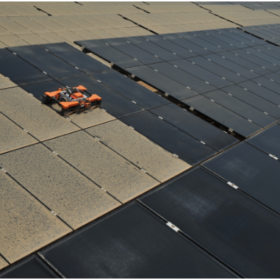
Impact of dust, heat, soiling on solar project performance
Scientists in Morocco recently conducted a year-long study on the impacts of soiling on PV modules in arid, dusty conditions. They found that soiling could contribute to daily performance losses of as much as 15%.
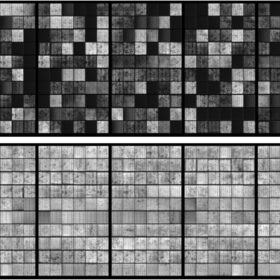
A closer look at potential-induced degradation in solar cells
UK scientists have examined the impacts of potential-induced degradation (PID) in solar cells and modules, based on a field study from a 1.2 MW PV system in Spain. Meanwhile, in a separate study, scientists in Japan have created a model for one of the less-investigated PID mechanisms, creating a model of its progress that will be useful in future research and mitigation efforts.
