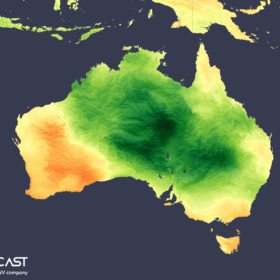
Wettest February since 2011 cuts irradiance across most of Australia
In a new weekly update for pv magazine, Solcast, a DNV company, reports that Australia’s wettest February in 15 years produced solar irradiance deficits of 15–30% across the country’s central and eastern regions.
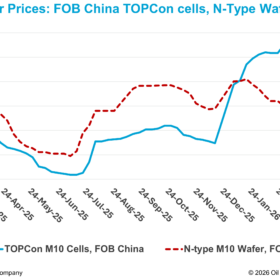
China solar cell prices fall for third consecutive week as upstream costs ease
In a new weekly update for pv magazine, OPIS, a Dow Jones company, provides a quick look at the main price trends in the global PV industry.
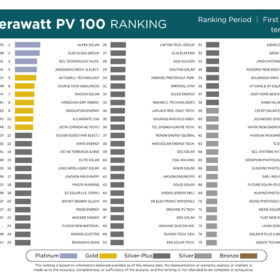
Who are the Top 100 PV manufacturers today?
The Terawatt PV 100 ranks the top 100 solar manufacturing companies using a new methodology based on production scale, financial strength, and corporate transparency, with Tongwei leading the Q1 2026 list and most top firms headquartered in China. The analysis highlights increasing global supply-chain scrutiny driven by tariffs and ESG mandates, while also showing rising influence from Indian companies and strong positions for key materials and equipment suppliers.

‘The barriers I encountered were never dramatic, they were cumulative’
This week Women in Solar+ Europe gives voice to Delfina Muñoz, Research Director & Strategic Project Manager at France’s CEA. She says diversity is a catalyst for faster, fairer clean energy innovation. Inclusion, mentorship, and authentic leadership don’t just support people, they build stronger, more resilient teams that power the energy transition forward.
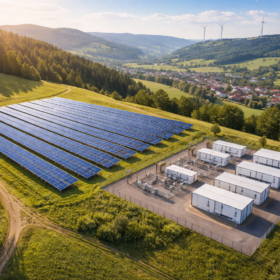
Why technical due diligence is becoming the backbone of Europe’s solar-storage boom
Europe’s hybrid solar-plus-storage projects are growing rapidly, but increasing complexity means treating technical due diligence as a formality is now a serious risk. Rigorous, lifecycle-based technical due diligence (TDD) – covering financial, supply chain, digital, and ESG factors – is essential to ensure project reliability, investor confidence, and a resilient clean-energy transition.
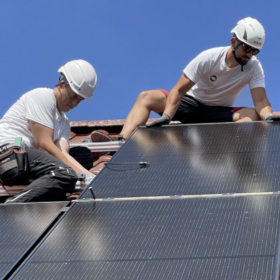
Iran conflict stirs solar demand debate in Germany
Germany’s solar sector is reporting a surge in inquiries following the military escalation between Israel, the United States, and Iran, with E.ON citing a doubling of demand for solar installations. Other industry participants are more cautious, attributing much of the increase to seasonal patterns rather than geopolitical anxiety.
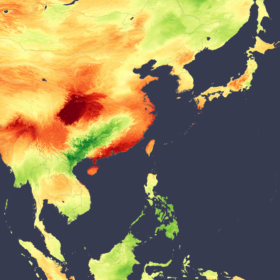
Clean Winter air drives major irradiance surplus across China and Taiwan in February
In a new weekly update for pv magazine, Solcast, a DNV company, reports that February saw a sharp East Asia solar divide, with southern China and Taiwan experiencing record-high irradiance due to clear skies and low aerosols, while maritime Southeast Asia faced heavy rainfall and below-average irradiance from enhanced tropical convection. The surplus in China was driven by atmospheric cleanliness, whereas Taiwan’s boost came mainly from persistently clear days, contrasting with widespread deficits across Indonesia, the southern Philippines, and nearby islands.
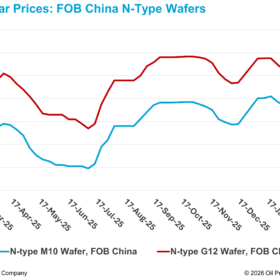
China wafer prices unchanged as resumed purchases fail to lift market
In a new weekly update for pv magazine, OPIS, a Dow Jones company, provides a quick look at the main price trends in the global PV industry.
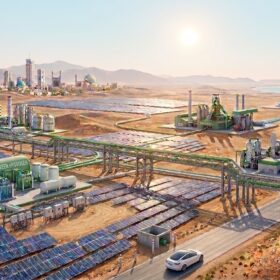
Solar-to-X could redefine Iran’s energy future
Iran is widely known for its oil and gas resources, but its strongest long-term energy asset may be the sun. New research shows how solar PV could drive a cost-competitive transition across power, heat, transport, industry, and desalination, while opening the door to a broader Solar-to-X Economy.

Grid-forming BESS set to stabilize Australia’s hyperscale data centers
Australia has become one of the world’s most attractive destinations for hyperscale data centers, ranking among the top five to 10 markets globally by capacity. Drivers include large land availability in Renewable Energy Zones, renewable penetration exceeding 40% across the National Electricity Market (NEM), geopolitical stability, Five Eyes membership, and proximity to Asia-Pacific demand hubs.
