Sandra Enkhardt


How PV is changing the world of energy
The annual expansion of photovoltaics throughout the world surpassed the 100 GW mark last year. The multi-terawatt market is looming on the horizon and PV is becoming a “game changer” in the global energy system in five specific areas, according to a consortium of research institutes.
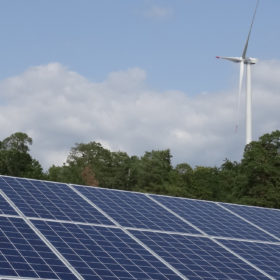
Germany sees new PV additions surpass 300 MW in April
In the first four months of the year, over 1.6 GW of solar power generation capacity came online in the country. Next month the FITs for rooftop PV will fall by 1.4%.
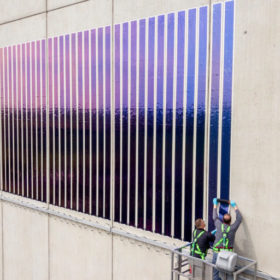
Heliatek and Lechwerke test PV facade on grain silo
The two companies have glued 230 square meters of solar film to the rough concrete surface of a grain silo in Donauwörth, Germany. The film is expected to generate approximately 6,700 kWh kilowatt-hours of solar power per year. Lechwerke and Heliatek want to open up new potential for the use of PV on other surfaces with the pilot project.
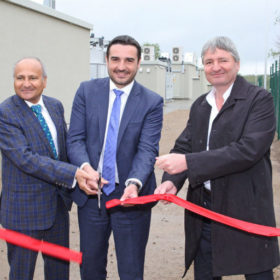
Enertrag, Enel and Leclanche commission 22 MW storage project in Germany
The companies have invested €17 million in the project. The energy stored, in the Brandenburg project, will be used to stabilize the grid and minimize the curtailment of wind farms.
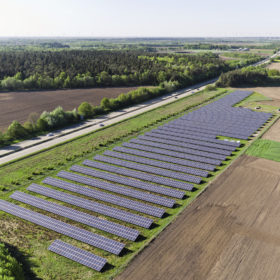
Germany’s Umweltbank offers standardized financing for solar PPAs
The sustainable projects lender wants to become a pioneer in the financing of unsubsidized PV ground mounted systems. The loans have a term of 25 years and operators need a PPA with at least five years’ maturity at a fixed price.
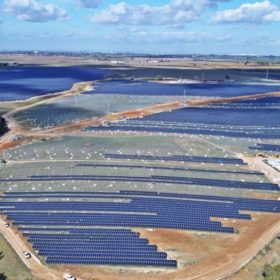
Baywa re to build its first unsubsidized solar plant in Germany
The 8.8 MW project, in Mecklenburg-Pomerania, will sell power to industrial customers through a long-term PPA. Construction is expected to begin in June.
SMA posts first-quarter loss
Sales revenue declined at the start of the year despite steady inverter shipments. The reverse was mainly due to sluggish project business and SMA is predicting significant increases in sales and earnings in the second half.
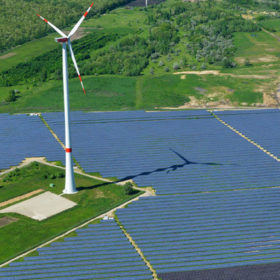
Solar once again the only winner in German renewables auctions
In the first round of this year’s mixed wind and solar tender there were only bids for PV projects. Some 18 projects with a combined capacity of 210 MW were selected and the final feed-in premium tariffs were almost the same as those seen in the previous round, with the average price slightly higher.
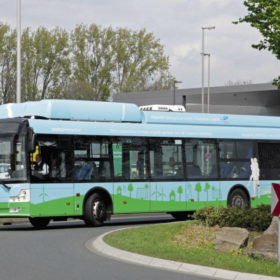
Vattenfall-led consortium plans 50 MW power-to-gas project in Germany
The energy company plans to build the “HySynGas” project in the Brunsbüttel Industrial Park with ARGE Netz and MAN Energy Solutions. The consortium wants to establish a power-to-gas hub for cross-sector decarbonization in northern Germany.
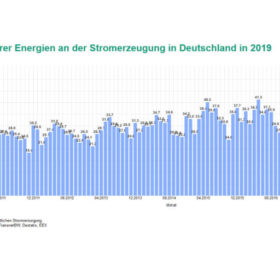
Germany: renewables covered 54% of net power production in March
Germany set a new record in March as more than half of its power was generated from wind, PV and other renewables. In the first quarter, renewables accounted for 45.4% of net electricity generation, according to Energy Charts from Fraunhofer ISE.
