
Solar+battery project has Australian town on target for 100% renewables
The small town of Yackandandah in northeast Victoria is one step closer to being powered by 100% renewable energy with the state’s first behind-the-meter, community-owned solar PV and battery energy storage system the latest addition to its community’s energy generation strategy.

Tesvolt invests in development of cable-free EV supercharging
The German energy storage business has invested an unspecified amount in compatriot Stercom Power Solutions, which offers the ability to transfer electricity, untethered, from a magnetic coil to a receiver coil on the underside of new-energy vehicles.
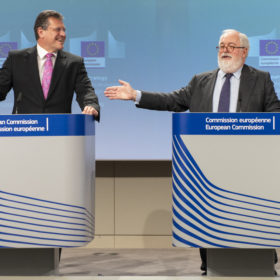
Expansion of battery training courses into France could benefit 150,000 workers by 2025
The ‘EBA250 Academy’ battery technician, engineer and researcher skills courses offered in Spain by EU body EIT InnoEnergy will also be rolled out in France, after approval from Paris.
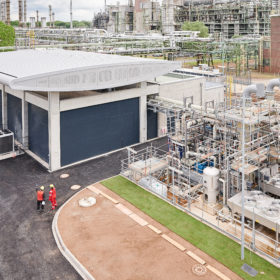
The Hydrogen Stream: Ineos to invest £25m in HydrogenOne fund as Shell fires up its 10 MW electrolyzer
Plus, the Norwegian government is set to devote €2.5 million into a joint venture trying to develop liquid organic hydrogen carrier solutions for shipping by the middle of the decade.

Renewables powered island can be an outlier for the Greek archipelago
The Greek Ministry of the Environment and Energy has signed a memorandum of understanding with a clutch of private companies to turn the small Aegean island of Halki green as a demonstration of the effectiveness of its planned GR-Eco Islands Initiative.

Another battery recycling plant for Sweden
Construction on the Halmstad facility is expected to start this year after the Stena Recycling branch of the Swedish conglomerate announced a €25 million commitment.

The prospects for solar in a 1.5C world
We will need 10.7 TW of clean energy generation capacity this decade to stay on track with the most ambitious of the climate change paths agreed in Paris, which would include plenty of solar investment and jobs, according to the International Renewable Energy Agency.

The Hydrogen Stream: Chile and Germany join forces to develop viable green hydrogen projects
Furthermore, Texas oil field services company Baker Hughes and engineering, procurement and construction company Samsung Engineering have announced a collaboration with regards to low to zero-carbon projects utilizing carbon capture, utilization and storage (CCUS) and hydrogen technologies.
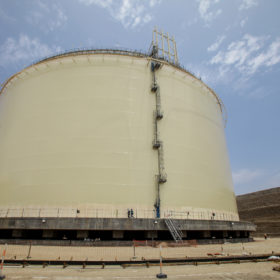
LNG and hydrogen – untangling a complex relationship
Six industry experts recently spoke to pv magazine about the relationship between LNG and hydrogen.
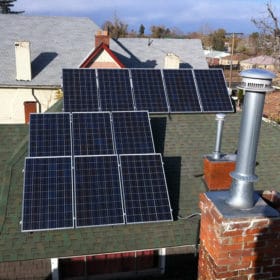
‘Residential batteries are less profitable than selling excess power to the grid’
Although self-consumption of solar power is the optimal economic approach, the expense of household batteries at present outweighs the increased ability they offer to use electricity generated on the roof. Whether aggregated ‘virtual batteries’ offer better returns is an open question, due to lack of electricity company transparency.
