
US ‘aqueous air battery’ developer reveals investors in recent $76 million funding round
The holy grail of energy storage has always been low-cost and long-duration. Form Energy plans to deploy a 1 MW/150 MWh system with a Minnesota utility before 2023 – an unprecedented energy storage duration, if successful.

pv magazine video: US storage market under spotlight
In pv magazine’s second roundtable session, Advanced technologies, the U.S. storage market came under the spotlight – in particular, the lessons that can be learned from solar as the market moves towards greater maturity. Also under discussion was the trend among PV manufacturers to producing ever larger cells and modules in the continuous drive to bring down LCOE. But is big necessarily better?
India tweaks 100 MW solar-plus-storage tender
The peak DC capacity of the project has been reduced, along with the size of the battery storage element of the facility.

UK assembles experimental hydrogen network from decommissioned gas infrastructure
The £12.7 million project will explore how to transport pure and blended hydrogen for use in heating and industrial purposes. Construction will start next year.

Europe’s largest battery project gets approval in the UK
U.K.-based energy company InterGen has received planning permission to deploy 320 MW/640 MWh of capacity at a logistics park near London. The storage complex is planned to provide fast-reacting power and system balancing with an initial, two-hour duration.
IRENA raises carbon price issue in green hydrogen policy guide
Guide to drawing up national green hydrogen strategies acknowledges the global hydrogen economy could fail to take shape if any of the world’s powers decide to stick with fossil fuels to gain a price advantage.
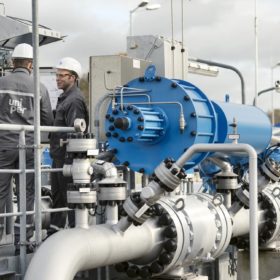
Europe could double ambition of its hydrogen strategy – white paper
Big brands will have to put their money where there mouth is on carbon commitments, though, and the EU will have to put its shoulder to the wheel, particularly in respect of the commonly-heard call to dispense with red tape. The prize could be a call for 280 GW more renewables capacity by 2030.
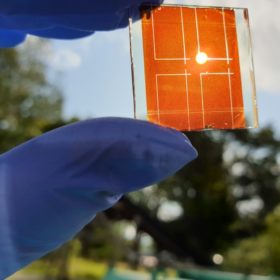
India and Israel to work together on perovskite solar cells and lithium sulfur batteries
Low-cost batteries and novel perovskite materials are among the topics selected for joint research and development.
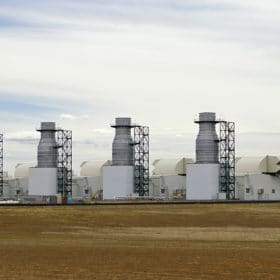
Australian power provider to install big batteries, 300 MW electrolyzer
Australian power supplier Origin Energy is accelerating its transition to clean energy through large-scale storage projects and newly announced hydrogen plans.
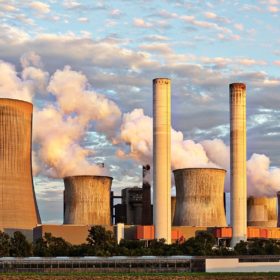
‘China renewables will hit grid parity with new-build coal next year’
Analyst WoodMac says South Korea, Thailand and Vietnam will also join India and Australia next year, among the nations where clean energy projects are cheaper than new coal power plants.
